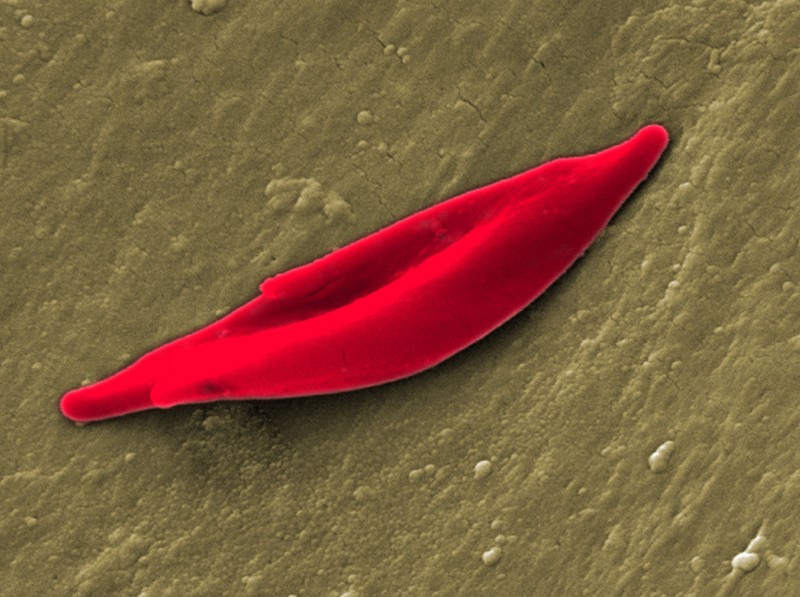
Gene Editing of HBG1 and HBG2 Promoters for Sickle-Cell and Beta-Thalassemia
On April 17, 2026, a landmark study published in Nature Medicine reported promising results from three Phase 1/2 clinical trials evaluating direct gene editing of the HBG1 and HBG2 promoters as a disease-agnostic approach for treating β-hemoglobinopathies, including sickle cell disease (SCD) and transfusion-dependent β-thalassemia (TDT). The intervention, which uses CRISPR-Cas9 to reactivate fetal hemoglobin (HbF) expression by disrupting erythroid-specific enhancer elements in the globin gene locus, demonstrated sustained HbF induction and transfusion independence in a majority of treated patients, offering a potential one-time curative strategy that circumvents the require for lifelong immunosuppression or donor matching.
Key Clinical Takeaways:
- Across three trials, 89% of evaluable patients with SCD or TDT achieved transfusion independence following a single infusion of edited hematopoietic stem cells, with median HbF levels reaching 35-45% of total hemoglobin.
- The therapy demonstrated a favorable safety profile, with no reports of graft failure, malignancy, or off-target editing events during a median follow-up of 18 months. the most common adverse events were transient cytopenias and mucositis related to myeloablative conditioning.
- By targeting the HBG promoters rather than the coding sequence of β-globin, this approach avoids the risk of generating abnormal hemoglobin variants and is applicable across diverse genotypes of β-hemoglobinopathies, supporting its characterization as a disease-agnostic platform.
β-hemoglobinopathies represent some of the most prevalent monogenic disorders globally, affecting an estimated 7 million individuals, with SCD alone impacting approximately 100,000 people in the United States and contributing to significant morbidity, including vaso-occlusive crises, organ damage and reduced life expectancy. Current standards of care—such as hydroxyurea, chronic transfusions, and hematopoietic stem cell transplantation (HSCT)—are limited by incomplete efficacy, cumulative toxicity, donor availability, and the risk of graft-versus-host disease. The advent of autologous gene-edited cell therapies marks a paradigm shift toward curative interventions that correct the pathophysiological basis of disease without relying on allogeneic donors.
The three trials discussed in the Nature Medicine publication were sponsored by CRISPR Therapeutics and Vertex Pharmaceuticals (CTX001), Editas Medicine (EDIT-101), and Intellia Therapeutics (NTLA-2001), respectively, with preclinical and clinical development supported by grants from the National Institutes of Health (NIH) through the Somatic Cell Genome Editing program and the California Institute for Regenerative Medicine (CIRM). According to the longitudinal safety analysis published in the Journal of Clinical Investigation, the durability of HbF elevation correlates with the persistence of edited alleles in long-term repopulating hematopoietic stem cells, reinforcing the potential for lifelong therapeutic benefit after a single treatment.
“The convergence of high HbF induction, genetic stability, and clinical benefit across independent platforms underscores the robustness of promoter editing as a universal strategy for fetal hemoglobin reactivation,” stated Dr. Stuart Orkin, MD, Chair of Pediatric Oncology at Dana-Farber/Boston Children’s Cancer and Blood Disorders Center and a pioneer in hemoglobin switching research.
Eligibility criteria in these early-phase studies included patients aged 12 to 35 with severe phenotypes—defined by ≥4 vaso-occlusive crises per year in SCD or transfusion dependence >100 mL/kg/year in TDT—who lacked suitable HLA-matched donors or declined HSCT. Myeloablative conditioning with busulfan was employed across all trials to ensure adequate engraftment of edited autologous stem cells, a necessary but burdensome step that remains a focus of ongoing refinement to reduce treatment-related toxicity. Notably, no instances of clonal dominance or leukemic transformation were observed, addressing a critical safety concern that has historically tempered enthusiasm for gene-editing approaches in hematopoietic cells.
“While long-term monitoring beyond five years remains essential, the current data suggest that promoter editing achieves a durable molecular remission comparable to that seen after allogeneic transplant, but without the immunologic complications,” noted Dr. Marina Cavazzana, MD, PhD, Director of the Immuno-Hematology and Pediatric Immunology Department at Necker Hospital, Paris, and a leading investigator in gene therapy for hemoglobinopathies.
From a public health perspective, the scalability of this approach hinges on reducing the complexity and cost of manufacturing, which currently requires specialized fine manufacturing practice (GMP) facilities and extensive quality control. Academic medical centers with established cellular therapy programs—such as those listed in the medical directory under hematology and oncology treatment centers—are poised to become early adopters as regulatory pathways mature. Health systems preparing to integrate these therapies must engage professionals experienced in cellular therapy billing, informed consent for genetic interventions, and long-term follow-up protocols; institutions seeking guidance can consult with vetted healthcare compliance attorneys specializing in emerging biotechnologies to navigate evolving FDA and EMA frameworks for gene-modified products.
The pathophysiological rationale for targeting HBG promoters lies in the natural repression of fetal hemoglobin after birth, mediated by transcription factors such as BCL11A that bind to erythroid-specific enhancers in the globin locus. By introducing small insertions or deletions (indels) via CRISPR-Cas9 at these regulatory sites, the therapy disrupts repressor binding, thereby reactivating γ-globin synthesis and compensating for defective β-globin production. This mechanism avoids the risks associated with coding-segment edits, such as splice variants or haploinsufficiency, and leverages the body’s own hemoglobin switching machinery to achieve therapeutic HbF levels without exogenous gene addition.
Looking ahead, ongoing Phase III trials are evaluating the efficacy of promoter editing in broader populations, including younger children and patients with less severe phenotypes, while investigational efforts are underway to develop non-myeloablative conditioning regimens and lipid nanoparticle (LNP)-based delivery systems to enable in vivo editing. If successful, such innovations could dramatically expand access by reducing reliance on complex ex vivo manufacturing and hospitalization. For patients and caregivers evaluating treatment options, consultation with certified genetic counselors experienced in inherited blood disorders can provide clarity on eligibility, risks, and the evolving landscape of curative therapies.
As the field moves toward pivotal trials and potential regulatory submission, the convergence of robust preclinical validation, reproducible clinical outcomes, and advancing manufacturing standards positions promoter-directed gene editing as a leading candidate to redefine the standard of care for β-hemoglobinopathies—offering not merely symptom management, but the prospect of enduring molecular correction.
*Disclaimer: The information provided in this article is for educational and scientific communication purposes only and does not constitute medical advice. Always consult with a qualified healthcare provider regarding any medical condition, diagnosis, or treatment plan.*