
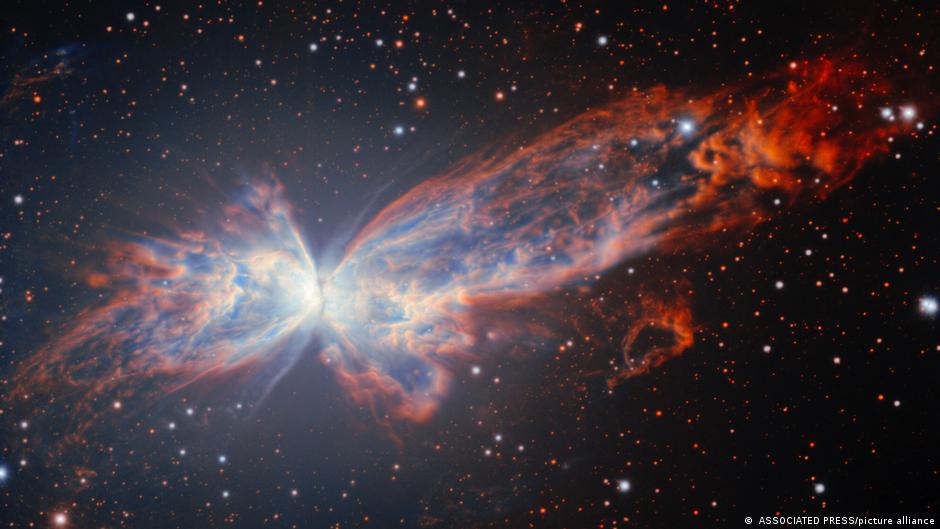
James Webb telescope Reveals Stunning Image of Butterfly Nebula 2,500 Light Years Away
A newly released image from the Gemini International Observatory, processed using data from the James Webb Space Telescope, showcases the breathtaking beauty of NGC 6302, a bipolar planetary nebula located between 2,500 adn 3,800 light years from Earth in the constellation Scorpio. The image, selected by Chilean schoolchildren to commemorate the observatory’s 25th anniversary, reveals intricate “wings” of gas and dust expelled by a dying star, offering scientists a unique glimpse into the final stages of stellar evolution.
NGC 6302, also known as Caldwell 69, features a white dwarf at its center – the remnant of a star once similar in size to our Sun. This white dwarf is exceptionally hot, exceeding 250,000 °C, and is shedding layers of gas and dust as it nears the end of its life. The resulting structure is a testament to the dramatic processes occurring as stars evolve and eventually disperse their material back into the cosmos.
The vibrant colors within the nebula aren’t merely aesthetic; they reveal the chemical composition of the expanding gas. Deep red indicates regions of ionized hydrogen, while deep blue highlights areas energized by oxygen. Scientists have also detected nitrogen,sulfur,and iron,elements crucial for the formation of future stars and planets.
According to a report from noirlab, the nebula was “formed by a massive star that is near the end of its life and thus ejects material into space, surrounding itself by a shell of expanding ionized gas.” Before collapsing into a white dwarf, the original star was a red giant, potentially reaching a diameter close to 1,000 times that of our Sun.
The image was made possible through funding from the National Science Foundation (NSF) of the United States. Data from the gemini International Observatory and the James Webb space Telescope continue to provide invaluable insights into the universe’s most captivating phenomena.
