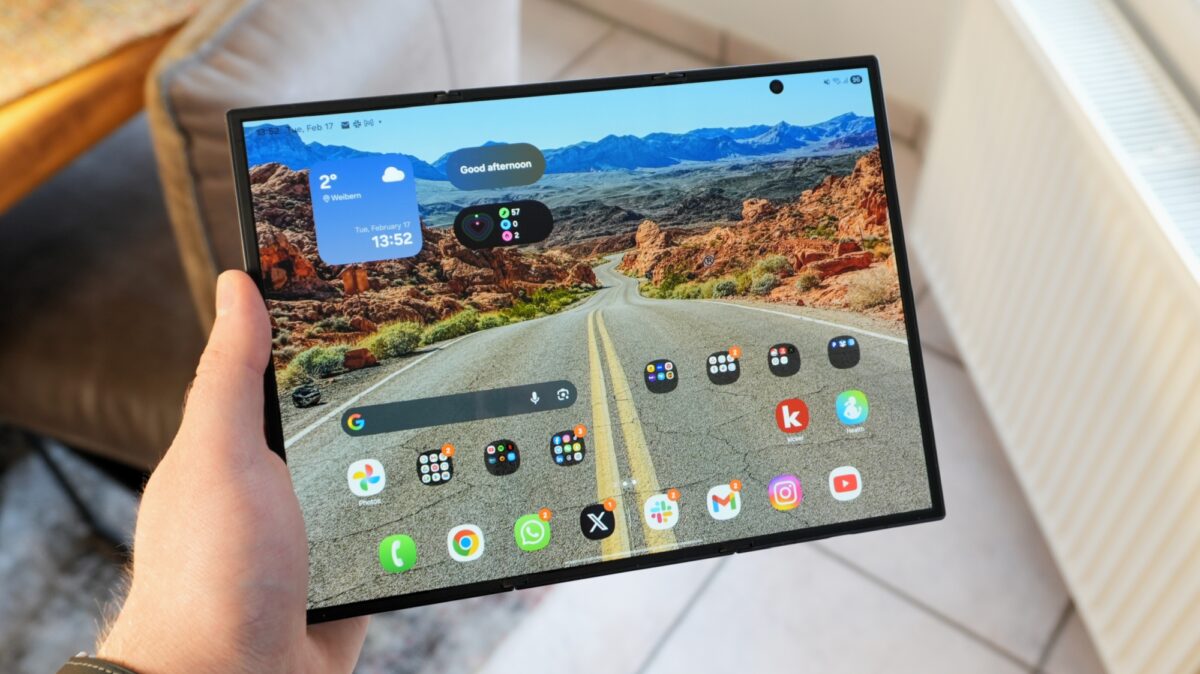
The Samsung Galaxy Z TriFold is officially sold out in the United States, marking a swift end to the company’s experiment with its first-ever tri-fold smartphone. As of Saturday, March 21, 2026, the device no longer appears in stock on Samsung’s website, and the company has indicated it will not be restocking.
Launched in the U.S. On January 30, less than two months ago, the Galaxy Z TriFold carried a premium price tag of $2,899 for the 512GB model. The availability of a 1TB variant, and its potential pricing, remains unknown. Samsung initially offered the device exclusively through its online store and a limited number of Samsung Experience Stores, bypassing traditional carrier and retail partnerships.
The discontinuation comes after a similarly rapid exit from the South Korean market, where the Z TriFold was first released in December. According to reports from Bloomberg, Samsung intends to cease sales globally as existing inventory is depleted. Customers seeking a hands-on demo are now directed to Samsung Experience stores, suggesting limited remaining units are primarily for display purposes.
The Galaxy Z TriFold distinguished itself with a unique design, unfolding to reveal a 10-inch display alongside a 6.5-inch cover screen. Samsung highlighted minimized creasing and a complex dual-rail hinge structure. The device also featured a substantial 5,600 mAh battery, the largest ever used in a Samsung smartphone, and a triple-camera system headlined by a 200-megapixel wide-angle lens.
Despite the high price and limited availability, early reviews were overwhelmingly positive, with 97% of reviewers on the official Samsung store recommending the device. Even though, the short lifespan of the Z TriFold suggests that sales volume did not meet expectations.
While Samsung has not publicly commented on the reasons for the discontinuation, industry analysts suggest that the device’s high cost and niche appeal contributed to the decision. The move may also signal a strategic shift towards refining foldable technology rather than pursuing increasingly complex form factors.
Leave a Reply