
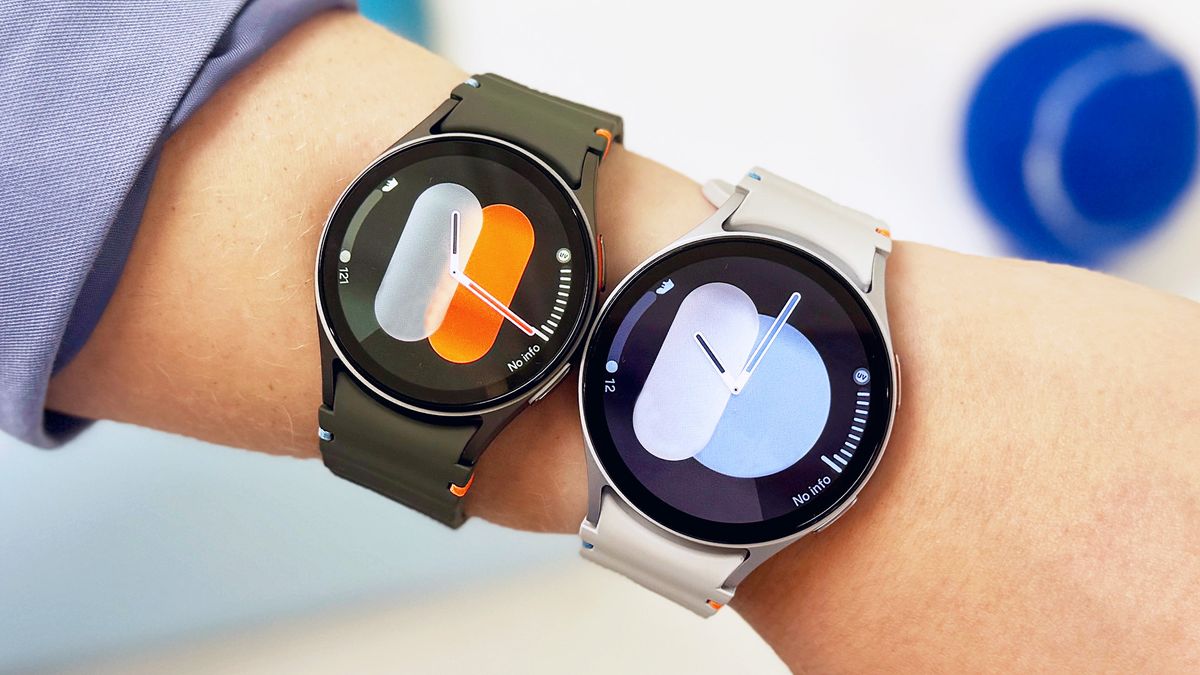
Samsung Galaxy Watch 8: Will Non-Invasive Glucose Monitoring Revolutionize Diabetes Management in the U.S.?
The tech community is abuzz with anticipation for Samsung’s upcoming Galaxy Watch 8, slated for release this summer.
Rumors of groundbreaking health features and the potential return of a beloved design element have ignited excitement among consumers, notably in the United states.
Recent firmware discoveries suggest Samsung is preparing to unveil a new lineup of wearables, possibly including a game-changing health innovation: non-invasive blood glucose monitoring.
Firmware testing has revealed three new Samsung wearable models: SM-L320, SM-L330, and SM-L500, along with their LTE-enabled counterparts, SM-L325U, SM-L335U, and SM-L505U.
These model numbers offer clues about what Samsung has in store for its next generation of smartwatches.
Given that the current Galaxy Watch 7 models are designated as SM-L300 (40mm BT), SM-L305 (40mm LTE), SM-L310 (44mm BT), and SM-L315 (44mm LTE), it’s reasonable to assume that the SM-L320, SM-L325U, SM-L330, and SM-L335U models represent different sizes and configurations of the standard Galaxy Watch 8.
This aligns with Samsung’s typical approach of offering variations in size and connectivity to cater to a broader range of consumer preferences.
The SM-L500 and SM-L505U models are generating even more speculation.
The tech community believes these could signal the return of the Galaxy Watch Classic, a fan-favourite known for its rotating bezel.
This intuitive control method allows users to navigate the watch’s interface with a satisfying tactile experience, a feature many users have missed as its discontinuation.
Adding weight to this theory, the model number SM-L505U was previously spotted in the GSMA database, identified with the “market name” of “galaxy Watch8 Classic.”
This strongly suggests that Samsung is indeed planning to resurrect the Classic variant, potentially appealing to users who prefer a more traditional watch interface.
while the last iteration, the Galaxy Watch 6 Classic, carried model numbers SM-R940, SM-R945, SM-R950, and SM-R955, the change in numbering could reflect significant internal upgrades or a strategic shift in Samsung’s product segmentation.
The Galaxy Watch Ultra (SM-L705), available only in an LTE version, further supports the idea that the SM-L505U is not a mistaken identity with an Ultra 2 model.
A Potential Revolution in Health Monitoring?
Beyond the design updates, the most exciting prospect for the Galaxy Watch 8 is the potential inclusion of non-invasive blood glucose monitoring.
This feature could be a game-changer for the 37 million Americans living with diabetes, according to the Centers for Disease Control and Prevention (CDC).
Currently, individuals with diabetes in the U.S. frequently rely on finger pricks or expensive continuous glucose monitoring (CGM) systems to manage their blood sugar levels.
A non-invasive solution integrated into a smartwatch would offer unparalleled convenience and potentially improve diabetes management.
Imagine being able to track your glucose levels discreetly and continuously, receiving alerts when levels are out of range, all from your wrist.
At the Samsung Health forum in San Jose earlier this year, Samsung’s Senior Vice president, Dr.hon Pak, discussed the company’s progress on “a noninvasive optically-based continuous glucose monitor.”
This statement has ignited hope that samsung is on the verge of delivering a revolutionary health feature.
Dr. pak elaborated further, stating, “Blood glucose is a big area of focus for us, and Samsung has been working to develop a sensor algorithm that predicts early signs of diabetes — along with non-invasive blood glucose monitoring technology and continuous glucose monitoring-integrated nutrition coaching.”
However, some experts remain cautious, suggesting that such a significant breakthrough might be reserved for a premium model like the Galaxy Watch ultra 2.
Introducing such a groundbreaking feature on the standard Galaxy Watch 8 could overshadow other potential advancements in the Ultra line.
Looking Ahead: Summer Unpacked and Beyond
Samsung is expected to unveil its new Galaxy Watches at its Summer Unpacked event,typically held in July or August.
Alongside the wearables, the event is also anticipated to showcase the Galaxy Z Fold 7, Galaxy Z Flip 7, and galaxy Ring 2.
The potential for non-invasive blood glucose monitoring, coupled with the possible return of the Galaxy watch Classic’s rotating bezel, makes the galaxy watch 8 one of the most anticipated wearables of the year.
As the launch date approaches, the tech community eagerly awaits confirmation of these exciting features and the chance to experience Samsung’s latest innovations firsthand.
The impact on the U.S.market, especially for those managing diabetes, could be considerable.
| Feature | Potential impact on U.S. Market |
|---|---|
| Non-Invasive Glucose Monitoring | Revolutionize diabetes management, improve quality of life for millions. |
| Galaxy Watch Classic Return | Appeal to users who prefer a traditional watch interface. |
| Summer Unpacked Event | Showcase Samsung’s latest innovations to a global audience. |
Samsung Galaxy Watch 8: Will Non-Invasive Glucose Monitoring Revolutionize Diabetes Management? An expert Weighs In
Is Samsung truly on the cusp of a breakthrough that could change the lives of millions?
That’s the question on everyone’s minds as whispers emerge about the potential for non-invasive blood glucose monitoring in the upcoming Samsung Galaxy Watch 8.
To delve deeper into this exciting prospect, we spoke with Dr. Evelyn Reed, a leading expert in wearable health technology and diabetes management.
World Today News: Dr. Reed, thank you for joining us.
To start, the prospect of non-invasive glucose monitoring in a smartwatch sounds like something out of science fiction.
Is this technology even feasible?
Dr. Reed: “Thank you for having me.
The idea of non-invasive glucose monitoring, specifically through wearable technology like a smartwatch, is definitely becoming more feasible.
It’s not science fiction anymore; it’s very much on the horizon.
The challenge has always been accurately measuring glucose levels without drawing blood.
Though,advancements in sensor technology,algorithm advancement,and data processing are making this a real possibility,especially with the use of optical sensors and sophisticated analysis to predict glucose levels.”
World Today News: The article mentions that Samsung is focusing on this area.
What are the advantages of non-invasive glucose monitoring compared to current methods like finger pricks or Continuous Glucose Monitoring (CGM) systems?
Dr. Reed: “The advantages are meaningful.
Imagine being able to monitor your blood sugar levels continuously and discreetly, without the pain of finger pricks or the insertion of a sensor under the skin.”
- Convenience: Non-invasive monitoring offers unparalleled convenience. You literally just wear your smartwatch.
- Reduced Pain: Eliminates the need for finger pricks or insertion of a sensor.
- Continuous Data: Provides a continuous stream of data, allowing for better insights into glucose trends and patterns.
- Improved Lifestyle: It can seamlessly integrate into daily life, promoting proactive diabetes management.
These factors can significantly improve the quality of life for people with diabetes by providing a more cozy and less intrusive way to manage their condition.
World Today News: What are the technical hurdles Samsung and other companies still need to overcome to make this a reality?
Dr. Reed: “The primary hurdle is accuracy.
The technology needs to be as accurate as current methods, such as blood glucose meters and CGM systems, to be clinically useful.
Sensors need to be sensitive enough to detect subtle changes in glucose levels through the skin, and algorithms must accurately process the data while taking into account factors like skin tone, body temperature, and activity levels.
Another challenge will be regulatory approval.
This requires rigorous testing and validation to ensure safety and efficacy and to demonstrate the technology’s reliability across diverse populations.
Miniaturization and power consumption are critical.
The device needs to be small,unobtrusive,and have a long battery life for daily use.”
World Today News: Beyond blood glucose monitoring, the article also mentions the possible return of the Galaxy Watch Classic.
What are your thoughts on the design and features of a smartwatch?
Dr. reed: “The Galaxy Watch Classic’s return would be very exciting for a smartwatch.
The rotating bezel is a distinctive and highly functional feature that makes navigation incredibly intuitive.
It provides a satisfying tactile experience that many users find superior to touch-only interfaces.
The integration of features like sleep tracking, activity monitoring, and possibly, ECG and blood pressure monitoring, enhances its appeal.
If the non-invasive glucose monitoring is indeed included in the Galaxy Watch 8, it could become one of the most feature-rich smartwatches on the market.”
World Today News: Do you think this technology will be a game-changer for diabetes management, particularly in the U.S.?
Dr. Reed: “absolutely.
If Samsung can deliver accurate, reliable, and user-pleasant non-invasive glucose monitoring, it will be a game-changer, particularly in the U.S., where diabetes is a significant public health concern.”
- Accessibility: It makes glucose monitoring more accessible to a wider population, including those who may be hesitant about conventional methods.
- Proactive management: Continuous monitoring allows for proactive diabetes management, reducing the risk of complications.
- Personalized Insights: The data collected can provide personalized insights into the relationship between diet, exercise, and blood sugar levels, empowering individuals to make informed decisions.
World Today News: What advice would you give to people with diabetes who are looking forward to this technology?
Dr.Reed: “My advice would be to stay informed and manage your expectations.
While non-invasive glucose monitoring holds tremendous promise, it’s crucial to remember that it’s still an emerging technology.”
- Be patient: Clinical validation will be essential to ensure the accuracy and reliability of the technology.
- Consult your doctor: Be sure to consult with your healthcare provider about its potential fit for your individual needs and use it as a tool, in conjunction with your doctor’s guidance.
- Embrace advancements: Embrace the potential of this technology to improve your health.
World Today news: Dr. Reed, thank you so much for sharing your expertise and providing such valuable insights.
Dr. Reed: “It was my pleasure.
I’m excited to see how this technology develops and the positive impact it can have on diabetes management.”
World Today News: what are your thoughts on the potential of non-invasive glucose monitoring?
Share your opinions and questions in the comments below, and let us know if you’re excited about the upcoming samsung Galaxy Watch 8!
