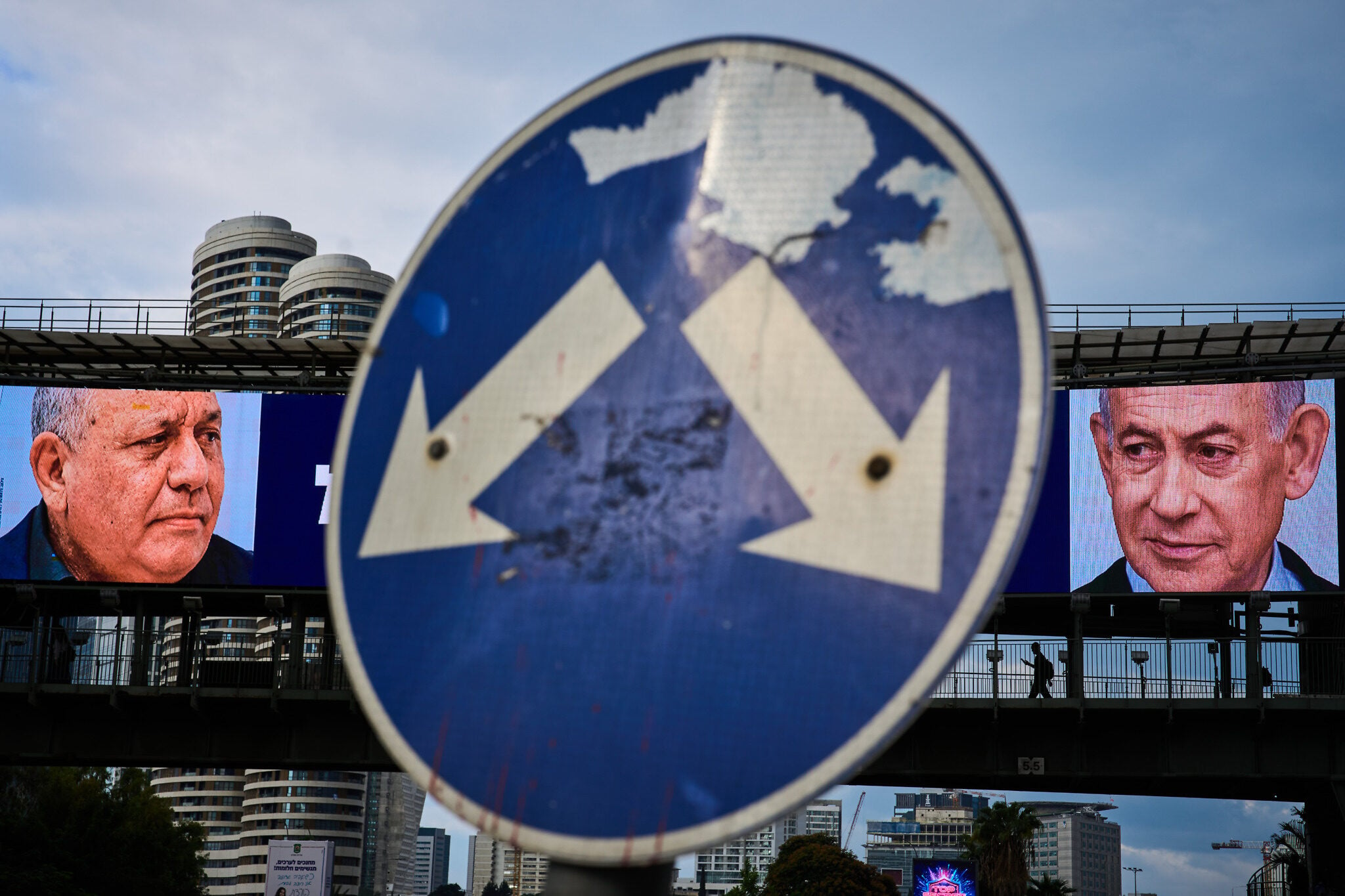
Gadi Eisenkot and Yashar Party pursue legislative bypass for inquiry
There is a majority for change,
protesters chanted in Tel Aviv as Israel faced an immediate political deadlock following the October 27, 2026 legislative elections. Prime Minister Benjamin Netanyahu lost his coalition’s parliamentary majority, leaving the incumbent administration as a caretaker government while rival factions maneuver to form the next administration. The inconclusive vote yielded 53 seats for Netanyahu’s right-wing bloc, while the centrist Yashar party led by former IDF chief Gadi Eisenkot secured 48 seats in the change bloc, and Arab-majority parties captured the remaining 19 seats in the 120-seat Knesset. Ahead of the elections, President Donald Trump posted on Truth Social to endorse Netanyahu, urging Israelis to vote for the warrior
prime minister despite their soured relationship.
The Yashar party has already started drafting an amendment to the Commissions of Inquiry Law aimed at establishing a formal state commission of inquiry through a simple majority vote of the Knesset plenum. Under the proposed legislative changes reported by The Times of Israel, approval by the 120-member plenum would instantly transfer the inquiry’s mandate to the Supreme Court president, who would independently select the committee’s members and chair to investigate the October 7, 2023, Hamas massacre.
Establishing a state commission faces hurdles under existing Israeli law, which currently requires the process to be established by a vote of the Knesset plenum.
Knesset Power Shift Challenges Caretaker Government
Netanyahu’s bloc managed to win 53 seats, while the bloc led by opposition leader Gadi Eisenkot managed to win 48 seats and Arab-led parties won the remaining 19 seats.
Conversely, the anti-Netanyahu change bloc and Arab-majority factions command 67 combined seats in the parliament. Although these parties cannot easily form a unified government together, their combined numerical strength allows them to challenge Netanyahu’s caretaker administration across every parliamentary front.
Public Demonstrations and Prediction Markets React to Deadlock
While left-wing Democrats leader Yair Golan met with Raam leader Mansour Abbas to discuss cooperation, right-wing Yisrael Beytenu leader Avigdor Liberman stated on Facebook that his party would not enter a coalition relying on Arab lawmakers. Yisrael Beiteinu will not be there,
he wrote on Facebook on Friday. Meanwhile, Netanyahu condemned potential collaboration with Arab parties as disastrous for the country.
Prediction markets have reacted sharply to the electoral deadlock. Data from the federally authorized platform Kalshi shows Eisenkot leading with an 80% probability of receiving the first government-formation mandate, while Netanyahu’s probability dropped to 24%, according to Benzinga.

President Herzog Must Task Government Formation by November 11
Official election results must be certified and presented to President Isaac Herzog by November 4. Herzog is required to task an incoming Knesset member with forming a new government by November 11. The designated candidate will have 28 days to build a coalition, with a possible 14-day extension before the mandate expires.
Protests and Counter-Protests Erupt Over Potential Arab-Party Alliance
It’s the Right, or Palestine,
they chanted, repeating a slogan from Netanyahu’s campaign. The two Arab parties are for Hamas,
said Rebecca Schindler, 60.
Disclaimer: Kalshi and Benzinga have an existing data collaboration agreement.