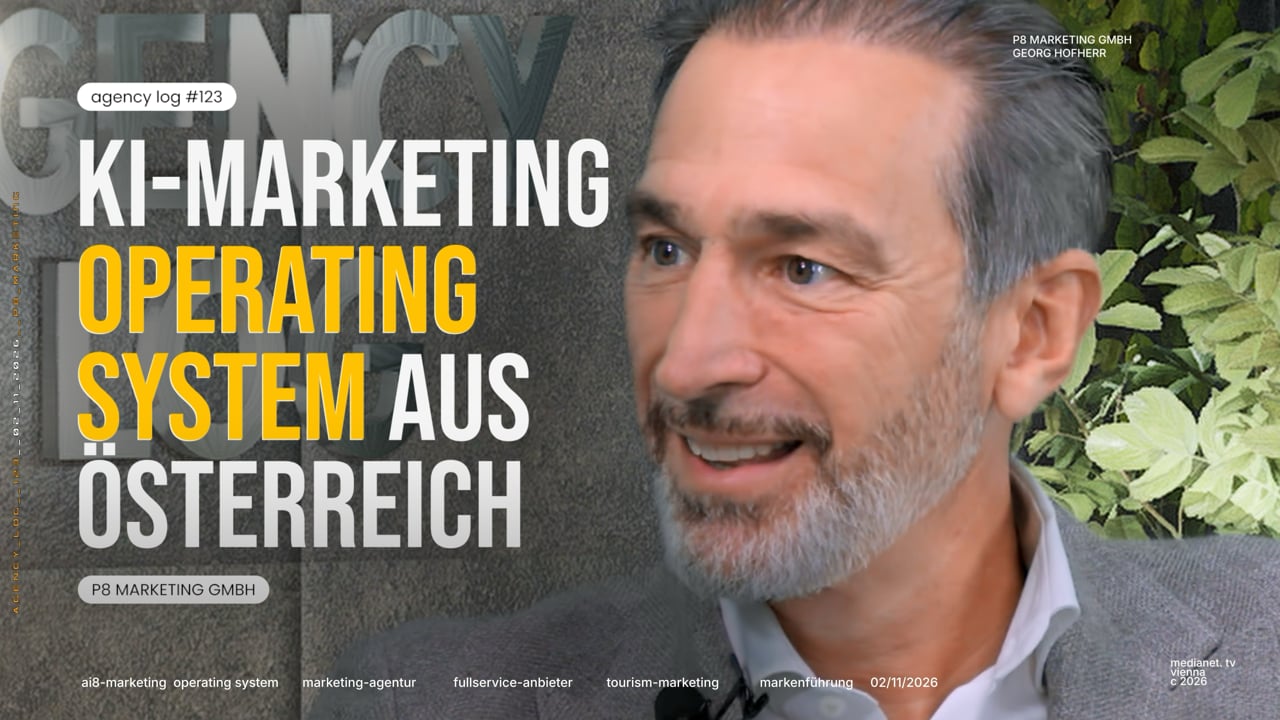
P8 marketing GmbH is developing ai8 marketing operating system
P8 Marketing GmbH is developing a marketing operating system named AI8 to integrate corporate knowledge, artificial intelligence applications, and human expertise, medianet.at reported.
Building an AI Operating System for Corporate Marketing
Artificial intelligence alters not only the production of texts and images but also the organization of marketing departments. Georg Hofherr, founder and managing director of P8 Marketing GmbH with offices in Vienna, Salzburg, and Innsbruck, explained how these workflows can be bundled during an appearance on the medianet-TV format “agency log” in conversation with publisher Chris Radda. While large AI providers dominate general content creation through their investments, P8 concentrates on company-specific work processes. The agency is building AI8 to combine corporate knowledge, AI applications, and human expertise.
“KI erstellt Content oder gewisse Distributionskanäle werden damit gesteuert, aber der Mensch, der Experte, bedient dieses system,” Hofherr stated. The goal is to better coordinate marketing and sales communication and make their impact visible within the company.
Multi-Brand Governance Models Ensure Structured Data and Expert Control
A central prerequisite for the system involves structured data. A multi-brand governance model allows information for the overall enterprise, individual business units, and product brands to be stored centrally. Overarching guidelines can be passed down while specific content gets added at each respective level. This structure accommodates situations where corporate public relations follows different requirements than a product description.
Fachliche control remains decisive throughout the process. Hofherr referred to this framework as an “Expert in the Loop,” where specialists examine and approve results. Modifications flow back into the central knowledge base to improve future drafts. The system also maps different responsibilities and approval hierarchies, keeping knowledge available across the organization rather than trapped within individual employees and their personal AI tools.
AI8 Integrates Language Models with Customer Databases and Training
Technically, AI8 relies on utilizing diverse language models alongside open interfaces connecting to customer databases or product information systems. The implementation process incorporates workflow analysis, data quality evaluation, and determinations regarding task automation. Employee training sessions managed through the AI8 Academy aim to support daily application.
Discoverability in AI-driven search environments presents another primary focus. Traditional websites built solely for human readers must adapt to become understandable for AI chatbots, requiring clearly structured information and direct answers to specific user questions. In the tourism sector, practical details such as pet policies directly influence whether a hotel appears in specific queries. Hofherr anticipates a renaissance for qualitative, editorial content and classical public relations as publications in recognized media increase visibility in AI-driven searches.