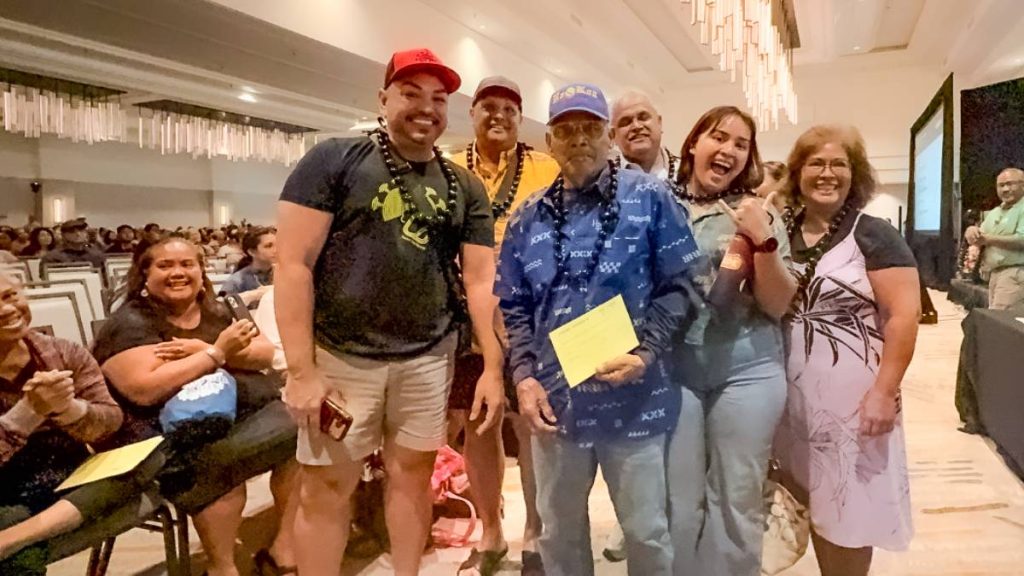
Hawaiian Home Lands hands out 832 leases on Kauaʻi
State housing officials on Kauaʻi handed out 832 residential homestead leases for planned communities in Hanapēpē and Līhuʻe on October 31, 2026, significantly shrinking a waiting list that had kept thousands of native Hawaiians waiting for decades, kauainownews.com reported.
The Halloween Lease Distribution at the Royal Sonesta
The event took place at a packed ballroom at the Royal Sonesta Kaua‘i Resort in Līhuʻe. For applicants like 38-year-old Pakala resident Trinity Adams, who has spent seven years on the Hawaiian Home Lands waiting list, the gathering brought long-awaited relief.
“It’s so emotional because my kids are gonna finally have a home,” Adams said, attending alongside her young daughter. “It’s hard. I’ve been homeless before. I actually don’t even have a place of my own right now; I’m staying with my mom.”
Adams was one of more than 1,400 applicants who received letters regarding the distribution. The 832 leases offered by the State Department of Hawaiian Home Lands represent nearly half of the 1,712 applicants who sat on the Kauaʻi residential waiting list as of June 2025.
The state Department of Hawaiian Home Lands is offering beneficiaries 832 leases for homesteads on Kauai largely slated for development in the coming years.Read more: https://t.co/YKZ24xOWaH
Two Major Housing Projects on Former Grove Farm Land
The awarded leases cover two distinct developments on the island. The Hanapēpē project includes 82 single-family home lots, while the larger Līhu‘e development encompasses 750 single-family homestead lots.
The Līhuʻe site sits on approximately 260 acres of former Grove Farm land acquired by the Department of Hawaiian Home Lands in December 2025. Both housing projects remain years away from complete construction. Under the rules of the homestead program, recipients pay $1 a year for their land lease but must finance and build or buy their own homes.
Funding Sources and Historic Context Behind the Wait
Kari Watson, director of the Department of Hawaiian Home Lands, pointed to a massive influx of state funding as the catalyst for the current push. Following the passage of Act 279, lawmakers appropriated $600 million in general state funds in 2022 to tackle the state’s sprawling waiting lists.
Watson noted that the money has propelled about 22 projects across Hawaiʻi, focusing on infrastructure installation and vertical construction through various tax credit strategies. The overarching framework stems from the federal Hawaiian Homes Commission Act of 1920, signed by President Warren G. Harding on July 9, 1921. Spearheaded by Prince Jonah Kūhiō Kalaniana‘ole, the legislation aimed to return native Hawaiians to trust land to foster self-sufficiency and community connection.
“Prince Kūhio’s vision was to return his people because he felt that only by doing that, but more importantly, to their culture, they could reconnect as a community,” Watson told the gathering.
Officials Address Decades of Waiting for Hawaiian Homes
Rep. Jill Tokuda, Kaua‘i Mayor Derek S.K. Kawakami, County Council members, and members of the Hawaiian Homes Commission.
“I know that behind every single letter is a family and a story and years, if not decades, generations of waiting for the chance to call this place home,” Tokuda said, noting that the oldest applications date back to the 1970s. When she asked how many attendees had applied during that decade, a handful of residents raised their hands.
State House Rep. Luke Evslin pledged to push through legislation ensuring that the designated land and nearby schools transform into functional housing as quickly as possible. Mayor Kawakami, reflecting on his time in office, described the mass lease distribution as a momentous occasion for the people of Kauaʻi and Niʻihau.
Recipients face strict hereditary rules following the award. Beneficiaries must possess at least 50% Hawaiian blood. If a lessee dies, the lease can pass to a family member with at least 25% Hawaiian blood, though successors cannot get on a waiting list in place of a beneficiary relative who dies without a lease.