Fundación Juan March Opens ‘La transición estética’ Exhibition
The Fundación Juan March opened “La transición estética. España, 1960-2020” in Madrid on October 16, 2026, launching an ambitious exhibition that examines how the Spanish public encountered international contemporary art after decades of Francoist isolation.
Running until January 10, 2027, at the institution’s Castelló street headquarters, the free exhibition presents seventy-one case studies of foreign artists and their reception in Spain. Curated by José María Parreño, Germán Labrador Méndez, and Manuel Fontán del Junco, the project explores the friction between social transformations and political structures from the 1960s onward.
Charting Three Decades of Cultural Lag
According to Manuel Fontán, director of museums and exhibitions at the foundation, the core premise focuses on how the Spanish public received works arriving with a three-decade delay rather than merely cataloging who arrived and when. Before 1985, virtually no one in Spain had seen work by Marcel Duchamp, who died in 1968. Similarly, Pablo Picasso’s works reached Spain through private galleries in the late 1950s and early 1960s because the regime had institutionally sidelined him.

The exhibition brings together seventy-one international figures and explores the influence their works had on some 200 Spanish artists, featuring creations by Kandinsky, the Russian avant-gardes, surrealists like Meret Oppenheim, Maruja Mallo, and Remedios Varo, alongside the Bauhaus figures Gunta Stolzl and Anni Albers, Henri Matisse, Paul Klee, and Marina Abramović. The retrospective also documents the presence of the neoplasticists and Giacometti.
Crowd Sizes and Sales Vary Across Modern Exhibitions
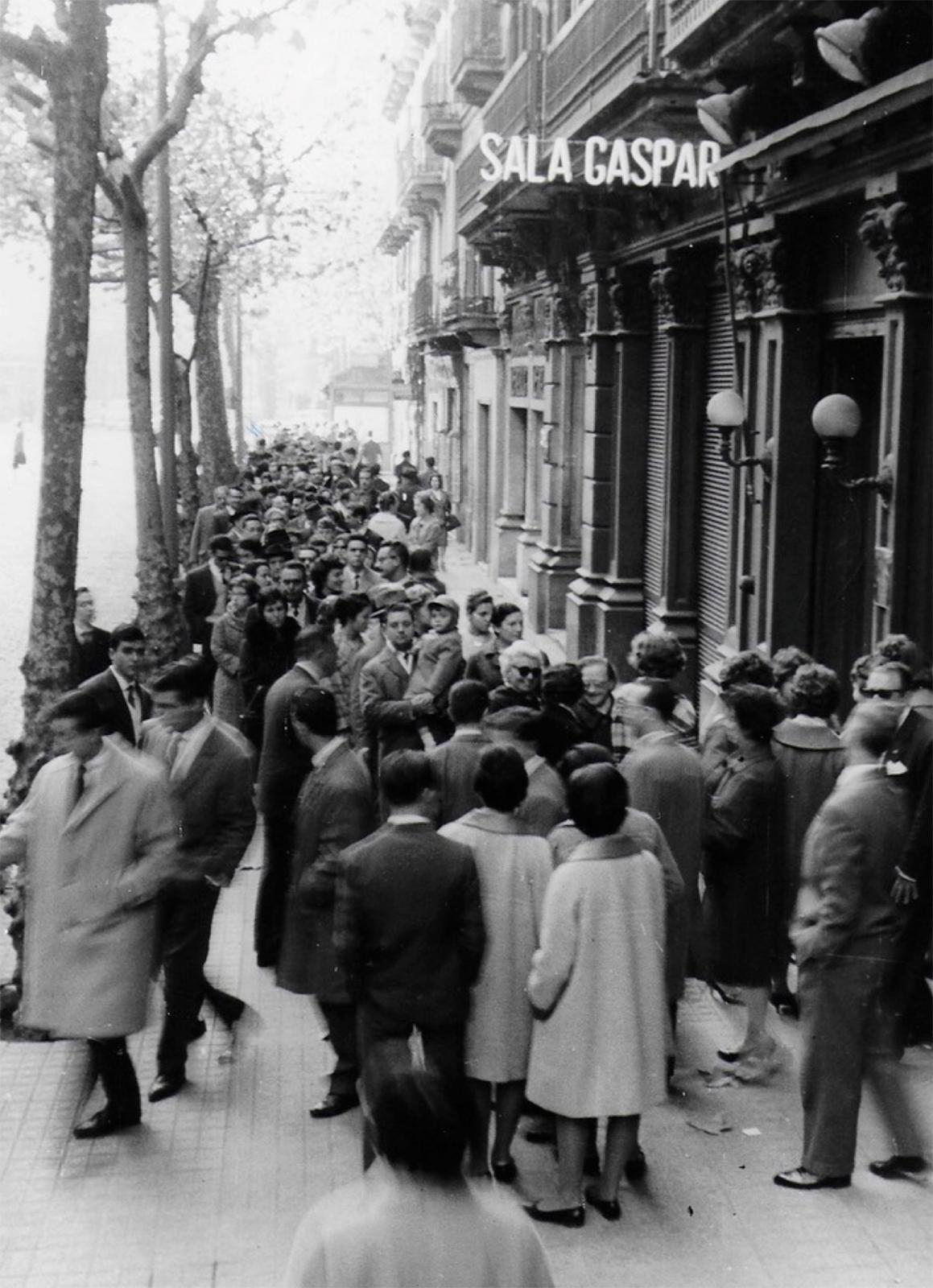
The historical record shows stark contrasts in how early modern exhibitions fared. In 1960, a presentation of just thirty Pablo Picasso paintings at Barcelona’s Sala Gaspar drew such massive crowds that the city council had to assign guards to control access. Seventeen years later, however, a Juan Gris exhibition at the Galería Theo in 1977 failed to sell a single piece.
By January 1983, the cultural climate shifted sharply as pop art established a foothold in Madrid. Andy Warhol opened an exhibition at the Galería Fernando Vijande—where he portrayed the gallerist—while Roy Lichtenstein launched an exhibition at the Fundación Juan March, located just a street away.

Documenting the Shift Through Media and Film
The exhibition relies on more than just paintings and sculptures, incorporating books, periodicals, fanzines, records, cassettes, photographs, and audiovisual materials to trace how radio, television, film, and printed press interpreted incoming artistic currents. José María Parreño emphasized that the project does not construct a visual history of the Transition, but rather documents a transition of visual history itself.
A documentary film about Spain's cultural transitions is scheduled, featuring archival footage, exhibition recordings, and commentary from specialists.