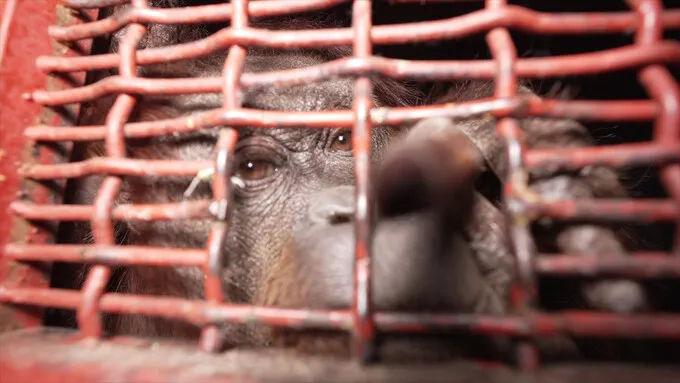
Animal rights groups demand sanctuaries for South Korea’s great apes
As of August, a total of 775 primates lived in captivity across South Korean exhibition facilities, with 46 classified as great apes, including gorillas, chimpanzees, orangutans, and gibbons, according to data from the Climate, Energy and Environment Ministry cited by the outlet hani.co.kr.
Exhibition Realities for Captive Primates
Animal rights organizations Animal Liberation Wave and Last Chance for Animals released the latest figures during a campaign at Seoul Station square marking the 48th anniversary of the Universal Declaration of Animal Rights. The groups highlighted that the 46 great apes face severe spatial constraints, with a minimum required breeding area of just 31.5 square meters—roughly 9.5 pyeong—per individual in domestic exhibition facilities. In the wild, these primates inhabit expansive forests spanning dozens of square kilometers.
Field observations conducted across 12 visits since August by Animal Liberation Wave revealed that the captive apes spent most of their time lying down or sitting aimlessly. Alex, a 39-year-old chimpanzee housed at the Dalseong Park in Daegu, spent extensive periods alone on a concrete floor. Meanwhile, Jurang, an 11-year-old orangutan at Aramaru in Sacheon, Gyeongsangnam-do, was observed moving away to evade the gaze of visitors.

Individual Histories of Isolation
Several individual primates have endured decades of isolation within exhibition networks. Gorina, the sole remaining gorilla in South Korea at 49 years of age, has resided at Seoul Grand Park since its opening in 1984, spending over four decades at the facility. Following the deaths of her companion gorillas, she now spends her senior years without any conspecifics. Orang’s journey includes a transfer last year from Gyeonggido Goyang to the Sacheon facility, keeping the primate within exhibition circuits after being the subject of a 2015 campaign by KARA to end animal shows.
The Universal Declaration of Animal Rights, proclaimed on October 15, 1978, at UNESCO headquarters in Paris, states in its tenth article that any use of animals for human recreation runs counter to animal dignity. Nearly fifty years later, advocacy groups point out that domestic great apes remain entirely confined to exhibition roles.
Demands for Sanctuaries and Policy Shifts
The organizations staging the Seoul Station demonstration emphasize that minor facility upgrades do not resolve the welfare issues of captive great apes. Lee Ji-yeon, representative of Animal Liberation Wave, stated that these animals require an end to exhibition rather than altered enclosures, pointing out that they possess individual personalities, memories, and complex social ties.
The groups called upon the government and local authorities to halt the import and breeding of new great apes for exhibition purposes and to phase out their public display. They specifically urged officials to establish a sanctuary capable of providing immediate, appropriate care for four prominent individual apes: Alex the chimpanzee, Gorina the gorilla, and orangutans Orang and Jurang. Citizens can view further details and participate in an ongoing petition through the Animal Liberation Wave website.
Disclaimer: The views and cultural analyses presented in this article are for informational and entertainment purposes only. Information regarding legal disputes or financial data is based on available public records.