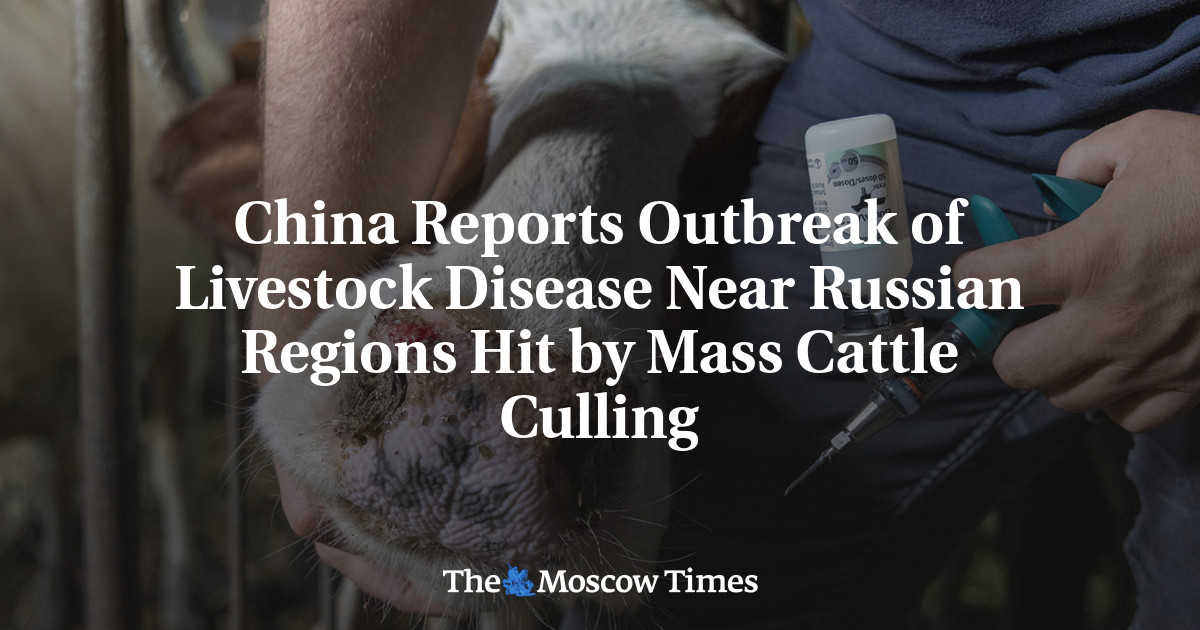
Foot-and-Mouth Disease Outbreak in China Sparks Cross-Border Concerns
China is culling livestock and tightening border controls in Xinjiang and Gansu provinces following a foot-and-mouth disease outbreak. The detection of the rare SAT-1 serotype, likely imported from abroad, coincides with massive cattle culls in Russia’s Altai region, sparking international concerns over a wider, unconfirmed regional epidemic.
The agricultural security of Central Asia is currently facing a critical inflection point. What began as isolated reports of cattle losses in the Russian interior has evolved into a cross-border biological crisis that threatens the stability of livestock markets across multiple jurisdictions. This represents not merely a local veterinary issue; it is a geopolitical friction point where official narratives and biological realities are clashing in real-time.
The stakes are immense. When a highly contagious disease enters a region with high livestock density, the economic ripple effects extend far beyond the farm gate. We are looking at potential trade embargoes, collapsed local economies in border provinces, and a desperate race to update vaccine protocols that are currently obsolete.
The SAT-1 Anomaly: A Vaccine-Resistant Threat
The core of the current crisis lies in the specific nature of the pathogen. Chinese officials have identified the SAT-1 serotype of foot-and-mouth disease (FMD). For the uninitiated, FMD is not a single entity but a complex of various strains, or serotypes, that require specific vaccines for protection.
Industry analysts confirm this is the first time the SAT-1 serotype has been detected within China. This particular strain is endemic to Africa and has been aggressively expanding its footprint since 2025, moving through the Middle East, West Asia, and South Asia. The danger here is a total lack of domestic immunity.
- Existing Protections: China’s current domestic vaccines are designed for the O and A serotypes, which are the most common globally.
- The Gap: These existing vaccines provide zero protection against the SAT-1 strain.
- The Impact: With no effective vaccine available on the ground, the only immediate tools for containment are culling and strict quarantine.
This biological gap leaves the livestock populations of Xinjiang and Gansu dangerously exposed. For producers, the solution is no longer about routine maintenance but about emergency intervention. Many are now seeking specialized livestock health consultants to implement bio-security measures that can withstand a vaccine-resistant strain.
The Altai Connection and Russian Ambiguity
The geography of this outbreak is too precise to be coincidental. The infection was detected in Xinjiang, which shares a narrow but critical frontier with the Siberian republic of Altai. This is the same region where Russia has been conducting massive, systemic cattle culls for months.
Since February, Russia has culled approximately 90,000 head of cattle across nine regions. Analysts estimate that roughly 80% of these losses occurred within the Altai region. Whereas the Moscow Times reports that Russian authorities attribute these losses to rabies and pasteurellosis, the international community is skeptical.
The U.S. Department of Agriculture (USDA) foreign service has suggested that the scale of the culling, combined with Kazakhstan’s recent ban on Russian animal and meat imports, points toward an unconfirmed FMD outbreak in Russia. Russia’s agriculture watchdog has dismissed these claims, but the biological evidence appearing in China tells a different story.
“The current outbreak threatens a large region and prevention and control are under severe pressure,” says Rosa Wang, an analyst from Shanghai JC Intelligence Co.
This discrepancy in reporting creates a “blind spot” for regional farmers. When a neighboring state denies the presence of a disease that is actively crossing its border, the ability to prepare is stripped away. This lack of transparency transforms a manageable health crisis into a regional emergency.
Containment Strategies in Xinjiang and Gansu
The Chinese response has been swift and aggressive. The Ministry of Agriculture reported that the outbreak hit herds totaling 6,229 cattle, with 219 testing positive for the variant. The immediate reaction has been a combination of eradication and isolation.
Officials have ordered widespread culling and disinfection measures across Xinjiang and the neighboring Gansu province. Beyond the veterinary response, the state has shifted into a security posture. Border patrols have been stepped up to prevent the disease from entering via smuggling or the illegal transportation of livestock.
Illegal trade is the primary vector for these types of outbreaks. When formal trade channels are restricted by disease or politics, “grey market” livestock movement increases, often bypassing the very checkpoints designed to stop the spread of pathogens. This creates a paradoxical situation where tighter controls can sometimes drive the disease further underground.
For businesses involved in the movement of goods across these borders, the logistical landscape has shifted overnight. Navigating these modern restrictions requires more than just a driver; it requires secure supply chain managers who can ensure compliance with emergency health protocols to avoid massive fines or seizures.
Economic Fallout and Legal Implications
The emergence of SAT-1 in China does more than kill cattle; it disrupts the macro-economic flow of agricultural trade in Asia. The cost of culling 219 animals is negligible, but the cost of the “pressure” mentioned by Rosa Wang—the potential for a region-wide shutdown—is astronomical.
We are seeing the beginning of a trade domino effect. Kazakhstan has already moved to ban Russian imports. If China formally links its outbreak to Russian livestock, we could see a total collapse of animal trade between the two allies in the northwest. This would leave thousands of farmers in the Altai and Xinjiang regions without a viable market for their herds.
The legal ramifications are equally complex. International trade laws and sanitary and phytosanitary (SPS) agreements govern how countries respond to these outbreaks. When a country is suspected of concealing a disease, it can lead to protracted legal battles at the World Trade Organization (WTO). Local exporters and agricultural conglomerates are now consulting international trade lawyers to shield their assets and navigate the sudden imposition of import bans.
The reality is that the biological border is porous. No matter how many patrols are added to the Xinjiang frontier, a virus does not carry a passport.
As China fast-tracks new vaccines to combat the SAT-1 strain, the world is watching to see if Russia will finally acknowledge the scale of its own crisis. Until there is transparency, the “pressure” on the region will only mount, leaving the livestock industry in a state of precarious vulnerability. In an era of globalized trade, a hidden outbreak in one region is a pending disaster for all others. Those who wait for official confirmation before securing their operations are already too late; the only real defense is the foresight to partner with verified professionals who can navigate the intersection of veterinary science, international law, and border logistics.