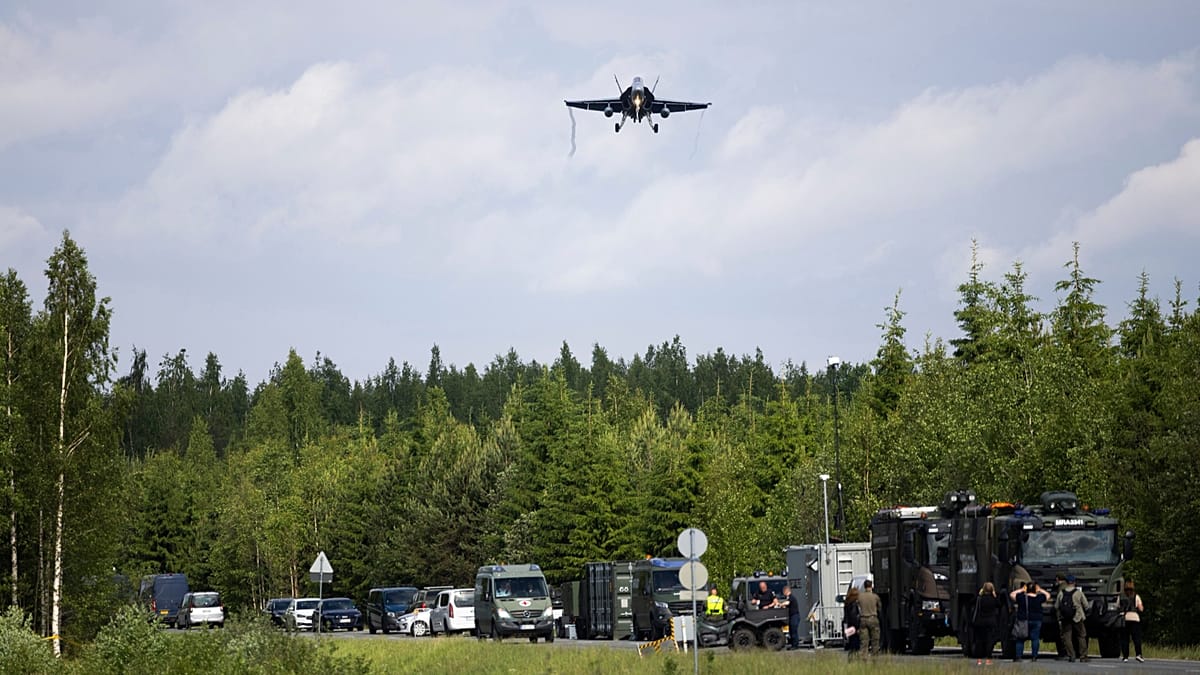
Finland Suspects Russian Plane of Violating Its Airspace
<>
The Scope of the Investigation
Defense Minister Antti Hakkanen confirmed the incident late Thursday, emphasizing that the government treats every suspected breach of its territorial integrity with extreme caution. No further details regarding the specific type of aircraft or the exact location of the potential violation have been released, as the investigation remains in its preliminary phase.
Records from the Finnish Ministry of Defense indicate that officials suspected two separate Russian military aircraft of entering Finnish airspace during May and June of this year. In each of those instances, the government summoned the Russian charge d’affairs to formally register a diplomatic protest.
Geopolitical Context and NATO Integration
The escalation in airspace incidents coincides with Finland’s definitive shift in defense policy. After decades of military non-alignment, the nation formally joined the NATO alliance in April 2023, a move prompted by the Russian invasion of Ukraine in February 2022.
Historical precedents underscore the tension. In May 2022, a Russian Mi-17 helicopter violated Finnish airspace by approximately four to five kilometers, an incident that occurred while the country was still finalizing its NATO bid. Earlier that same year, in April 2022, a civilian transport plane operated by the Russian military also briefly entered the country’s airspace.
“Every suspected violation of air space is taken seriously,” said Defense Minister Antti Hakkanen. “An investigation is underway.”
Operational Risks and Infrastructure Security
Strategic Deterrence in the Baltic Region
The pattern of behavior is not limited to Finland. Throughout the Baltic Sea region, Sweden has also reported multiple instances of Russian aircraft entering its airspace, including fighter jets near the strategically vital island of Gotland and spy planes operating near southern naval bases.
Cyberattacks and electronic interference remain primary concerns for municipal governments and public utilities.
Looking Toward Long-Term Stability
As Finland navigates its role as a frontline NATO member, the frequency of these incidents highlights the necessity of constant vigilance.

For those managing assets or personnel in regions prone to sudden geopolitical shifts, the situation underscores the need for proactive security measures.