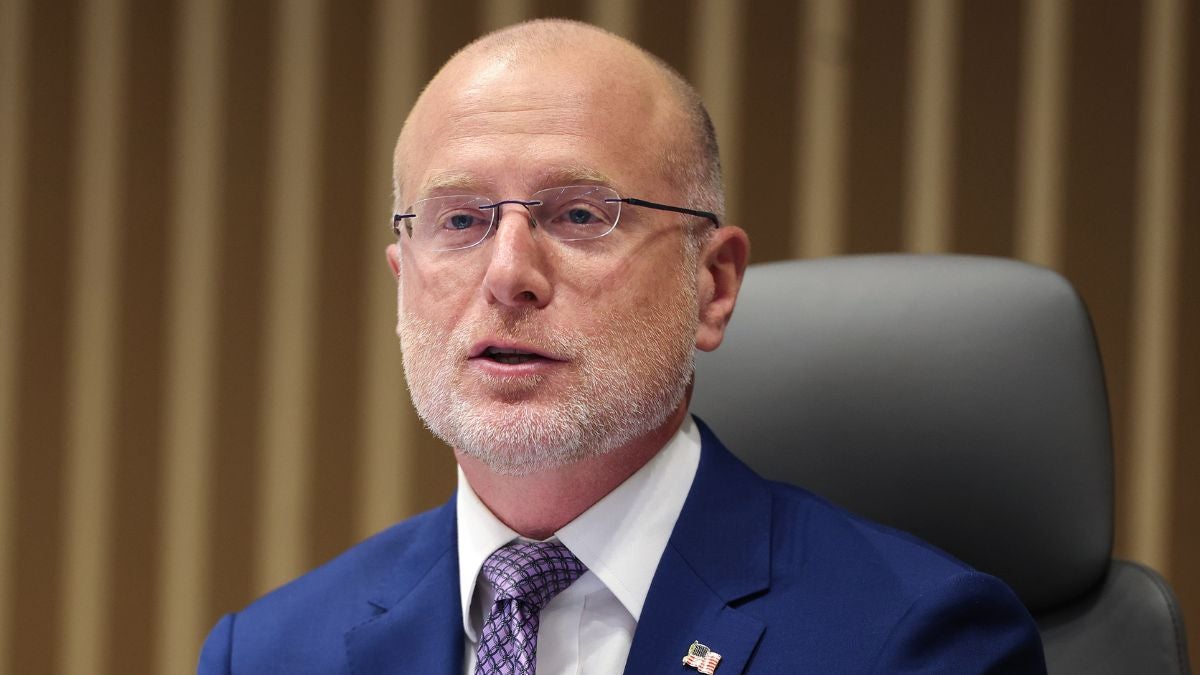
FCC Chairman Brendan Carr Boasts Trump Winning War on Fake News Media at CPAC
FCC Chairman Brendan Carr Declares Victory in War on Legacy Media Amidst $110 Billion Consolidation
Speaking at CPAC 2026, FCC Chairman Brendan Carr asserted that President Trump is “winning” against the “fake news media,” citing the defunding of public broadcasters and the impending consolidation of CNN under new ownership. This regulatory aggression coincides with a massive $110 billion merger between Warner Bros. And Paramount, signaling a seismic shift in media ownership structures and raising urgent questions regarding First Amendment protections and antitrust enforcement in the digital age.
The atmosphere inside the Grapevine, Texas convention center felt less like a policy discussion and more like a victory lap for a specific ideological conquest of the airwaves. When FCC Chairman Brendan Carr took the stage, he wasn’t discussing spectrum allocation or net neutrality; he was tallying scalps. His declaration that the administration is “winning” against the legacy press isn’t just political rhetoric—it is a stark indicator of a regulatory environment that has shifted from neutral oversight to active participant in the culture wars. For the entertainment industry, this represents a fundamental alteration of the risk landscape.
Carr’s list of casualties—PBS and NPR defunded, high-profile anchors like Jim Acosta and John Dickerson ousted, and Stephen Colbert departing late-night—reads like a restructuring plan executed with political precision. However, the most significant data point in Carr’s speech wasn’t a personnel change; it was the confirmation of the $110 billion Warner Bros.-Paramount deal. With David Ellison’s Paramount-Skydance poised to acquire CNN, the industry is witnessing the conclude of the traditional firewall between newsrooms and political donors. Ellison’s known ties to the President suggest that the “new ownership” Carr celebrates is not merely a business transaction but a realignment of corporate governance with executive branch priorities.
This level of consolidation creates a massive liability for legacy brands. When a network’s license renewal becomes contingent on “correcting course” regarding war coverage, as Carr recently threatened broadcasters over Iran reporting, the brand equity of independent journalism evaporates. Advertisers hate uncertainty, and nothing generates uncertainty like a regulator who views the First Amendment as a negotiable contract clause. In this climate, media conglomerates cannot rely on standard public relations playbooks. The immediate necessity for these embattled networks is to retain elite crisis communication firms and reputation managers capable of navigating the treacherous waters between regulatory compliance and editorial integrity. The cost of silence is now higher than the cost of conflict.
The human capital exodus is equally telling. The departure of established voices like Joy Reid and Chuck Todd suggests a talent market in flux. High-profile journalists and showrunners are no longer just negotiating backend gross points; they are negotiating moral clauses and editorial independence guarantees. This shift forces talent agencies to pivot from standard contract negotiation to complex risk assessment. As the “fake news” narrative gains regulatory teeth, the value of a journalist’s personal brand becomes both their greatest asset and their biggest liability. Top-tier talent agencies and management firms are now tasked with insulating their clients from political fallout while securing lucrative exits or transitions to unregulated digital platforms.
“The regulatory capture we are witnessing isn’t just about fines; it’s about the chilling effect on content creation. When the FCC Chairman publicly catalogs the firing of journalists as a victory, it signals to every showrunner and news director that dissent has a price tag.”
The financial implications extend beyond the newsroom. The merger activity surrounding CNN and CBS indicates a broader trend of defensive consolidation. Smaller independent producers and digital news outlets lack the balance sheets to weather potential license revocations or targeted audits. According to recent filings analyzed by Variety, the legal spend for major media entities has increased by 40% year-over-year, largely driven by compliance and defense against regulatory overreach. This creates a barrier to entry that favors only those entities aligned with the current administration’s worldview.
the threat to broadcast licenses mentioned by Carr regarding the Iran War coverage introduces a new variable for production insurance and liability. Networks are now operating in a zone where editorial decisions could trigger federal review. This necessitates a robust legal shield. Media companies are increasingly turning to specialized media law and litigation firms to draft airtight compliance protocols that protect their licenses without completely neutering their news divisions. The legal strategy has shifted from reactive defense to proactive fortification.
Jimmy Kimmel’s recent suspension and subsequent clash with the FCC highlights the volatility facing late-night television. Once a sanctuary for political satire, the genre is now on the front lines of a regulatory battle. Kimmel’s critique of Carr as an “attack schnauzer” underscores the personal nature of this conflict. When the regulator becomes a character in the comedy monologue, the line between oversight and retaliation blurs. For the hospitality and event sectors that host these productions, the political temperature in Los Angeles and New York directly impacts logistics and security planning. High-profile productions now require regional event security and A/V production vendors who understand the nuances of protecting talent in a politically charged environment.
The “mission accomplished” flag Carr hesitated to raise may yet be planted, but the terrain is scorched. The consolidation of CNN under Ellison, the defunding of public media, and the weaponization of the FCC create a media ecosystem that is less diverse and more susceptible to state influence. For the industry professionals reading this, the takeaway is clear: the era of benign neglect is over. Whether you are a network executive, a talent agent, or an independent producer, the regulatory environment is now an active competitor. Navigating it requires more than just creative instinct; it demands a strategic alliance with legal and PR professionals who understand that in 2026, the most dangerous script isn’t the one you write—it’s the one the government tries to enforce.
*Disclaimer: The views and cultural analyses presented in this article are for informational and entertainment purposes only. Information regarding legal disputes or financial data is based on available public records.*