Favipiravir vs Ribavirin for Lassa Fever: Phase 2 Trial Highlights Safety and Treatment Potential in Nigeria
Lassa fever continues to pose a significant public health challenge across West Africa, characterized by high morbidity and a historically limited therapeutic arsenal. The recent publication of a Phase 2 clinical trial suggests a pivotal shift in the management of this viral hemorrhagic fever, positioning favipiravir as a viable, well-tolerated alternative to the current standard of care.
Key Clinical Takeaways:
- A randomized, open-label Phase 2 trial in Nigeria demonstrates that favipiravir is safe and well tolerated for patients with mild-to-moderate Lassa fever.
- The findings support the further clinical optimization of favipiravir as a treatment alternative to ribavirin.
- The drug’s efficacy is rooted in its ability to inhibit the viral RNA-dependent RNA polymerase, disrupting the replication cycle of the Lassa virus.
The clinical management of Lassa fever has long been hampered by the limitations of ribavirin, the traditional first-line antiviral. While ribavirin has been utilized for decades, its clinical utility is often offset by significant hematological toxicity, most notably dose-dependent hemolytic anemia, which can complicate the recovery of already critically ill patients. This therapeutic gap creates an urgent need for antiviral agents that can achieve potent viral suppression without inducing severe systemic adverse effects.
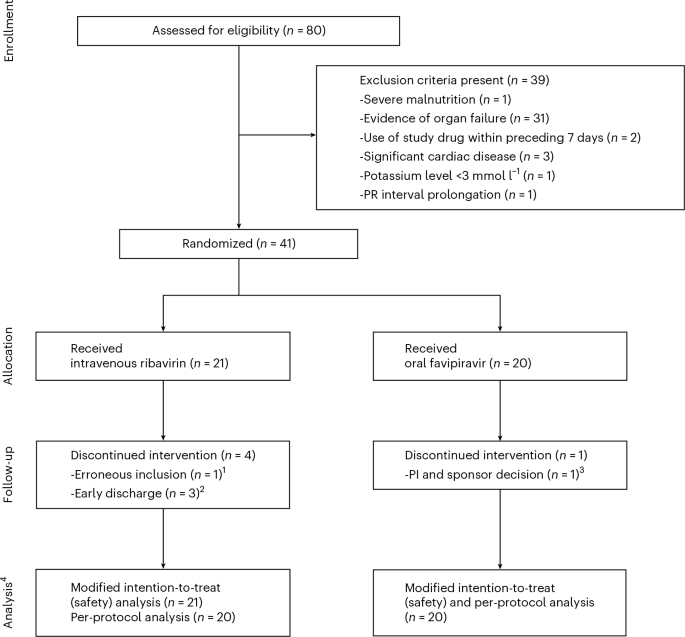
Addressing this gap, a study published in Nature Medicine on May 15, 2026, provides critical evidence regarding the safety and tolerability of favipiravir. The trial, conducted as an open-label, randomized controlled Phase 2 study in Nigeria, focused specifically on patients presenting with mild-to-moderate cases of the disease. By comparing favipiravir directly against ribavirin, researchers sought to determine if this pyrazinecarboxamide derivative could offer a superior safety profile while maintaining clinical efficacy.
The Pathogenesis of Lassa Fever and the Need for Novel Antivirals
Lassa fever is caused by the Lassa virus, a single-stranded RNA virus of the Arenaviridae family. The pathogenesis involves the virus targeting macrophages and dendritic cells, leading to a widespread inflammatory response and subsequent vascular leak. In severe cases, this progression results in capillary leak syndrome, pulmonary edema, and multi-organ failure. Because the virus replicates rapidly within the host, the window for effective intervention is narrow, requiring antivirals that can be administered early and tolerated over a sustained course.
The current reliance on ribavirin is problematic not only due to its toxicity but also because of varying efficacy rates depending on the timing of administration. For healthcare systems in endemic regions, the morbidity associated with treatment side effects can be as taxing as the virus itself. This underscores the necessity of transitioning toward therapies with a more favorable pharmacokinetic profile and reduced impact on red blood cell stability.
Biochemical Mechanism: How Favipiravir Disrupts Viral Replication
Favipiravir operates as a prodrug that requires intracellular activation. Once it enters the host cell, it undergoes phosphoribosylation to become favipiravir-ribofuranosyl-5’-triphosphate. This active metabolite acts as a pseudo-purine, effectively mimicking the natural nucleotides that the virus uses to build its genetic material.
The primary target is the viral RNA-dependent RNA polymerase (RdRp), an essential enzyme that the Lassa virus uses to replicate its RNA genome. By competing with natural purines, favipiravir induces lethal mutagenesis or causes premature chain termination. This prevents the virus from producing viable progeny, thereby reducing the viral load in the patient’s system. Unlike some nucleoside analogs, favipiravir’s selectivity for viral RdRp over human polymerases contributes to its relative safety and reduced toxicity compared to older antiviral agents.
Clinical Trial Analysis: Favipiravir vs. Ribavirin
The Nature Medicine trial focused on the “safe and well tolerated” nature of favipiravir in the Nigerian patient population. The study design—randomized and open-label—allowed researchers to monitor real-time reactions and pharmacokinetic responses in a clinical setting. The results indicate that favipiravir does not produce the severe hematological disruptions associated with ribavirin, making it a promising candidate for broader implementation.

| Clinical Parameter | Ribavirin (Standard of Care) | Favipiravir (Trial Agent) |
|---|---|---|
| Mechanism of Action | Guanosine analog / RdRp inhibitor | Pyrazinecarboxamide / RdRp inhibitor |
| Primary Safety Concern | Hemolytic anemia / Hematological toxicity | Generally well tolerated in Phase 2 |
| Trial Status (Lassa Fever) | Established baseline | Phase 2 (Supports further optimization) |
| Patient Profile | Broad application | Mild-to-moderate cases (Nigeria trial) |
For clinicians managing complex viral infections, the transition from standard protocols to emerging therapies requires precise diagnostic confirmation. It is essential for patients in high-risk areas to be screened through specialized diagnostic laboratories to ensure that the viral load and disease severity are accurately mapped before initiating these potent antiviral regimens.
Regulatory Hurdles and the Path to Phase III
While the Phase 2 results are encouraging, the journey to widespread clinical adoption involves significant regulatory and logistical challenges. The “optimization” mentioned in the study refers to the refinement of dosage, administration schedules, and the identification of the ideal therapeutic window to maximize survival rates. Moving into Phase III trials will require larger sample sizes and more diverse patient cohorts to confirm that the safety observed in Nigeria is consistent across different genetic populations and viral strains.

The scaling of such a treatment also requires a robust supply chain and strict adherence to international pharmaceutical standards. As these drugs move toward regulatory approval, pharmaceutical providers and regional health ministries are increasingly collaborating with healthcare compliance attorneys to navigate the complex intellectual property and distribution laws governing antiviral medications in West Africa.
Editorial Perspective: The Future of Lassa Fever Therapeutics
The findings in Nature Medicine represent a meaningful step toward reducing the morbidity associated with Lassa fever. By proving that favipiravir is safe and well tolerated, the research opens the door to a new standard of care that prioritizes both viral clearance and patient stability. The goal is no longer just survival, but survival without the debilitating side effects of legacy treatments.
As we look toward Phase III trials, the integration of favipiravir into regional health protocols could significantly lower the burden on isolation wards and intensive care units. However, the complexity of viral hemorrhagic fevers means that drug therapy must be paired with expert clinical oversight. We strongly encourage healthcare providers and patients to consult with board-certified infectious disease specialists to stay current on the evolving guidelines for treating emerging zoonotic threats.
For further scientific exploration of these mechanisms, clinicians may refer to the PubMed database or the World Health Organization (WHO) guidelines on viral hemorrhagic fevers.
Disclaimer: The information provided in this article is for educational and scientific communication purposes only and does not constitute medical advice. Always consult with a qualified healthcare provider regarding any medical condition, diagnosis, or treatment plan.