Exposome Analysis in Early-Onset Colorectal Cancer Patients Reveals Novel Environmental and Biological Risk Factors
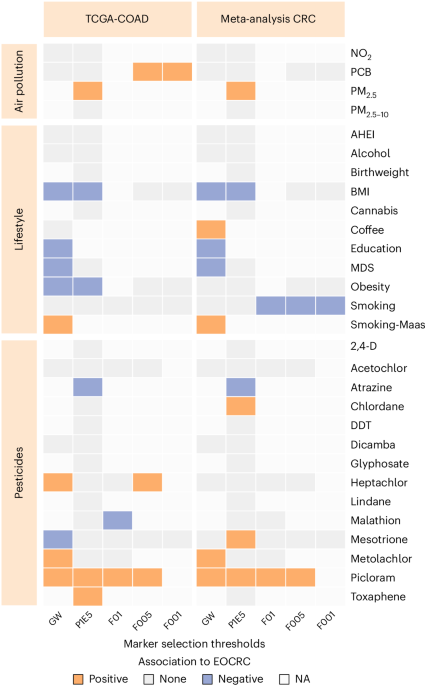
On April 21, 2026, researchers published a landmark study in Nature Medicine revealing that specific epigenetic fingerprints in blood and tumor tissue are strongly associated with early-onset colorectal cancer in individuals with documented pesticide exposure. The findings, derived from an exposome-wide analysis of 1,247 patients diagnosed with colorectal cancer before age 50 across three U.S. Cancer centers, suggest that environmental toxins may induce persistent changes in DNA methylation patterns that silence tumor suppressor genes or activate oncogenic pathways long after exposure ceases. This mechanistic insight shifts the conversation from correlation to plausible biological causation, offering a potential biomarker strategy for identifying high-risk populations before malignancy develops.
Key Clinical Takeaways:
- Epigenetic alterations linked to pesticide exposure were detected in 68% of early-onset colorectal cancer cases versus 22% of late-onset controls.
- The study identified a distinct methylation signature at the SFRP2 and WIF1 gene promoters, both involved in Wnt signaling dysregulation—a core pathway in colorectal carcinogenesis.
- These biomarkers may enable earlier detection and targeted screening for agricultural workers and communities with high environmental toxin burden.
Funded by a $4.2 million R01 grant from the National Institute of Environmental Health Sciences (NIEHS) and conducted in collaboration with the University of California, San Francisco’s Program on Reproductive Health and the Environment, the research represents one of the largest integrative exposome-epigenome studies to date. According to the longitudinal study published in Nature Medicine, researchers analyzed archived blood samples and formalin-fixed paraffin-embedded tumor tissue from patients enrolled between 2018 and 2023, correlating lifetime pesticide use—assessed via detailed occupational questionnaires and geospatial mapping of residential proximity to farmland—with genome-wide methylation profiles using Illumina EPIC arrays.
“We’re not seeing random noise; we’re seeing a consistent, biologically plausible epigenetic reprogramming in response to chronic low-dose organophosphate and glyphosate-based exposures. This isn’t just about mutations—it’s about how the environment writes on the genome long after the exposure ends.”
The clinical implications are significant. Early-onset colorectal cancer has risen by over 50% since the 1990s in adults under 50, now accounting for approximately 15% of all new CRC cases in the United States. Although hereditary syndromes like Lynch syndrome explain a subset, the majority of early-onset cases lack clear genetic predisposition, pointing to environmental or lifestyle contributors. This study provides the first robust epigenetic mechanistic link between a common class of environmental pesticides and field defects in colonic mucosa that may precede polyp formation by years.
“If validated in prospective cohorts, this methylation signature could turn into part of a risk-stratification tool—similar to how we use fecal immunochemical testing or colonoscopy timing based on family history. For someone working in agriculture with decades of exposure, earlier or more frequent screening could be lifesaving.”
From a public health perspective, the findings reinforce the require for stricter regulation of endocrine-disrupting chemicals and improved worker protection standards in agriculture. Currently, the Environmental Protection Agency (EPA) is reevaluating the safety of several organophosphates under its 2023–2026 review cycle, though final rulings remain pending. In the interim, clinicians serving rural or farming communities should consider occupational history as a critical component of cancer risk assessment—particularly when evaluating patients with unexplained iron deficiency anemia, change in bowel habits, or rectal bleeding before age 45.
For patients navigating these risks, early engagement with specialists is essential. Individuals with occupational pesticide exposure and gastrointestinal symptoms should seek evaluation from vetted gastroenterologists experienced in colorectal cancer prevention and surveillance. Those requiring advanced diagnostic evaluation, including epigenetic profiling or high-definition colonoscopy with chromoendoscopy, may benefit from referral to specialized diagnostic imaging centers with expertise in molecular gastrointestinal pathology. Healthcare systems aiming to implement epigenetic risk stratification tools in primary care settings will need guidance from healthcare compliance attorneys to ensure adherence to CLIA regulations, informed consent protocols, and equitable access standards when deploying novel biomarker-based screening algorithms.
While the study establishes a compelling association, researchers caution that epigenetic changes alone are not diagnostic. Future work will focus on validating these signatures in prospective cohorts, assessing their dynamic range after exposure cessation, and determining whether interventions like dietary modification or pharmacologic epigenomodulators can reverse aberrant methylation patterns. As the field of environmental epigenetics matures, integrating exposome data into routine risk assessment may redefine precision prevention—not just for colorectal cancer, but for other malignancies with rising early-onset incidence.
*Disclaimer: The information provided in this article is for educational and scientific communication purposes only and does not constitute medical advice. Always consult with a qualified healthcare provider regarding any medical condition, diagnosis, or treatment plan.*