
European Leaders Demand Gaza Aid Flow, Split on Palestine Recognition
UK, France, Germany Urge Israel to Lift Aid Restrictions Amidst Growing Political Divide
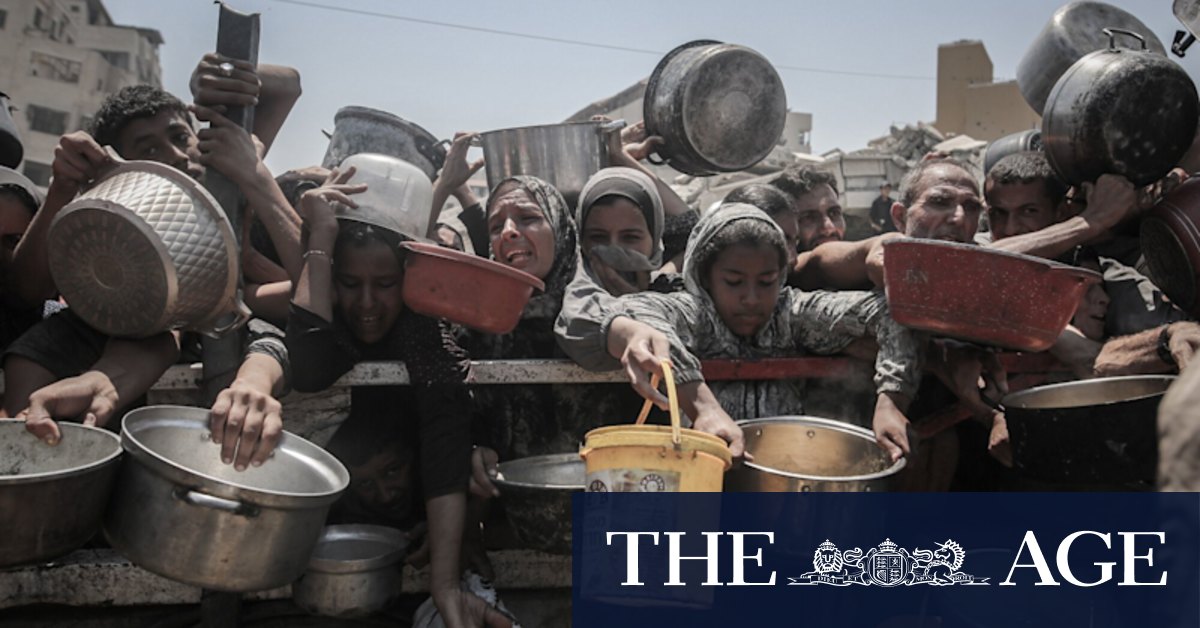
Three prominent European leaders are demanding an immediate end to restrictions on humanitarian aid into Gaza, urging Israel to allow the UN and NGOs to operate freely to combat starvation. The call highlights a widening rift among key European nations regarding the recognition of a Palestinian state.
Urgent Call for Humanitarian Access
The leaders, identified as representing major European powers, issued a joint statement asserting that Israel must “uphold its obligations under international humanitarian law.” They specifically called on the Israeli government to “immediately lift restrictions on the flow of aid and urgently allow the UN and humanitarian NGOs to carry out their work in order to take action against starvation.”
In a related development, Israeli officials announced that foreign nations would be permitted to parachute humanitarian supplies into Gaza. Jordan and the United Arab Emirates are expected to commence airlifts in the coming days, according to COGAT, the Israeli military body overseeing humanitarian affairs in the territory. British Prime Minister Keir Starmer indicated the UK would support these airdrops, pledging to do “everything we can” to deliver aid by air.
Aid Gaps and Commercial Needs
Despite efforts, the World Food Program reported delivering over 26,000 tonnes of food aid since May. However, it stressed that this volume represents a “tiny fraction” of the needs of Gaza’s two million residents. The program stated that “more than 62,000 [metric tonnes] is required every month” for basic food assistance. Furthermore, the reinstatement of commercial cargo is deemed essential for access to vital fresh produce and dairy products.
Divergent Views on Palestinian Statehood
The European leaders also jointly condemned actions by Israelis claiming land in occupied Palestinian territories. They stated that “threats of annexation, settlements and acts of settler violence against Palestinians undermine the prospects for a negotiated two-state solution.”
This stance, however, underscores a growing divergence on the issue of Palestinian statehood. French President Emmanuel Macron declared France’s intention to recognize a Palestinian state, outlining a vision that includes an immediate ceasefire, hostage release, massive humanitarian aid, and the demilitarization of Hamas. He suggested that building a viable Palestinian state, which fully recognizes Israel, would contribute to regional security.
Keir Starmer echoed the sentiment, stating that recognition of a Palestinian state “has to be one of those steps.” He emphasized that this must be part of a broader plan leading to a two-state solution and lasting security for both Israelis and Palestinians. The German government similarly views statehood as a concluding step within a broader peace framework, contingent on ensuring security for all parties.
The French government is anticipated to formalize its recognition bid at the UN General Assembly in September. This move could spark significant debate, particularly as former US President Donald Trump has previously dismissed Macron’s position. Israeli Prime Minister Benjamin Netanyahu criticized Macron’s call, arguing that a Palestinian state under current conditions would serve as a launchpad for attacks against Israel.
In Britain, Keir Starmer faces increasing political pressure from within his own party, with 110 Labour MPs signing a letter urging swift recognition of a Palestinian state. The letter, also signed by 111 MPs from other parties, cites Britain’s historical responsibility as the mandatory power in Palestine between 1923 and 1948. It argues that recognizing Palestine would validate the long-standing two-state solution policy and honor this historical commitment.
Italian Prime Minister Giorgia Meloni, however, has expressed reservations, stating that recognizing a Palestinian state should only occur concurrently with its establishment and its reciprocal recognition of Israel. As of May 2024, the United Nations Relief and Works Agency for Palestine Refugees (UNRWA) reported that nearly two million Palestinians in Gaza were in need of assistance, with severe shortages of food, water, and medical supplies.
