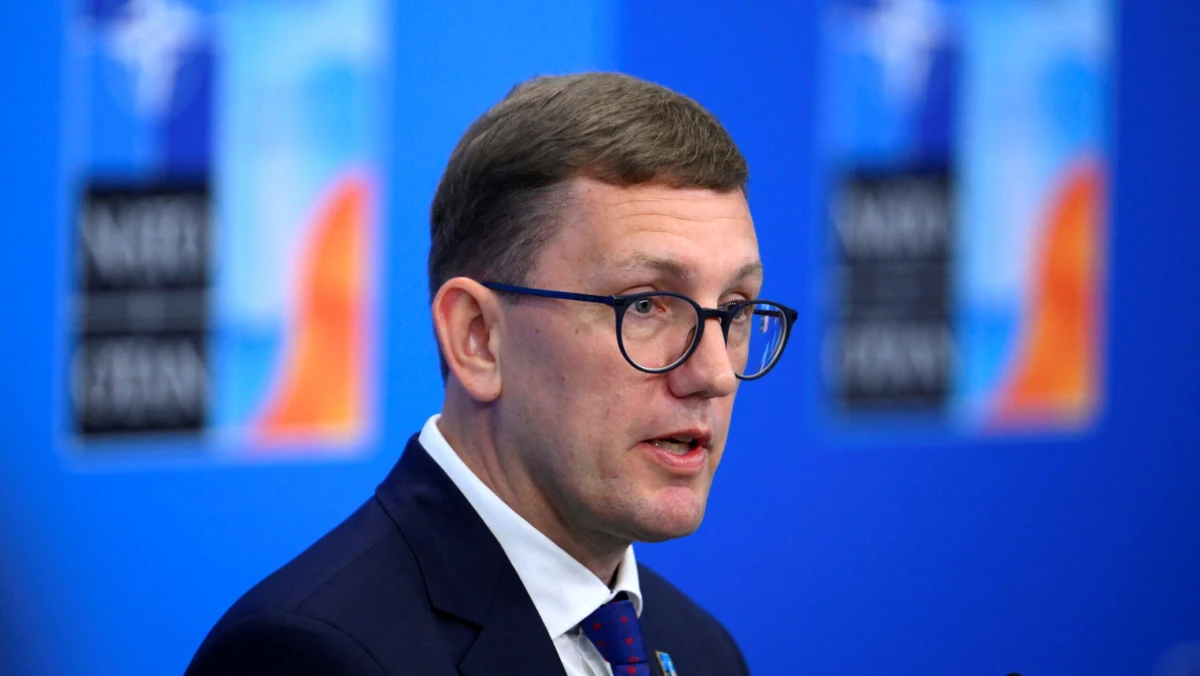
Estonian PM: Russia Knows Attacking NATO Is Not Worth the Risk
Estonian Prime Minister Kristen Michal declared on August 23, 2026, that Russia currently poses no direct conventional military threat to NATO, as Moscow recognizes the alliance’s collective strength renders an attack futile. Speaking after the “Ukraine – Northern and Baltic Eight” (NB8) summit in Kyiv, Michal cautioned that while the conventional threat is suppressed, Russia remains committed to persistent hybrid warfare and cognitive operations across the European Union.
The Deterrence Calculus: Why NATO’s Conventional Posture Holds
The assessment from Tallinn reflects a broader consensus among Baltic and Nordic leaders regarding the efficacy of NATO’s current defensive posture. According to Michal, the military and security evaluation of the alliance is “quite clear.” The Kremlin’s internal calculus regarding NATO’s military capacity has reached a threshold where the potential costs of direct confrontation outweigh any perceived strategic gains.
This stability is not accidental. It is the product of years of integrated defense planning and the hardening of the alliance’s eastern flank.
From Conventional Threats to Cognitive Warfare
While the risk of a full-scale invasion is currently muted, the nature of the conflict has shifted toward what Michal described as the collapse of Vladimir Putin’s “cognitive war.” The Prime Minister noted that early in the conflict, the Russian leadership successfully projected an image of inevitable rapid victory—a narrative that has since been dismantled by reality.
The destruction of Russian infrastructure, including facilities in Primorsk and Ust-Luga, alongside the failure of Russian air defenses to protect key logistical hubs, has altered the psychological landscape of the war. Despite this, the threat of hybrid attacks—ranging from cyber-sabotage to disinformation campaigns—remains acute. The European Union faces a persistent challenge in securing its digital and physical critical infrastructure.
The “Rat in a Corner” Dilemma
A critical question remains: how will Russia respond as it faces increasing isolation? Michal echoed concerns raised by his Finnish counterparts regarding the unpredictable behavior of an adversary facing systemic failure. This uncertainty is a primary driver for the current push to bolster European defense industrial bases.
Investment in Ukrainian technology and domestic defense production is now a cornerstone of the Baltic security strategy. As the conflict evolves, the logistical complexity of maintaining supply chains for defense components has intensified.
Economic Pressure and the Shadow Fleet
The Estonian leadership remains firm on the necessity of maintaining economic pressure on Moscow. Michal argued that despite claims of Russian economic resilience, the country’s economy lacks any “healthy parts.” The strategy moving forward involves:
- Maintaining the freeze on Russian sovereign assets.
- Aggressively targeting the “shadow fleet” of tankers used to circumvent oil sanctions.
- Holding all entities involved in supporting the conflict accountable.
The global energy and logistics sectors remain highly sensitive to these enforcement actions. For shipping firms and insurers, the legal environment surrounding the shadow fleet is volatile.
The Path to Integration
The strategic objective for the NB8 nations remains the eventual integration of Ukraine into both the European Union and NATO. Michal emphasized that the current momentum, while favoring Ukraine, must be sustained through unwavering material and political support.

As the geopolitical chessboard continues to shift, the bridge between security policy and corporate strategy has never been more critical. The stability of the Baltic and Nordic regions is tied directly to the success of this integration process. For global firms, the lesson is clear: long-term security in the region depends on a robust, coordinated response to both overt military posturing and covert hybrid operations.