ESA Warns Space Debris Poses Growing Hazard to Satellite Infrastructure
Space Debris Threatens Global Satellite Infrastructure
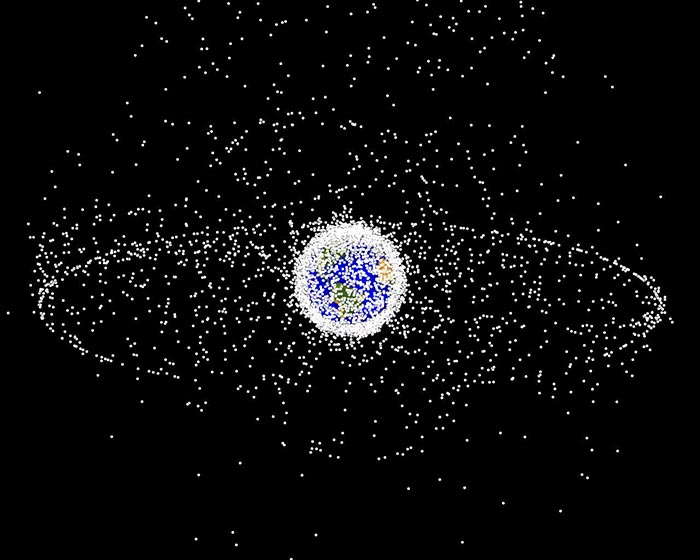
More than 230 million pieces of space debris are circling Earth at speeds exceeding 17,000 mph, posing a growing hazard to global satellite infrastructure, WRAL reported.
The Tech TL;DR:
- Over 230 million debris objects measuring 1 millimeter to 1 centimeter now circle the Earth alongside 1.5 million larger fragments.
- The European Space Agency warns that orbital collisions could sustain a cascading debris population even without new rocket launches.
- Space agencies and researchers are developing robotic capture missions and financial deposit systems to address long-term sustainability.
The space congestion consists of millions of fragments that remain too small to track individually. Updated statistics from the European Space Agency on November 2, 2026, detail that the orbital junkyard includes roughly 1.5 million objects measuring between 1 and 10 centimeters, alongside about 68,450 objects larger than 10 centimeters. WRAL reported that out of roughly 19,610 total satellites currently in orbit, only about 15,800 remain active and functioning.
Mark Moretto, an assistant professor of mechanical and aerospace engineering at North Carolina State University, told WRAL that debris is especially dangerous when it is too small to track but large enough to disable an operating spacecraft. The risk with space is we don’t have cleanup crews, right?
Moretto said.
This accumulation of hardware creates the risk of Kessler syndrome, a theoretical scenario where collisions trigger a self-sustaining cascade of further impacts. According to an analysis by the European Space Agency released in September 2026 and cited by WRAL, the debris population could continue growing through these cascading collisions even if humanity ceased all new satellite launches.

Debris and Satellites Interfere with Services and Astronomy
The dense debris field and expanding satellite constellations threaten vital terrestrial services including GPS, weather forecasting, and global communications, according to news.quantosei.com. Beyond physical collision risks, astronomical observations are experiencing direct interference. Arun Kannawadi, an assistant research professor of physics at Duke University, told WRAL that passing satellites leave bright streaks across telescope images. Removing those digital streaks forces astronomers to discard valuable underlying data.
SpaceX has described future plans involving up to 100,000 Starlink satellites and as many as 1 million spacecraft dedicated to orbital AI computing. SpaceX calls for operators to share precise trajectory data and utilizes automated collision-avoidance systems alongside its Stargaze tracking network.
Robotic Missions and Deposit Systems Target Debris Removal
To test active removal methods, the U.K. Space Agency announced a £61 million contract with ClearSpace in October. WRAL reported that the robotic mission is scheduled to launch in 2029 to capture two dead satellites and guide them into Earth’s atmosphere for destruction by 2032.
Simultaneously, researchers at North Carolina State University are exploring a deposit system similar to those used for returnable bottles to encourage operators to remove defunct spacecraft.
# Example simulation parameters for orbital debris decay modeling
debris_size_mm = [1.0, 10.0]  # Tracking size brackets
velocity_mph = 17000          # Average orbital velocity threshold
active_satellites = 15800     # Verified functioning units
defunct_satellites = 3810     # Non-operational hardware pool
Disposing of satellites via atmospheric reentry introduces new variables, as burning up satellites may introduce harmful materials, such as aluminum oxide, into the upper atmosphere. Scientists continue investigating these environmental trade-offs as commercial space infrastructure expands.