
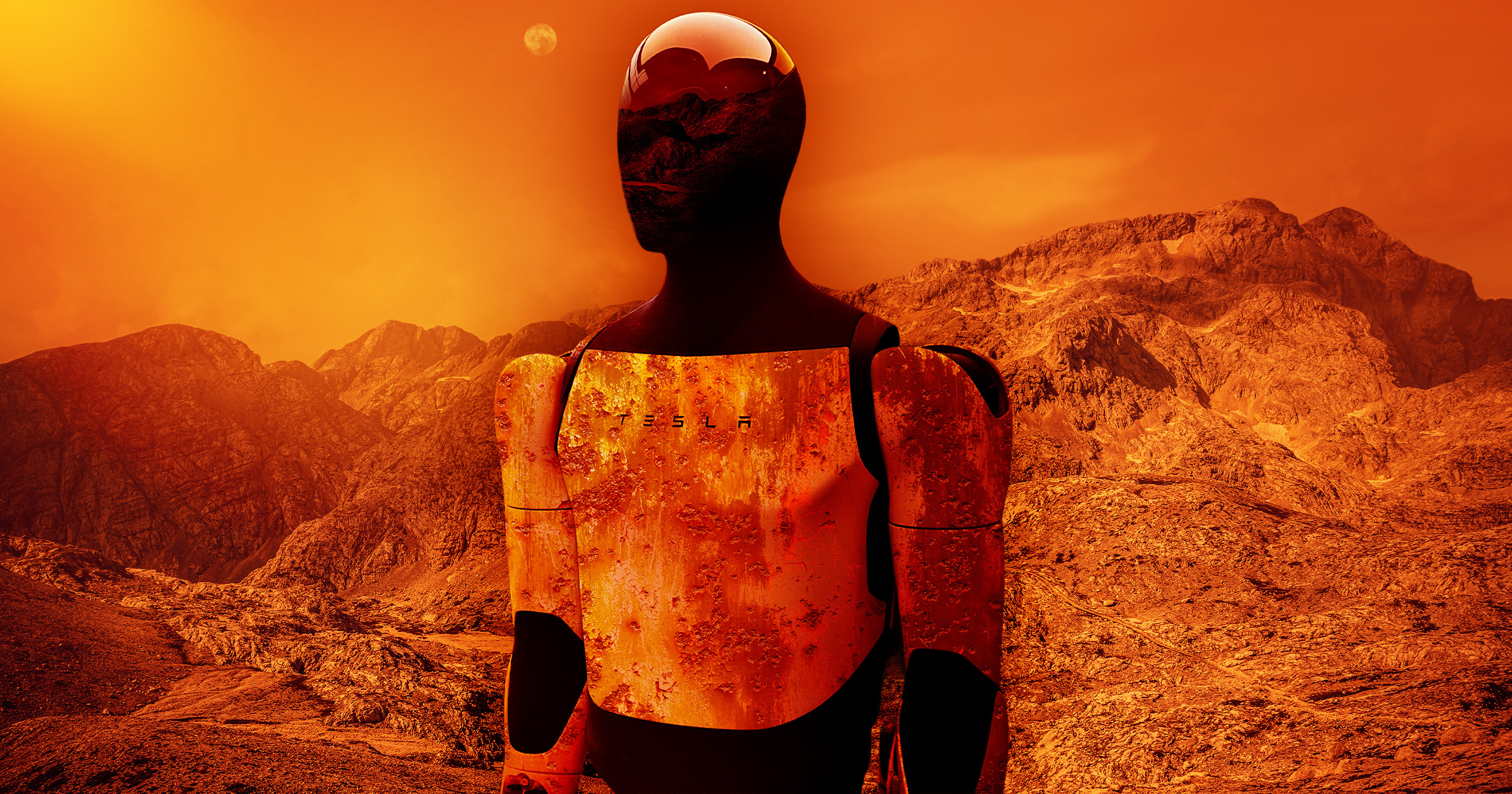
Elon Musk’s Mars robot Plan Faces Reality Check: Unreliable Humanoids Would Likely fail, Expert Says
HOUSTON, TX – Elon Musk’s aspiring plan to deploy humanoid robots to Mars by the end of 2026 is facing skepticism, with experts warning the unproven technology is unlikely to function for long in the harsh Martian habitat. Despite a recent demonstration revealing important flaws – the robot answered questions slowly, glitched mid-sentence, and moved clumsily – musk continues to integrate the Optimus robots into his vision of establishing a self-sustaining city on Mars within 20 to 30 years.
Musk has stated Optimus robots will travel to Mars aboard his Starship rocket, initially to explore the planet’s surface and prepare for human settlement. He recently outlined a timeline of a first unmanned flight in approximately 3.5 years, a manned flight in 5.5 years, and a self-sustaining Martian city within two to three decades.
However, space robotics expert Dr. Karl Hubicki told Forbes that sending humanoids to Mars without readily available human support is a critical flaw in the plan.Unlike NASA’s Robonaut, which operated on the International Space Station with astronauts present for maintenance and repair, a robot on Mars would face insurmountable logistical challenges.
“Critically on the [International Space Station],humans are there to help and fix the robot when it inevitably falters,” Hubicki said.”On Mars, there are no humans to rescue it, and replacement parts are a nightmare to ship in.”
Hubicki suggests a more practical approach would be to first test the robots on the Moon, where support is more accessible. He also highlighted the potential of specialized robotic designs, citing NASA’s advancement of a snake robot for exploring the subsurface ocean of Saturn’s moon Enceladus and potentially the Martian ice caps.
“Without a major technological leap in humanoid reliability,” Hubicki stated, “an unaccompanied humanoid on Mars wouldn’t be functional for long.”
