
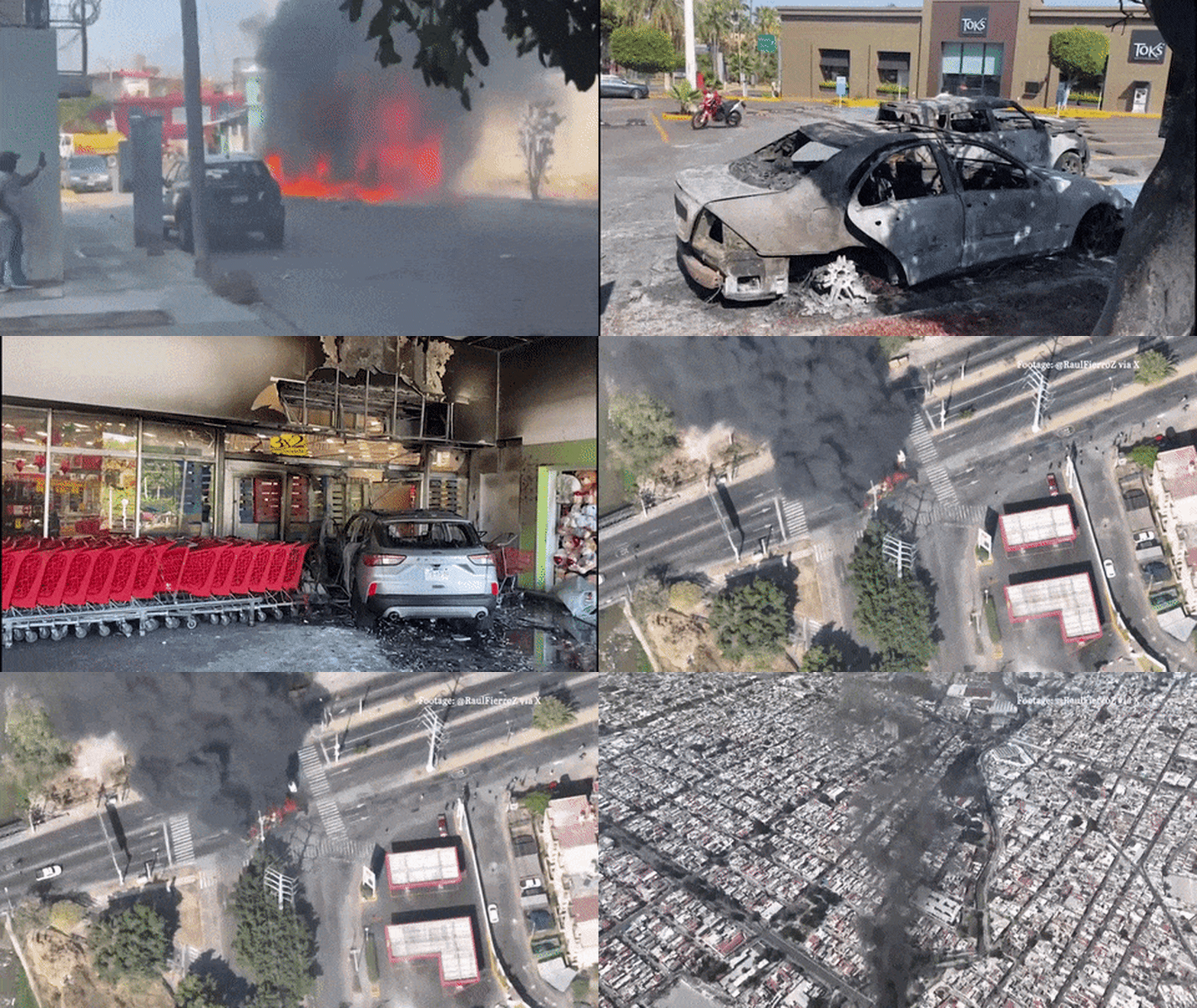
Mexico City – Nemesio Oseguera Cervantes, known as “El Mencho,” the leader of the Jalisco Fresh Generation Cartel (CJNG), was killed in a military operation in the town of Tapalpa, Jalisco state, on Sunday, Mexican authorities confirmed. The death of the country’s most wanted drug lord has triggered a wave of violence across Mexico, with cartel members blockading roads and attacking security forces.
The operation, carried out by Mexican special forces, resulted in Oseguera’s death after he was injured and later died in custody, according to the Mexican defense ministry. His body was transported to Mexico City on Sunday afternoon under heavy guard. The White House stated that the United States provided intelligence support to the operation and praised the Mexican army’s success in eliminating a key criminal target for both nations.
Following the announcement of Oseguera’s death, CJNG operatives responded with widespread violence. Reports indicate that cartel members blockaded over 250 roads in 20 Mexican states and set businesses ablaze in at least six states, causing significant disruption. The capital of Jalisco, Guadalajara, largely shut down Sunday night as residents sheltered in place, and schools were closed Monday in several states.
Mexican President Claudia Sheinbaum urged calm Monday, and authorities reported that all roadblocks had been cleared. Although, the violence continued, with at least 25 members of the National Guard killed in six separate attacks in Jalisco state, according to Security Secretary Omar García Harfuch. Additional deaths were reported in Michoacan and Guanajuato states.
Governments worldwide issued warnings to their citizens in Mexico, advising them to remain indoors. In the resort city of Puerto Vallarta, tourists described a chaotic scene with smoke rising from around the bay. Several airlines, including Air Canada, United Airlines, Aeromexico, and American Airlines, suspended flights to the area.
Oseguera, a former police officer, founded the CJNG, which rapidly grew to become one of Mexico’s most powerful and violent cartels. The cartel expanded its operations beyond drug trafficking to include fuel theft, extortion, human smuggling, and financial fraud. CJNG also gained notoriety for its innovative use of drones in attacks.
The United States had designated the CJNG as a foreign terrorist organization in February 2025 and offered a reward of up to $15 million for information leading to Oseguera’s arrest. Sunday’s raid represents one of Mexico’s most significant successes against drug cartels involved in the trafficking of fentanyl and other drugs into the United States.
During the operation, Mexican forces engaged in a firefight, killing four individuals at the scene. Three more, including Oseguera, were wounded and later died. Two suspects were arrested, and authorities seized armored vehicles, rocket launchers, and other weaponry. Three members of the armed forces sustained injuries and are receiving medical treatment.
The deaths of previous Sinaloa cartel leaders, Joaquin “El Chapo” Guzmán and Ismael “El Mayo” Zambada,” occurred through capture, with both currently incarcerated in the United States. The response to Oseguera’s death, however, demonstrates a different dynamic.
White House press secretary Karoline Leavitt confirmed U.S. Intelligence support for the operation and commended the Mexican military for its cooperation. Reuters reported that a U.S.-led taskforce played a role in the raid, though the extent of its involvement remains unclear.
Security experts predict that Oseguera’s death will likely lead to internal conflict within the CJNG as factions vie for control. “There will definitely be skirmishes between the various factions, and these spasms of violence could last for years,” said Carlos Olivo, a former U.S. Drug Enforcement Administration assistant special agent in charge and an expert on CJNG.
US Deputy Secretary of State Christopher Landau described Oseguera’s death as a “great development” for both the United States and Mexico, as well as the broader Latin American region.
