
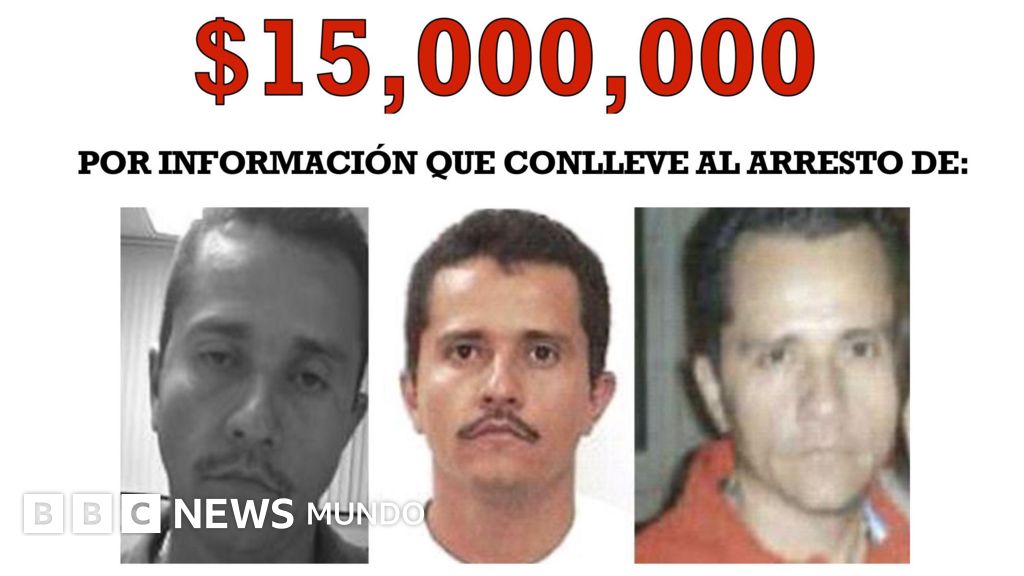
Mexican armed forces killed Nemesio Oseguera Cervantes, known as “El Mencho,” the leader of the Jalisco New Generation Cartel (CJNG), in a raid early Sunday morning in Tapalpa, Jalisco, officials confirmed. The operation, which resulted in the deaths of six other cartel members and injuries to three soldiers, triggered a wave of violence across multiple Mexican states, including road blockades and attacks on businesses.
The Secretary of National Defense reported that “El Mencho,” 59, died while being transported to Mexico City after sustaining serious injuries during the operation. The CJNG, under Oseguera Cervantes’ leadership, had expanded from its base in Jalisco to develop into one of the most powerful and violent criminal organizations in Mexico, with a presence throughout the country.
Following the announcement of his death, coordinated attacks and blockades erupted in Jalisco, Michoacán, Guanajuato, Guerrero, Puebla, Baja California, and Tamaulipas. Criminals reportedly set vehicles on fire and blocked roadways, disrupting traffic and creating a climate of fear. Attacks were also reported on businesses, including pharmacies and stores, a tactic frequently employed by criminal groups in response to government actions.
Jalisco Governor Pablo Lemus confirmed “clashes in the area” following the operation and urged residents to avoid unnecessary travel. Images circulating on social media showed smoke plumes rising in Guadalajara, a host city for the upcoming FIFA World Cup, and reports of armed individuals in the streets.
President Claudia Sheinbaum stated there was “absolute coordination with governments of all the states” and urged citizens to remain calm. However, reports from across the country contradicted this assessment, with widespread evidence of disruption and violence.
The U.S. Embassy in Mexico issued a shelter-in-place order for American citizens in several states, including Jalisco, Tamaulipas, Michoacán, Guerrero, and Nuevo León, citing ongoing security operations, road blockades, and criminal activity. The embassy specifically mentioned Puerto Vallarta, Chapala, and Guadalajara in its advisory.
The United States had offered up to $15 million for information leading to Oseguera Cervantes’ capture. The U.S. Drug Enforcement Administration (DEA) had designated him as a top target in 2020. The Secretary of National Defense indicated that the U.S. Provided intelligence that aided in the operation. Former U.S. Ambassador to Mexico Christopher Landau called the death a “huge win for Mexico, the U.S., Latin America, and the world.”
The Trump administration had previously designated the CJNG as a terrorist organization, accusing it of trafficking cocaine, heroin, methamphetamine, and fentanyl. The operation against Oseguera Cervantes followed pressure from the Trump administration on Sheinbaum’s government to intensify its offensive against drug trafficking, including threats of direct U.S. Intervention in Mexico.
Oseguera Cervantes’ death represents a significant blow to drug trafficking in Mexico, comparable to the arrests of Joaquín “El Chapo” Guzmán and Ismael “Mayo” Zambada, leaders of the Sinaloa Cartel, who are currently incarcerated in the United States.
Nemesio Oseguera Cervantes began his criminal career in the 1980s, migrating to California where he was arrested several times for minor offenses before being deported after becoming involved in drug sales. Upon his return to Mexico, he joined the police force in Jalisco before aligning himself with Armando Valencia Cornelio, a leader of the Milenio Cartel. Following the death of Ignacio “Nacho” Coronel in 2010, Oseguera Cervantes, alongside his brother-in-law Abigael González Valencia, inherited a portion of the cartel’s structure, leading to the formation of the CJNG.
Authorities have described Oseguera Cervantes as a dangerous figure with significant firepower, known for eliminating rival groups to consolidate power. He faced multiple charges in the United States, including conspiracy to distribute methamphetamine, cocaine, and fentanyl, as well as firearms offenses related to drug trafficking.
