
Educators Sue DHS Over New Foreign Student Visa Time Limits
Academic institutions and educator associations filed a federal lawsuit in the U.S. District Court in Massachusetts on Tuesday, challenging a sweeping Department of Homeland Security policy that places strict time limits on international student and scholar visas. According to the complaint, the plaintiffs allege that the Department of Homeland Security violated the Administrative Procedure Act by attempting to dismantle a longstanding policy that allowed foreign students and researchers to remain in the United States for the duration of their academic training.
- The Department of Homeland Security policy replaces the traditional “duration of status” framework with a fixed four-year maximum stay for foreign students and scholars, effective September 15.
- Plaintiffs in the U.S.
- Institutional leaders warn the regulatory shift will disrupt graduate science programs and international enrollment pipelines.
For decades, international students entered the country on F-1 and J-1 exchange visas under a designation known as duration of status. This system permitted scholars to stay in the United States for as long as it took to complete their degree requirements. Under the final notice issued by the Trump administration, the Department of Homeland Security established a fixed four-year limit unless individuals secure formal extensions from the federal government, while also restricting program switches and university transfers.
Department of Homeland Security Secretary Markwayne Mullin defended the regulatory adjustment by pointing to system vulnerabilities. “For decades, we don admit foreign students to US indefinitely, wey allow thousands to abuse our immigration system as dem continually dey register in courses to avoid leaving di US,” Mullin stated. The agency asserts that the policy will tackle rampant visa abuse and strengthen national security through regular vetting, shifting oversight away from higher education institutions that previously held the authority to grant visa extensions.
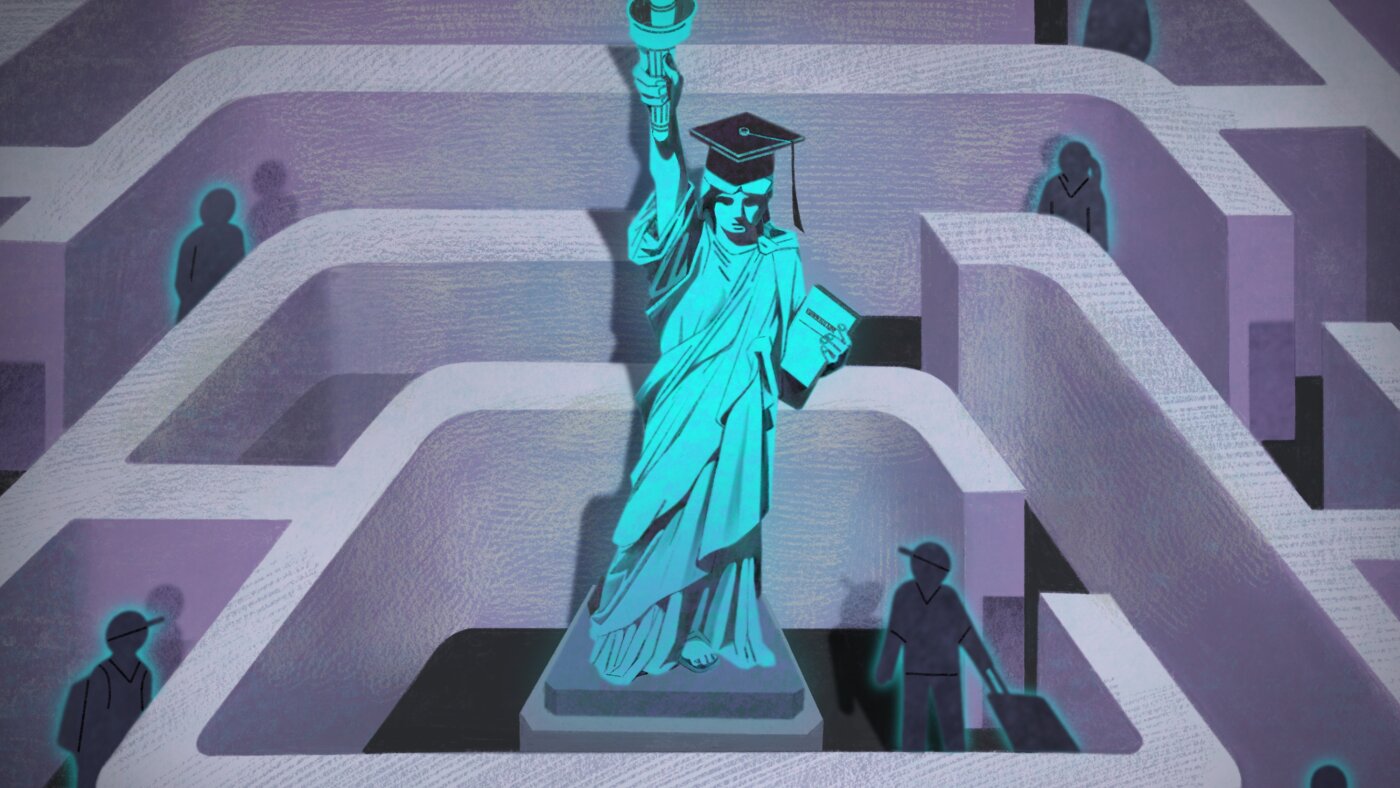
The policy carries implications for advanced medical and doctoral programs. While standard undergraduate curriculums generally span four years, graduate programs in science and technology frequently require extended timelines for research and publication. Funding shortfalls and personal circumstances often lengthen study periods further. Under the updated rules, students now face a compressed 30-day grace period to pack and depart the country after graduation, a reduction from the historical 60-day window.
Higher education advocates have sharply criticized the administrative shift. Fanta Aw, chief executive of NAFSA: The Association of International Educators, described the rules as misguided and unnecessary bureaucracy. “What is at stake is, frankly, the preeminence of American higher education,” Aw noted, warning that the policy introduces uncertainty and fear into a stable system at a time of increased global competition. Similarly, Jessica Vaughan, who leads policy at the Center for Immigration Studies, supported the changes, arguing that regular federal reviews are necessary to verify participant activities.

Academic health centers and research institutions dependent on global talent pools are evaluating the operational fallout as the September effective date approaches. Navigating shifting federal compliance standards requires meticulous institutional oversight.
As universities prepare for the upcoming academic term, international student enrollment metrics reflect notable contractions in graduate programs compared to prior years. European and alternative international academic hubs are actively leveraging the regulatory uncertainty to recruit global talent.
Disclaimer: The information provided in this article is for educational and scientific communication purposes only and does not constitute medical advice. Always consult with a qualified healthcare provider regarding any medical condition, diagnosis, or treatment plan.