Eduardo Bolsonaro says he will not return to Brazil for prison sentence
Former federal deputy Eduardo Bolsonaro stated in Washington on October 14, 2026, that he would not return to Brazil to serve a four-year and two-month prison sentence, as reported by UOL Notícias. The declaration arrives amid a tense second-round presidential runoff in Brazil, where Eduardo’s brother, Flávio Bolsonaro, faces former president Luiz Inácio Lula da Silva in an election scheduled for October 25, 2026.
Justice Moraes Orders Arrest of Eduardo Bolsonaro
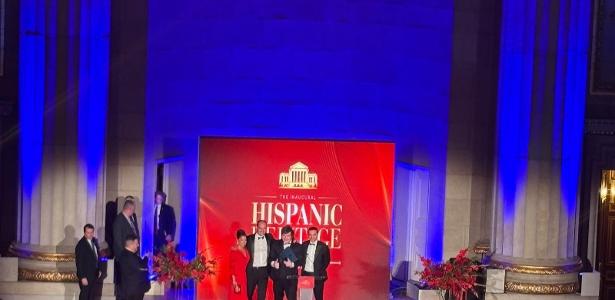
Eduardo Bolsonaro spoke to journalists on October 14, 2026, prior to an appearance at the Hispanic Heritage Gala in Washington, D.C., an event organized by the Latino Wall Street platform and La Derecha Diario. Supreme Federal Court Justice Alexandre de Moraes ordered Eduardo’s arrest and the cancellation of his travel documents in October 2026 after concluding that the former lawmaker used his influence in the United States to pressure authorities and link the removal of U.S. sanctions against Brazil to the release of his father, former president Jair Bolsonaro.
Living in the United States since 2025, Eduardo dismissed the possibility of returning to Brazil to face the semi-open prison regime. He also displayed an Italian passport in a separate video recorded on October 11, 2026, challenging Brazilian authorities to request its cancellation from Rome, an action connected to reports first highlighted by the Italianismo portal regarding citizenship procedures initiated in 2022 through the Italian Embassy in Brasília.

Second-Round Political Calculus And The Supreme Court Clash
Assessing the polls in mid-October 2026, Eduardo acknowledged that his brother's campaign remains tightly contested. “Now in the second round, he is the favorite, but nothing is won yet,” Eduardo told Valor Econômico, adding that polling numbers provide a directional guide but do not guarantee an outcome.
The political friction extends directly to the highest levels of the judiciary. Eduardo asserted that an incoming Flávio Bolsonaro administration could not function alongside Justice Alexandre de Moraes. “First, we will have to purge this cancer called Alexandre de Moraes from the Supreme Court,” Eduardo declared to Valor Econômico, criticizing what he described as personal animosity and rejecting any behind-the-scenes political deals.
🇧🇷🇺🇸NO FILTERMy quick video explains what is happening in Brazil after yesterday’s conviction by Brazil’s Supreme Court, sentencing me to 4 years and 2 months in prison for denouncing human rights violator Alexandre de Moraes.Watch it.Share it.The world needs to know what… pic.twitter.com/PW5KfGuUPf
Simultaneously, Supreme Court magistrates have expressed concern over potential congressional impeachment proceedings if conservative senators secure a strong legislative footing after the vote, though Rogério Marinho, coordinator of Flávio Bolsonaro’s campaign, has denied any formal pacts between the campaign and the judiciary, according to Folha de S.Paulo.
International Reactions From The Milei Administration And Washington
The legal actions against Eduardo Bolsonaro drew direct commentary from Argentina. Adrián Ravier, spokesperson for the Casa Rosada, characterized the arrest warrant issued by Justice Moraes as an instance of political opportunism. Speaking at a press conference covered by CNN Brasil on October 13, 2026, the Argentine official noted the timing of the judicial move ahead of the Hispanic Heritage Gala, where Eduardo appeared alongside Argentine President Javier Milei.

While the Argentine government avoided issuing formal rulings on another nation’s judiciary, the Casa Rosada emphasized Milei’s explicit support for the Bolsonaro family’s political platform. During the Washington gala, Eduardo embraced Milei onstage, where the Argentine leader reiterated goals opposing regional communism. Eduardo framed a potential victory for his brother on October 25 as the beginning of a new conservative alliance across Latin America.
Addressing questions regarding potential interference from Washington, Eduardo denied asking U.S. President Donald Trump to issue a public endorsement for Flávio Bolsonaro’s campaign. While Trump acknowledged Flávio’s first-round performance as a strong showing while describing the race as tight, Eduardo emphasized that a victorious Bolsonaro administration would handle bilateral relations through personal rapport rather than trade concessions.