
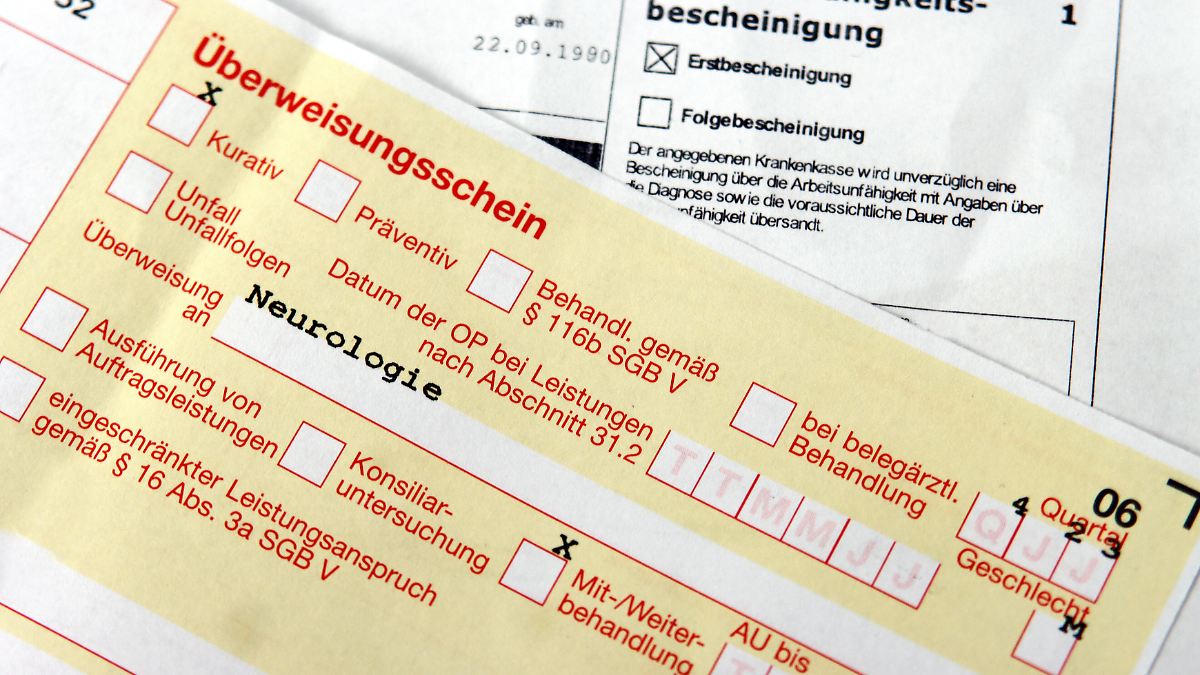
Breaking: Germany’s Health Minister Announces Spring 2026 Push for Electronic Prescription Transfers, Aims to Simplify Doctor Visits
Berlin, September 27, 2025, 02:07 a.m. CET - Federal Minister of Health Nina Warken (CDU) announced plans to launch electronic prescription transfers (“e-transfer”) next spring, aiming to fully digitize the process and ease burdens on both medical practices and patients. The announcement, made to the Editorial Network Germany (RND), comes as the rollout of the e-recipe system – launched in 2024 – and the electronic patient file (introduced in 2025) face ongoing stability concerns.
Warken intends to lay the groundwork for the e-transfer and further digitization efforts with two new digitization laws slated for presentation in spring 2026. While a firm date for the e-transfer’s full implementation remains unconfirmed, the Minister emphasized the goal of eliminating the “last analog process in the supply.”
“We want to digitize the transfer as the last analog process in the supply,” Warken told RND. “This will lead to a further considerable simplification for medical practices and insured persons.”
The move is part of a broader strategy to strengthen the role of general practitioners as primary care providers, a system Warken intends to implement “in the context of the primary doctor system,” though no official timeline for this has been established.
addressing persistent complaints from medical and pharmacists’ associations regarding IT issues, Warken acknowledged the need for improvement. “The stability has to be better, no question,” she stated. The upcoming digital laws will also focus on stabilizing the technical infrastructure supporting the e-patient file and e-recipe systems.
Pharmacy advance Remains on the Table
Despite opposition from the medical profession, Warken reaffirmed her commitment to a project allowing pharmacists to dispense prescription medication without direct physician involvement, citing an aging population and a shortage of healthcare professionals.
“in view of the aging society and the shortage of skilled workers, we are forced to distribute the supply of the population over more shoulders,” Warken explained to RND. “the general practitioners are fully busy, 5000 medical seats are vacant – and at the same time, general practitioners should get a central role as the first point of contact in the future.”
Warken clarified that any pharmacy-led prescriptions would be governed by a defined catalog of diseases and medications, persistent by the Bfarm (Federal Institute for Drugs and Medical Devices) in consultation with medical and pharmacist chambers. “It is not about pharmacies making complex diagnoses,” she stressed, suggesting potential applications for patients with chronic conditions whose facts is documented in the electronic patient file.
Context: Germany has been steadily moving towards digitalizing its healthcare system,with the e-recipe and e-patient file representing significant steps. However, implementation has been hampered by technical difficulties and concerns about data security and interoperability. The proposed e-transfer aims to complete this digitization, streamlining a traditionally paper-based process and potentially improving access to care for patients. The debate surrounding pharmacists’ expanded roles highlights ongoing tensions between different healthcare stakeholders regarding the optimal distribution of responsibilities within the German healthcare system.
