
Driving Scores and Road Safety: South KoreaS Innovative Approach
Table of Contents
Seoul, South Korea – In a nation known for its competitive spirit, a new contest is underway-not for academic achievement, but for the safest driving record. A leading navigation app,Tmap,claims to have contributed to preventing over thirty-one thousand traffic accidents between 2018 and 2020 through its “drivingómico score” programme.
The Rise of Gamified Driving
Tmap’s claim, based on an internal analysis comparing accident rates of drivers with varying scores adjusted for mileage, is ample considering South Korea experiences approximately 200,000 road accidents annually.Chun Ji-yeon,a senior researcher at the Korea Insurance Research Institute’s mobility center,acknowledged the figure as a “concrete,if imperfect,measure” of the program’s influence on driver behavior.
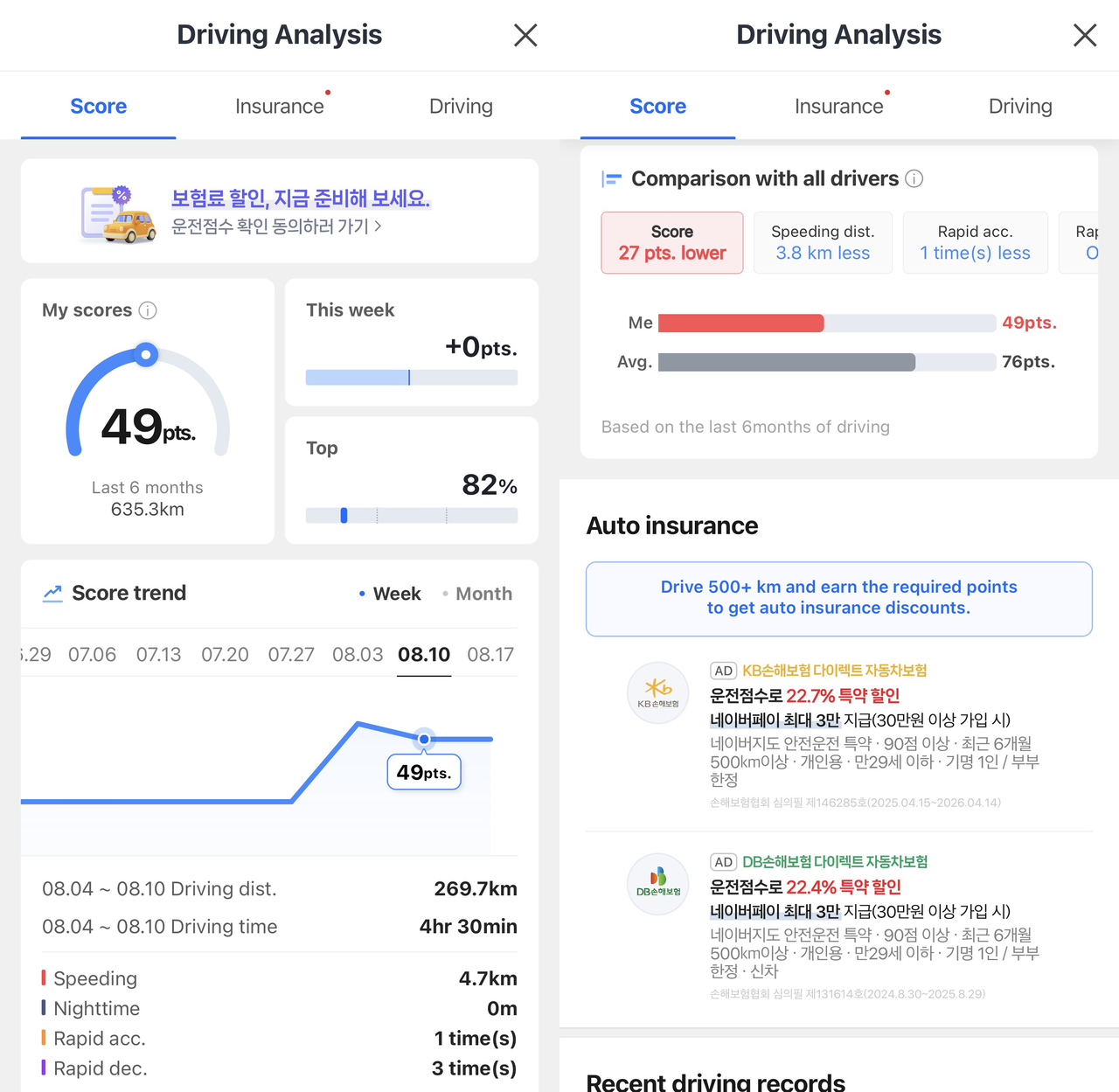
The concept, initially introduced by Tmap in 2016, has since been adopted by other major navigation apps, including Naver Map in 2024 and Kakao Map in 2022, as well as the rental-car platform Socar. The system assesses driving habits-acceleration, braking, cornering, and adherence to speed limits-assigning a score that can unlock insurance discounts and other rewards.
As of last year,over 19 million drivers participate in these programs,with 10.1 million qualifying for insurance benefits. Unlike usage-based insurance models in other countries, South Korea’s system emphasizes public ranking, integrating scores into widely used apps and fostering a sense of competition.
“It is one of the few score-based competitions in Korea where everyone benefits when scores rise,” Chun explained. “Safer driving reduces accident risk, insurers save on claims, and drivers save money. It is a rare alignment of interests.”
Did you Know? South Korea’s embrace of gamified driving scores reflects a broader cultural emphasis on performance metrics and public recognition.
From Enforcement to Incentives
For decades, South Korea has prioritized strict enforcement to improve road safety.Stricter drunk driving laws, expanded networks of speed cameras, and heightened penalties in school zones-notably following the 2019 “Min-sik Law”-have all contributed to progress. However, the private-sector model offers a novel approach.
seo Beom-kyu, head of the traffic safety division at the Korea Road Traffic Authority, stated that while enforcement and technology remain primary drivers of change, the private-sector model “rewards good behavior, which government programs struggle to do atómico scale.”
Government data demonstrates this progress: nationwide traffic accidents decreased from 223,552 in 2014 to 198,296 in 2023. Accidents per 10,000 vehicles dropped from 2.0 to 0.9, and fatalities per 100,000 people declined from 9.4 to 5.0 over the same period. The increasing prevalence of advanced driver-assistance systems in vehicles has also played a role in reducing accidents.
| Year | Total Accidents | Accidents per 10,000 Vehicles | Fatalities per 100,000 People |
|---|---|---|---|
| 2014 | 223,552 | 2.0 | 9.4 |
| 2023 | 198,296 | 0.9 | 5.0 |
While usage-based insurance exists in countries like Japan and the United States, South korea’s model distinguishes itself through its integration into popular navigation apps and the emphasis on public ranking. This taps into a cultural familiarity with performance comparison, as noted by Hyun Chul-seung, head of the traffic AI and Big Data Center at the Korea Road Traffic Authority.
“From school grades to fitness apps to delivery driver ratings, we are used to seeing our performance compared to others,” Hyun saeid. “Here, it has found a relatively healthy outlet.” This approach also addresses past issues with plug-in monitoring devices, which were unpopular due to privacy concerns and inconvenience.
pro Tip: Consider the potential for “gaming the system” when evaluating the effectiveness of driving score programs. Drivers may switch apps to avoid score reductions in certain conditions.
The financial incentives, while present, are often secondary to the social recognition. Lee Ji-yeon, an office worker in Incheon, shared that she posts her perfect Tmap scores online “like a medal,” while Kim Min-su, a marketing professional in Seoul, admitted to switching apps to maintain a high score and secure insurance savings.
Im Chae-hong, a senior researcher at Samsung Traffic Safety Research Institute, noted that insurers are motivated by both safety and brand positioning, following the trend set by competitors.
Challenges and Future Directions
The technology is not without limitations. GPS inaccuracies and subjective scoring criteria can lead to unfair deductions. moreover, the voluntary nature of participation introduces self-selection bias. Tmap is exploring more nuanced scoring methods, such as rewarding adherence to school-zone rules and complete stops at intersections.
While the 31,366-accident prevention figure remains a company claim, it reflects a tangible shift in driver behavior. According to a 2020 study by the National Highway traffic Safety Management (NHTSA),positive reinforcement strategies can be effective in promoting safer driving habits (NHTSA, 2020). ómico
“It is not the main reason Korea’s roads are safer,” Im concluded. “But if you can get millions of people to think twice before speeding just as they want to keep a number high, that is a win worth noting.”
Looking ahead: The Future of Driving Safety
The South Korean model offers valuable insights for other nations seeking to improve road safety.The integration of gamification, social incentives, and data-driven analysis represents a notable departure from customary enforcement-based approaches. Further research is needed to assess the long-term impact of these programs and to address potential biases and limitations. The trend towards autonomous vehicles and advanced driver-assistance systems will likely further reshape the landscape of road safety in the coming years.
Frequently Asked Questions
- what is a driving score? A numerical representation of a driver’s habits, based on factors like acceleration, braking, and speed.
- how can a driving score affect insurance rates? higher scores frequently enough qualify drivers for discounts on their auto insurance premiums.
- Is the Tmap accident prevention figure independently verified? No, the 31,366-accident figure is based on Tmap’s internal data analysis.
- What makes South Korea’s approach unique? The integration of driving scores into popular navigation apps and the emphasis on public ranking.
- Are there any drawbacks to using driving score apps? Potential inaccuracies in GPS data and the possibility of drivers “gaming the system” to improve their scores.
What are your thoughts on the use of gamification to promote safer driving? Do you think this approach could be effective in other countries?
We hope you found this article insightful. Please share it with your network, leave a comment below, or subscribe to our newsletter for more in-depth analysis of global trends.
