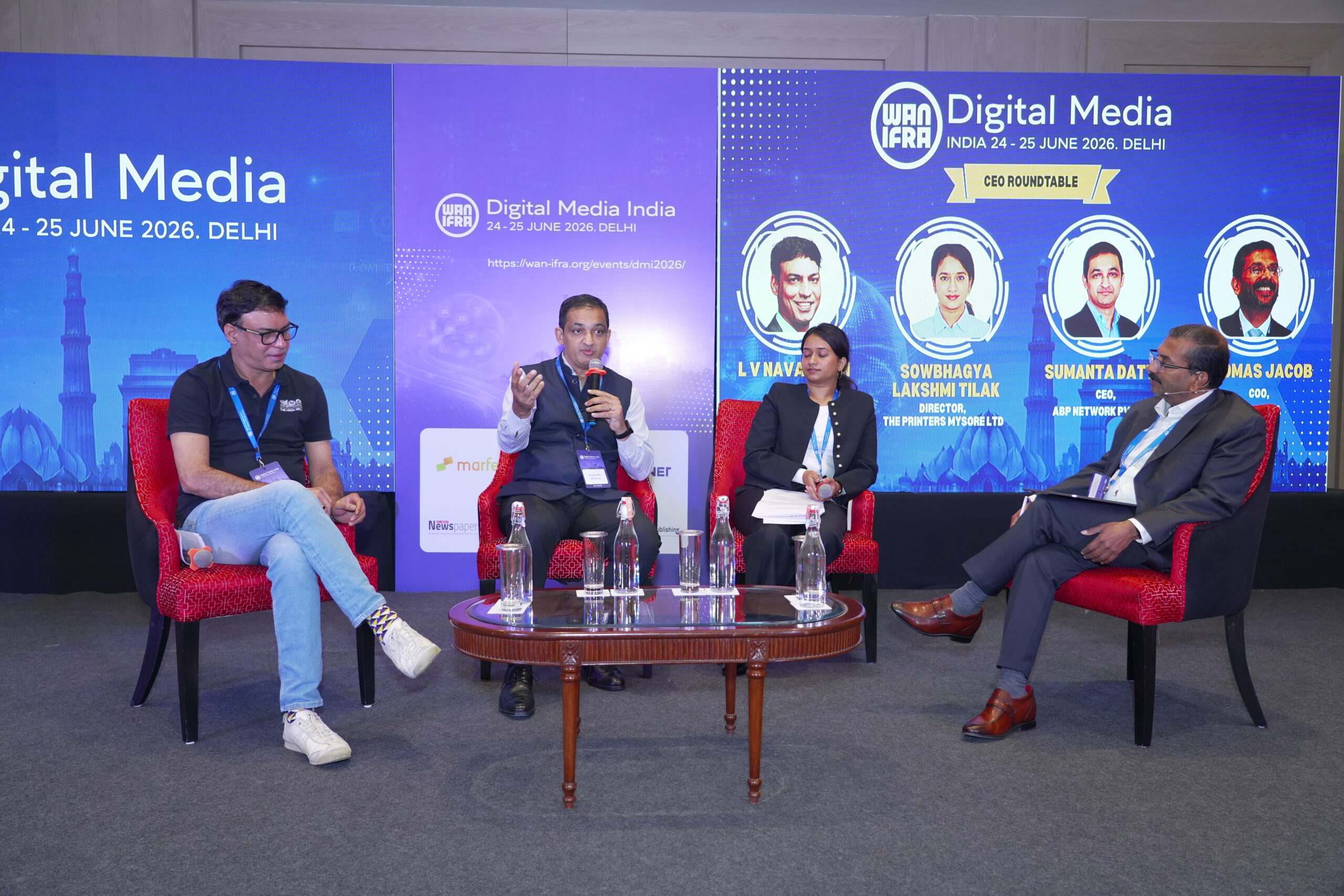
Digital Media India 2026: AI, Audience Growth, and New Revenue Models
The Digital Media India 2026 conference centered on the urgent transition of legacy publishers toward AI-integrated revenue models and audience-first strategies. Industry leaders identified the shift away from traditional page-view metrics and the balancing of physical and digital revenue streams as the primary challenges for South Asian newsrooms.
The Structural Shift in Publishing Revenue
The economic reality for legacy media in South Asia remains anchored in physical products. According to LV Navaneeth, The Hindu Group, 85 to 90 percent of revenue and the majority of profits for legacy publishers originate from physical products. Navaneeth cautioned against viewing the industry as a binary choice between print and digital, advocating instead for a dual strategy that protects and grows physical while doubling down on digital efforts.

This financial balancing act occurs as organizations face mounting pressure to diversify. The conference highlighted that sustainable growth requires a disciplined approach to capital allocation, particularly as newsrooms invest heavily in technology stacks to support AI-driven content distribution.
Beyond Clickbait: Redefining Success Metrics
The industry is experiencing a collective retreat from the “page view” as the primary indicator of editorial success. Vertika Kanaujia, who leads editorial operations at Financial Express Digital, noted that the obsession with page views has historically incentivized headline-chasing and clickbait.
This shift reflects a broader trend toward audience intelligence. Rather than chasing volume, publishers are pivoting toward deep engagement.
AI Integration and the Future of Newsrooms
Stig Ørskov, CEO of WAN-IFRA, outlined five pillars for the future of journalism and media businesses: a balanced revenue model, taking control of the AI journey, building audience-first newsrooms, embracing the news creator economy, and a focus on audio/video. The conference saw extensive focus on generative AI, with sessions exploring how automation can assist with personalization without sacrificing journalistic integrity.
The “Newsroom Innovation Study Tour,” which visited facilities including Times Internet, The Quint, Collective Newsroom, and Brut India, showcased the practical application of these concepts. Key takeaways included:
- Personalization: Using AI to serve relevant content to specific user segments.
- Multilingual Scale: Leveraging automated tools to expand reach.
- Data-Led Video: Transitioning from generalist content to formats backed by viewer metrics.
Regional Recognition and Industry Standards
The Digital Media Awards South Asia 2026 served as a benchmark for these digital advancements. The Hindu Group emerged as the Champion Publisher of the Year, securing seven wins across categories including AI, audience engagement, marketing, and audio. HT Media Group followed with six awards, while Collective Newsroom earned three. Other notable recipients included Prothom Alo, Manorama Online, and The Daily Star.

The Path Forward for South Asian Media
The discourse at the 2026 conference suggests that publishers are no longer asking if they should adopt AI, but how they can do so while maintaining the trust of their readership. The reliance on legacy revenue, while providing a temporary buffer, is clearly being managed as a bridge toward a more digitized future.
The challenge for publishers in the coming months will be to maintain this momentum without losing the distinct editorial voice that defines their brand. The focus on sustainable, audience-funded models will likely determine which publishers remain viable in an increasingly crowded and automated information ecosystem.