
Bielefeld University too Lead Continued Research into Matter Under Extreme Conditions
Bielefeld University will spearhead the next phase of the Collaborative research Center/Transregio 211, “Strongly Interacting Matter under Extreme Conditions,” following renewed funding from the German Research Foundation (DFG). Particle physicist Professor Dr. Sören Schlichting of Bielefeld University will serve as the spokesperson for the extended network.
“This collaborative research area is a first-class example of cutting-edge theoretical research in the context of large-scale international experiments,” stated Professor Dr. Angelika Epple, Rector of Bielefeld University. “The fact that the DFG is now funding this network for the third time speaks for itself.”
Professor Schlichting emphasized the collaborative nature of the project,noting the participation of 26 project managers and 76 additional scientists. “We combine basic theoretical research with applications in cosmology, heavy ion physics and astrophysics – a constellation that is unique in the world,” he said.
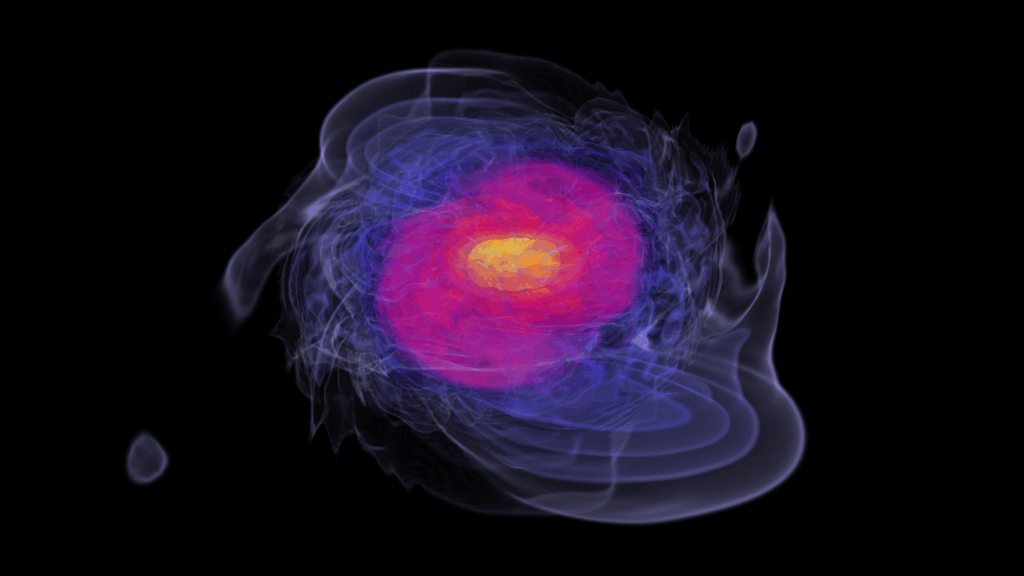
The previous funding phase yielded over 250 scientific publications and two meaningful international conferences. researchers made advancements in understanding the phase diagram of quantum chromodynamics (QCD), essentially mapping the states of matter at varying temperatures and densities.they also refined methods for interpreting experimental data from particle accelerators and neutron star merger observations.
Professor Dr. Guy Moore of the Technical University of Darmstadt, current speaker of the SFB and future deputy speaker, highlighted the importance of this work: “Our work provides the theoretical basis for precisely interpreting experimental data…This is crucial for the large international measurement campaigns that are currently underway or planned.”
The upcoming funding phase will focus on investigating the behavior of extremely dense matter and its phase transitions, incorporating new theoretical approaches, including the use of quantum computers. Researchers will also continue to explore connections between fundamental particle physics and observable phenomena like neutron star mergers.
Professor Dr. Hannah Elfner from Goethe University Frankfurt,deputy spokesperson for the SFB,explained the broad impact of the research: “We combine fundamental particle physics with observable phenomena…Our research answers fundamental questions about the evolution of the universe – from the behavior of the smallest particles of matter to the structure of neutron stars.”
The research team is committed to public engagement, utilizing formats like “Shots of Science” events and school lectures to make particle physics accessible. A public lecture detailing the SFB’s research is scheduled for January as part of the “Physics on Saturday” series.
