
“`html
CAR T-Cell Therapy Shows Promise in early Lupus Trials
Table of Contents
In a significant step forward for autoimmune disease treatment,early clinical trials are demonstrating encouraging results with CAR T-cell therapy in patients battling systemic lupus erythematosus (SLE), commonly known as lupus.published online October 10, 2025, in Nature Medicine, two phase 1 studies suggest this innovative approach could offer a new avenue for managing the debilitating effects of this chronic autoimmune condition. The research, detailed in doi:10.1038/s41591-025-03987-y,highlights the potential of reprogramming a patient’s own immune cells to target and suppress the autoimmune response characteristic of lupus.
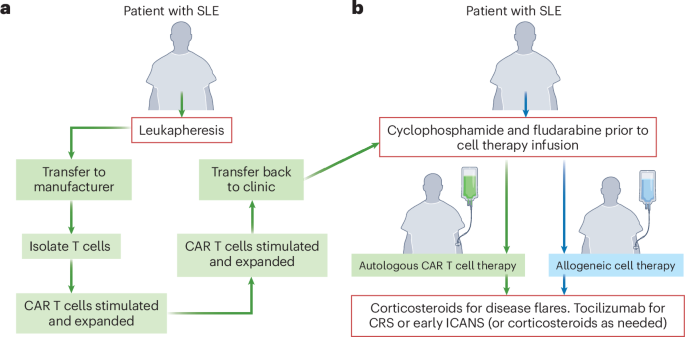
Lupus, affecting an estimated five million people worldwide, causes the immune system to attack its own tissues and organs. Current treatments often rely on broad immunosuppression, leaving patients vulnerable to infections and othre side effects. CAR T-cell therapy, initially developed for cancer treatment, offers a more targeted approach. It involves extracting T cells from a patient, genetically modifying them to express a chimeric antigen receptor (CAR) that recognizes a specific target on immune cells contributing to the autoimmune process, and then reinfusing them back into the patient.
The phase 1 trials focused on safety and initial efficacy. While the results are preliminary, they indicate that CAR T-cell therapy can induce remission in some patients with severe lupus. However, researchers caution that further investigation is crucial. As noted in the nature Medicine publication, key challenges remain regarding the design of future trials, particularly the selection of appropriate comparator arms and the management of ancillary immune-modulating treatments.
The next stage of development must address key pitfalls around comparator arms and ancillary immune-modulating treatments.– Nature Medicine
The success of CAR T-cell therapy for lupus hinges on refining the treatment protocol to maximize efficacy and minimize potential side effects. Researchers are actively exploring strategies to improve the specificity of the CAR, reduce the risk of cytokine release syndrome (CRS), and optimize the conditioning regimen prior to cell infusion. Long-term follow-up is also essential to assess the durability of the response and identify any late-onset complications.
Developing cell therapies for lupus represents a paradigm shift in how we approach autoimmune diseases. While still in its early stages, this research offers hope for a future where lupus patients may experience sustained remission and improved quality of life.
What are your thoughts on the potential of CAR T-cell therapy to revolutionize the treatment of autoimmune diseases like lupus? And, considering the complexities of immune modulation, what ethical considerations do you think are most critically important as this field advances?
The Landscape of Lupus Treatment
Systemic lupus erythematosus has historically been a challenging disease to treat, with limited options offering incomplete relief. Traditional therapies, such as corticosteroids and immunosuppressants, can manage symptoms but often come with significant side effects. The emergence of targeted therapies, including biologics like belimumab, has improved outcomes for some patients, but a substantial proportion remain refractory to existing treatments. The development of CAR T-cell therapy represents a potentially transformative approach, offering the possibility of resetting the immune system and achieving long-term remission. the field of autoimmune disease treatment is rapidly evolving, with ongoing research exploring novel targets and therapeutic strategies.
Frequently Asked Questions about CAR T-Cell Therapy for Lupus
- What is CAR T-cell therapy? CAR T-cell therapy is a type of immunotherapy that involves genetically modifying a patient’s own T cells to target and destroy specific cells.
- How does CAR T-cell therapy work in lupus? In lupus, CAR T-cells are engineered to target immune cells that are contributing to the autoimmune attack on the body’s tissues.
- Is CAR T-cell therapy a cure for lupus? While early trials are promising, CAR T-cell therapy is not yet considered a cure for lupus. Further research is needed to
