
Deported to Mexico: How the US Is Sending People It Won’t Take Back
VILLAHERMOSA, Mexico — It was 2 a.m. When a bus carrying dozens of U.S. Deportees heaved into this sweltering city in southern Mexico. The Mexican immigration agents who had guarded the group on their three-day trip from the border simply told them they were free to head, leaving them to navigate an unfamiliar city with little more than the prison garb they were wearing. Alberto Rodríguez, 73, limped with a cane down a deserted industrial street, disoriented and alone. A stroke had left him perpetually foggy, unable to recall many details about his life beyond the fact that he had been born in Cuba and had spent nearly 50 years in the United States. “Where am I?” he called out. “Villahermosa,” someone answered. Like most of the others, Rodríguez had never set foot in Mexico and had never heard of this city of a million people surrounded by dense jungle.
Rodríguez’s experience is increasingly common. As part of a sweeping immigration crackdown during his presidency, Donald Trump authorized the deportation of individuals to countries other than their own, including Rwanda, El Salvador, and South Sudan. By far, the largest number of these “third-country deportees” have been sent to Mexico, often bused to cities thousands of miles south of the U.S. Border. Some are eventually able to return to their countries of origin, even those where they fear persecution. Others, like Rodríguez, find themselves stranded in a legal and logistical limbo.
Mexico accepted nearly 13,000 non-Mexicans deported during the first 11 months of Trump’s second term, including people from Venezuela, Haiti, and Nicaragua, according to data from the Mexican government. The largest group consisted of Cuban immigrants, whose government sometimes refuses to accept deportees, particularly those with criminal records. This creates a particularly hard situation for those individuals, who are left undocumented in Mexico with limited options.
Advocates describe the situation as a “quasi-stateless limbo.” Yael Schacher, one of the authors of a recent report by Refugees International, characterized Mexico’s practice of sending migrants to cities like Villahermosa, located a few hours from the Guatemalan border, as an attempt to keep them “out of sight.” Villahermosa, a city grappling with a violent conflict between drug gangs – where nine out of ten residents report feeling unsafe, according to census data – lacks adequate resources to support the influx of deportees. It has only one migrant shelter and no local office of the federal agency that processes refugee applications.
“They’re dumping people in a dangerous place who are extremely vulnerable,” said Gretchen Kuhner, director of the Institute for Women in Migration, a nonprofit organization. For decades, Mexico has primarily been a transit country for migrants traveling *to* the United States. These new deportees represent a different profile: many are long-term U.S. Residents who entered the country years ago, often legally. Some had even been granted the opportunity to stay after demonstrating to immigration judges that they would face persecution if returned to their home countries.
Many Cubans expelled to Mexico had lost their refugee status decades ago after committing crimes but were allowed to remain in the U.S. With deportation orders that were never executed due to the Cuban government’s previous refusal to accept them. It was only under the Trump administration that these individuals became targets for removal. Rodríguez, for example, was convicted of robbery in 1990, according to court records.
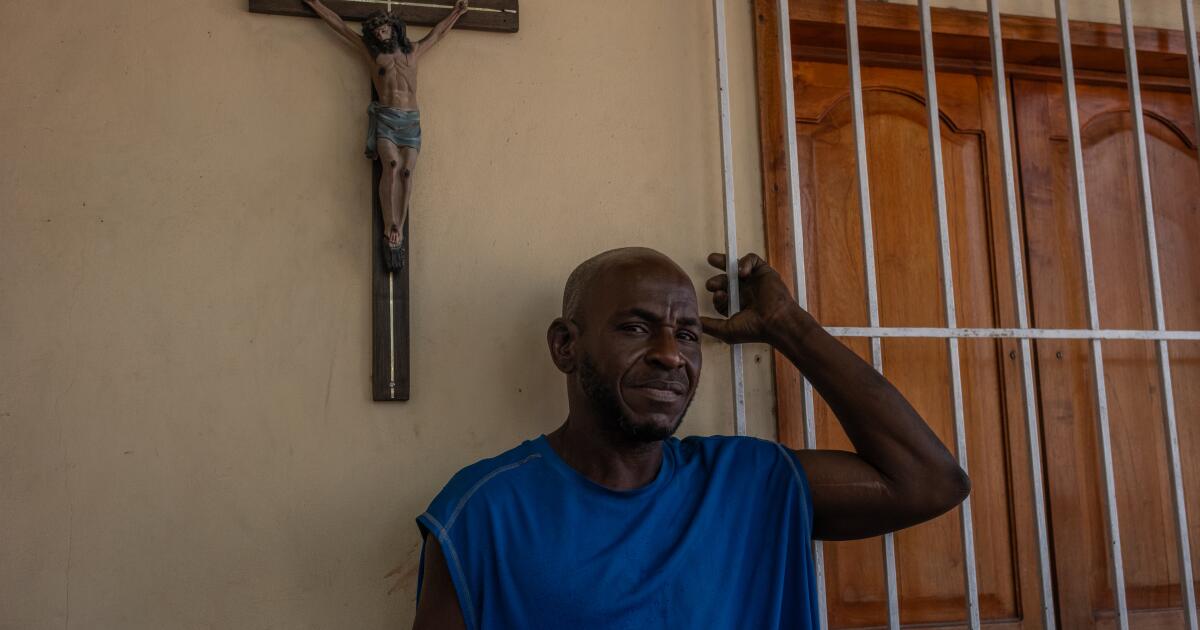
Rodríguez now spends his days sitting in the shade outside Oasis de Paz del Espíritu Santo Amparito, a compact Catholic shelter nestled among junkyards and mechanic shops. He is one of many elderly Cubans with health problems who have been deported in recent months, according to aid workers. The shelter’s oldest resident is 83 years old and spent most of his life working in Florida before being sent to a detention center nicknamed “Alligator Alcatraz.” Other residents include Ricardo Pérez, 67, who says he was pushed across the U.S. Border in a wheelchair by immigration agents, and Luis René Lemus, 59, who suffers from Parkinson’s and schizophrenia and struggles to obtain medication in Mexico. Josué Martínez Leal, one of the shelter’s directors, recalls that Ricardo del Pino, 67, arrived severely ill last summer and died of cancer a few months later. Martínez had del Pino’s remains cremated and keeps the ashes in a niche in the shelter’s small chapel.
Martínez expressed anger that the U.S. Is deporting vulnerable individuals and that Mexico is not doing more to care for them. “They’re sending them here to die,” he said. Rodríguez, who often sleeps outside a public hospital a few blocks from the shelter, has expressed feelings of hopelessness and has contemplated suicide. “Honestly?” he said. “I’m just looking for a gun.”
José Alejandro Aponte Delgado, 53, intervened, putting his arm around Rodríguez. “I’ve felt the same way at times,” Aponte said. “It’s going to get better, brother. It has to.”
But, relief remains elusive. Severe cuts to foreign aid by the Trump administration have diminished Mexico’s capacity to assist migrants. Last year, the administration slashed $2 billion in annual U.S. Aid destined for Latin America and the Caribbean, forcing nonprofit shelters and legal aid providers to lay off staff or suspend operations. Martínez said he was forced to fire the shelter’s doctor, psychologist, and social worker. These cuts also impacted staffing at Mexico’s refugee agency, which received indirect funding through the United Nations.
Mexican President Claudia Sheinbaum has stated that her country has not signed a formal agreement to accept immigrants from the U.S., unlike other nations accepting third-country deportees. She said that those her country has accepted so far were welcomed for “humanitarian” reasons. Andrés Ramírez, who previously served as director of the Mexican Commission for Refugee Assistance, suggested that Mexico is under pressure to appease the Trump administration, which has threatened tariffs on Mexican imports if Sheinbaum does not comply with U.S. Wishes on immigration and other issues. He argued that Mexico could do more to help deportees gain refugee protection by expediting the current process, which can take months. “If you truly were acting on humanitarian grounds, you would presumably implement a much more humane policy regarding these people.”
Human rights advocates say Mexican officials rarely inform deportees of their right to seek asylum in the country. They also allege that Mexico has violated the principle of “non-refoulement,” which prohibits governments from sending people to places where they may face persecution. Kuhner’s organization is assisting a trans woman from Honduras who had proven to a U.S. Court that she faced danger in her home country due to her gender identity. After being deported, Mexico sent her back to Honduras, where she has begun dressing as a man to avoid being targeted. Refugees International documented the case of a Salvadoran man who had won protection from deportation under the Convention Against Torture, only to be sent by the U.S. To Mexico, which then returned him to El Salvador, where he was subsequently imprisoned.
An appeals court recently allowed the Trump administration to continue deporting immigrants to nations other than their home countries. Last year, one Cuban migrant was deported over 10,000 miles away to the African kingdom of Eswatini. This suggests that more buses will likely be arriving in Villahermosa, depositing deportees still wearing prison clothing.
Mauricio De Leon, 50, was born in Guatemala and brought to the U.S. By his mother at age one. He entered the foster care system after his mother lost custody of him and received a deportation order in 2007 after serving prison time for drug trafficking. He was deported last year. Mexico attempted to send him to Guatemala, but Guatemalan authorities stated they had no record of him, leaving him stateless. He now survives on savings from his time as a truck driver in California, renting a small rooftop apartment with other elderly deportees. They spend their days smoking cigarettes, watching movies, and reminiscing about life in the U.S. “I miss burgers,” De Leon said. “I miss pizza,” said Miguel Martínez Cruz, 65, a Cuban deportee who is blind in one eye. “I miss the beach,” De Leon added. They have no hot water and no job prospects. “It’s the same bad day over and over,” he said.
Lázara Santana, 57, migrated to the U.S. From Cuba at age 11 and lost her refugee status 20 years ago after being convicted of drug sales. Her only son is a Marine who served multiple tours in Afghanistan and voted for Trump. For two decades, she checked in annually with Immigration and Customs Enforcement. This fall, she was taken into custody and given a choice for her deportation: “You can go to Congo or Mexico.” She now shares a room with other women, funded by money sent from her partner in the U.S. She has not applied for refugee status in Mexico, fearing to depart her house. “I go to sleep crying, I wake up crying,” she said. “This feels like a nightmare, and I can’t wake up.”