Delhi H1N1 Cases Surge As Health Ministry Issues Swine Flu Symptom Alert
India’s Union Ministry of Health and Family Welfare has urged people to recognise H1N1 symptoms early, following a 7.8-fold rise in swine flu cases in Delhi. According to Delhi health department data, the city has recorded 1,777 cases of H1N1 out of 2,392 total Influenza-A infections this year, prompting reviews by national health authorities.
- Delhi has documented 1,777 H1N1 swine flu cases this year.
- Union Health Minister J.P. Nadda convened a review meeting to evaluate national surveillance, laboratory testing, and healthcare facility preparedness to manage seasonal influenza cases.
- Health agencies advise high-risk groups—including young children, the elderly, and individuals with co-morbidities—to seek medical advice upon displaying persistent flu-like symptoms.
Epidemiological Tracking and National Health Review
The trends in influenza-like illness (ILI) and severe acute respiratory infections (SARI) prompted Union Health Minister J.P. Nadda to conduct a review of national healthcare preparedness, as reported by PTI. Federal officials evaluated epidemiological trends, testing and laboratory surveillance, and preparedness of healthcare facilities. Delhi Health Minister Pankaj Kumar Singh confirmed that local medical facilities maintain adequate supplies of hospital beds, doctors, medicines, and essential medical equipment to manage the influx of patients.
While Delhi bears a significant portion of the caseload—logging 114 H1N1 infections on a single Thursday within a total of 159 new influenza diagnoses—the viral transmission extends beyond the capital. According to reporting from The Hindu, cities including Mumbai, Bengaluru, and Chennai are managing rising tallies of H1N1 and influenza-like illnesses. In Mumbai, the Brihanmumbai Municipal Corporation documented 309 H1N1 cases between June 1 and August 15, compared with 72 during the same period in 2025.
For patients managing chronic conditions or persistent respiratory distress during this seasonal wave, early diagnostic confirmation is essential.
Clinical Pathogenesis and Recognized Symptom Clusters
Seasonal influenza is an acute respiratory infection driven by globally circulating influenza viruses. H1N1 represents the predominant subtype in Delhi this year, while H3N2 was predominant last year. To facilitate early recognition, the Ministry of Health and Family Welfare published a symptom profile via social media channels on Saturday.
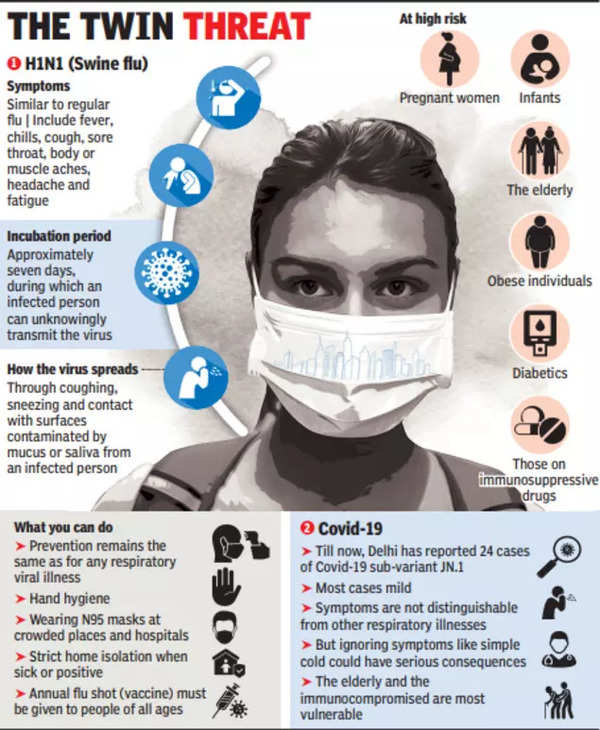
The federal advisory notes that H1N1 manifests through a combination of systemic and respiratory signs. Primary indicators include:
- Fever, cough, sore throat, and chills
- Severe headache and generalized body aches
- Fatigue, lethargy, and weakness
- Gastrointestinal manifestations such as nausea, vomiting, and diarrhoea
- Runny nose and occasional loss of the sense of smell
Dr. (Major) Rajesh Bhardwaj, founder, ENT and Sleep Expert at MedFirst ENT Centre, noted in published commentary that swine flu can be somewhat more dangerous and serious. The virus transmits primarily through respiratory droplets expelled during coughing or sneezing, alongside close contact with infected individuals. Vulnerable populations—specifically the elderly and those suffering from underlying pathologies such as diabetes, hypertension, and chronic kidney disease—face a risk of serious complications.
Mitigation Strategies and Healthcare Infrastructure Readiness
To curb community transmission, authorities emphasize standard infection control measures. Public guidance recommends staying home while sick, practicing proper respiratory hygiene by covering coughs and sneezes, washing hands regularly, and utilizing face masks in crowded indoor environments. Furthermore, health agencies advise against taking medicines without medical advice, urging individuals with prolonged symptoms to seek medical advice at the nearest healthcare centre.

Healthcare institutions are coordinating to monitor viral prevalence, including the 210 Influenza-B cases—dominated by the Victoria strain—identified alongside Influenza-A data in Delhi. Ensuring seamless triage and treatment pathways remains a priority for regional health boards.
As India navigates its seasonal influenza peaks, continuous epidemiological surveillance and rapid clinical intervention remain the primary defenses against severe morbidity.
Disclaimer: The information provided in this article is for educational and scientific communication purposes only and does not constitute medical advice. Always consult with a qualified healthcare provider regarding any medical condition, diagnosis, or treatment plan.