Delaware County tells Compass Mining rezoning is required for facility
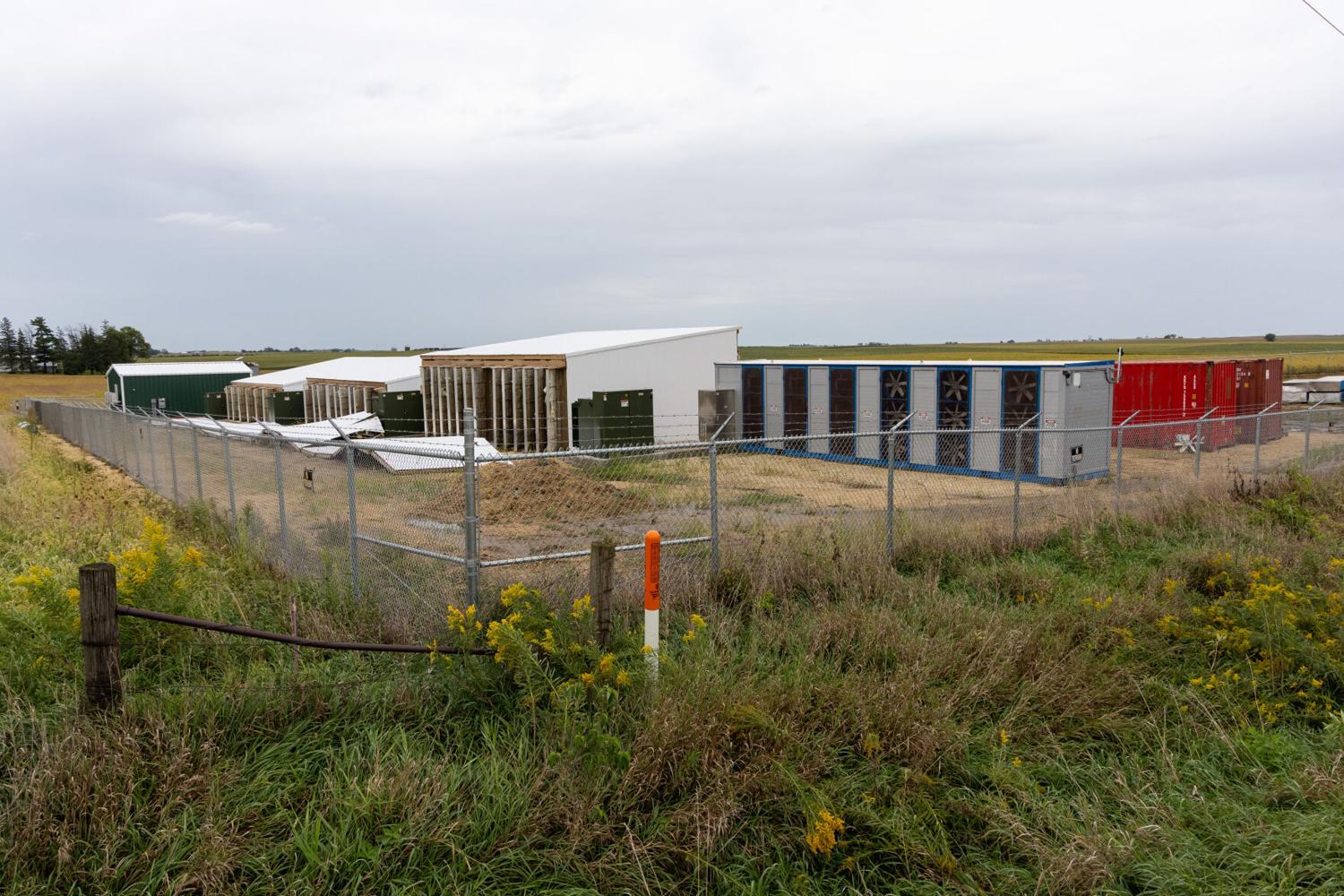
A Delaware County bitcoin mining facility operated by Compass Mining near Hopkinton has sparked regulatory friction and resident complaints regarding unpermitted construction and constant noise since operations began in 2025. Local officials and neighbors continue to clash with the firm over land use and sound mitigation efforts.
The Genesis of an Unannounced Data Center
Residents living near 2024 302nd St. in Hopkinton first noticed construction activity on leased agricultural land in late 2024. According to Alex Linderwell, the Delaware County Planning and Zoning administrator, a standard zoning permit was approved that fall for a contractor seeking to place containers for a project linked to a local substation. Linderwell noted that county zoning rules permit electrical substations on agricultural land. However, the true nature of the project became clear only after the data center went live.
By early 2025, county road departments reported concrete slabs on the site. In the spring of 2025, Hopkinton resident Randy Fitzgerald contacted county officials to report that the facility’s cooling fans had started running. When county staff failed to reach the initial contractor, they contacted Wilmington, Delaware-based Compass Mining directly, informing the firm that rezoning was required for continued operation. Compass Mining helps customers purchase bitcoin mining hardware and establish mining sites across multiple states, including Indiana, Minnesota, North Dakota, Texas, Ohio, and Iowa.

Decibel Levels and Resident Pushback
Cryptocurrency mining operations function as temperature-controlled, energy-intensive warehouses of computer servers that verify transactions on the decentralized bitcoin network every ten minutes. When the Hopkinton facility launched, its cooling fans ran around the clock. Fitzgerald reported that the close-range sound measured 95 decibels, a level comparable to a lawn mower or power tools.
“I hear the blare of these fans going, and so I don’t hear grain bins. I don’t hear cattle mooing, I don’t hear pigs squealing… all those things that you know and love,” Fitzgerald said regarding the disruption to the rural environment.
While the company adjusted operations to restrict fan usage primarily to the early morning and evening hours, the underlying hum of the servers remains audible inside nearby homes with windows and doors closed. To address noise complaints, the company constructed insulated structures around the fans. Fitzgerald described these additions as flimsy 2-by-4 walls resembling a low-grade school project that collapsed following the first rainstorm. Compass Mining did not respond to multiple requests for comment from The Gazette.
Zoning Board Rejections and Regulatory Escalation
Regulatory challenges intensified in July 2025 when the Delaware County Planning and Zoning Commission recommended denying Compass Mining’s initial application to rezone the property from agricultural to light industrial use. Rather than acting immediately on that recommendation, the Delaware County attorney and a county supervisor offered the company an opportunity to lower its sound output.
Following operational adjustments, company representatives proposed expanding the facility during an August 2026 Planning and Zoning hearing. The commission again recommended denial. Under county ordinances, neither agricultural nor light industrial operations are permitted to produce offensive noise or vibrations.
The matter now rests with the Delaware County Board of Supervisors, which holds the authority to override the zoning commission. If the board upholds the denial, the county attorney could issue a cease-and-desist order to force the facility’s closure. As local governments increasingly grapple with industrial-scale digital infrastructure in rural zones, property owners and municipal planners face complex legal and acoustic hurdles that often require specialized land-use counsel and environmental engineering oversight to resolve.