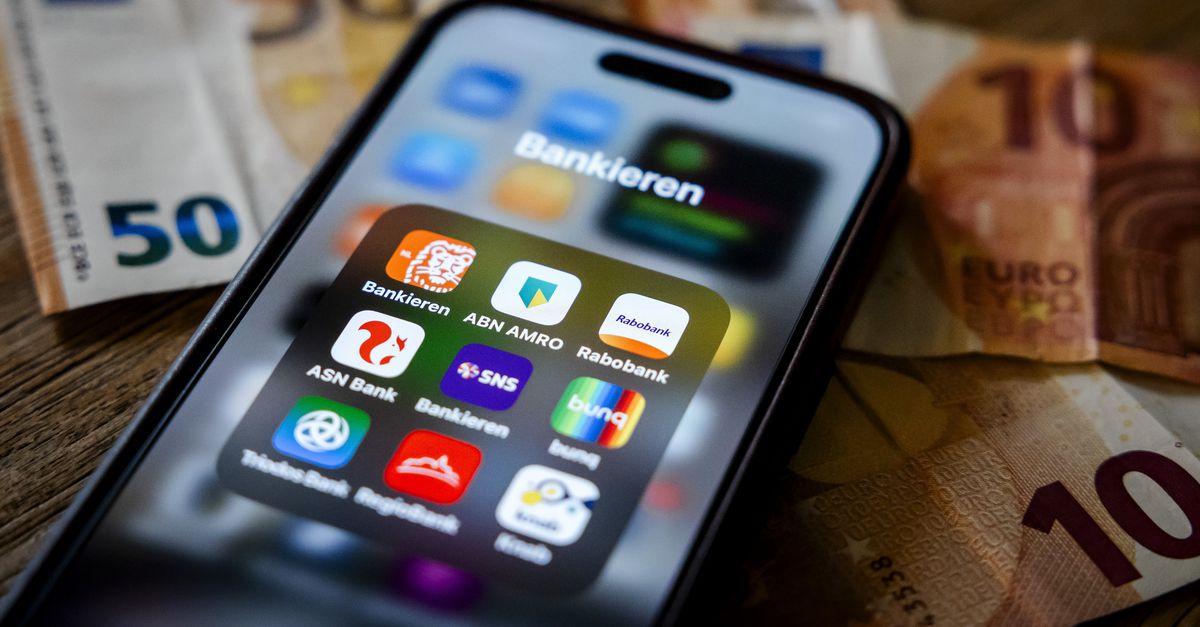
Consumentenbond Demands End to Mandatory Banking Apps as 2.6 Million Risk Exclusion
The Consumentenbond is demanding that Dutch banks reverse policies requiring smartphone applications for essential banking services, citing concerns over the digital exclusion of millions of customers.
The consumer advocacy group released findings today indicating that financial institutions are increasingly restricting access to non-mobile alternatives. The organization calls this trend "app coercion," and it creates real barriers for people who cannot or choose not to use smartphones for banking.
According to the Consumentenbond, the shift directly affects the 2.6 million people in the Netherlands identified by De Nederlandsche Bank in 2023 as unable to manage all their banking affairs independently.
ING has become a primary target of the criticism. Since October, the bank has mandated that customers use its mobile application to confirm payments made via Wero, the successor to iDeal, according to nu.nl.
Customers can no longer use the physical ING Scanner for these specific transactions. To accelerate this transition, the bank has offered a 50-euro incentive to clients who trade in their physical scanning devices for the mobile app, the Consumentenbond reported.

The pressure on traditional hardware is intensifying across the sector. Triodos Bank is steadily discouraging the use of its “identifier” device, no longer issuing replacements for broken units unless a customer explicitly requests one, nu.nl noted.
Some services, such as opening a savings deposit, are now restricted entirely to the bank’s app. Meanwhile, ASN Bank has announced plans to mandate app usage for Wero payments starting in 2028, per nu.nl, according to NU.
Not all institutions have followed this trajectory. ABN AMRO and Rabobank currently maintain full support for banking without a smartphone, though both institutions promote their mobile applications heavily, according to NRC. For many, the resistance to app-only banking stems from more than just technical difficulty. Privacy fears and a reluctance to depend on big tech platforms are key reasons for user concern, the Consumentenbond said.
“A bank app can be useful, but it must never become the only possibility. A smartphone can be lost, broken, stolen, or outdated, leaving consumers unable to access their payment accounts. And people who do not want or cannot use a smartphone are excluded by this app coercion.”
This statement was provided by Sandra Molenaar, director of the Consumentenbond, as reported by NRC. In a survey of 3,830 panel members conducted by the bond, 86 percent of respondents insisted that full-fledged, non-app alternatives must remain available for essential services. This sentiment was consistent across both older demographics and younger users aged 18 to 44, according to NRC.

The current lack of universal standards allows banks to determine their own policies regarding digital alternatives. However, this regulatory autonomy faces an upcoming challenge. New European rules, known as the Payment Services Regulation, are expected to take effect in 2028 or 2029, according to nu.nl.
These rules will generally prohibit banks from mandating the use of a smartphone for logging in or confirming payments, with exceptions only for customers who explicitly opt into app-based services.
Founded in 1953, the Consumentenbond became the world’s most penetrating consumer organization by 1997, representing one in nine Dutch families with 650,000 members. It was a founding member of Consumers International in 1960 and the European Consumers’ Bureau in 1962, and helped establish the Foundation for Resolution of Disputes in 1970 to handle consumer complaints across industries.
For now, the Consumentenbond continues to call on ING and ASN Bank to roll back their requirements, according to Ad. “Banks should adapt their services to their customers, not the other way around,” Molenaar told nu.nl.
Related reading