The ongoing attacks on Sudan’s Zamzam camp, a refuge for hundreds of thousands of displaced people, are escalating the already dire humanitarian crisis. This article delves into the harrowing realities of the situation, documenting the violence, casualties, and international response to the attacks on Zamzam camp and the surrounding areas. Learn about the human cost and the urgent need for aid in this critical report.
Sudan’s Zamzam Camp Under Relentless Attack: ‘Death is Everywhere’
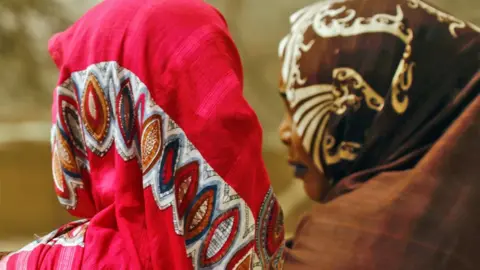
Ongoing Crisis: A Camp Under Siege
Devastating attacks on Zamzam camp, a refuge for hundreds of thousands displaced by Sudan’s civil war, have persisted for three consecutive days, according to camp residents. The situation is rapidly deteriorating, exacerbating an already dire humanitarian crisis.
- The attacks are concentrated on el-Fasher and two nearby camps, Zamzam and Abu Shouk.
- These camps house over 700,000 people, many of whom are facing famine-like conditions.
- The violence coincides wiht the second anniversary of the civil war’s outbreak between the Rapid Support Forces (RSF) and the Sudanese army.
Eyewitness Accounts: A Glimpse into the Horror
Residents paint a grim picture of life inside the besieged camp. One Zamzam resident, identified as Mustafa, 34, who works at a community kitchen, described the situation in stark terms:
A large number of young people had been killed… Those who were working in the community kitchen have been killed, and the doctors who were part of the initiative to reopen the hospital were also killed.
Mustafa further detailed the personal toll of the violence:
My uncle and my cousin were killed. People are wounded, and there is no medicine or hospital to save them – they are dying from bleeding… The shelling is still ongoing, and we are expecting more attacks in the morning.
He emphasized the complete isolation of the camp, stating that all routes out of the camp were closed and it was surrounded from all four directions.
Another resident, Wasir, conveyed a sense of utter devastation:
Nothing [was] left in Zamzam… A large number of civilians have fled,and we are still trying to leave,but we haven’t succeeded,all the roads are blocked,and we have children with us… Death is everywhere. As I speak to you now from inside the trench, there is shelling happening.
Casualties and Displacement: The human Cost
The United Nations reports that over 100 civilians, including at least 20 children and a medical team, have been killed in the recent assaults in Darfur. The attacks are attributed to the paramilitary Rapid Support Forces (RSF), although the group denies committing atrocities.
North Darfur’s Health Minister, Ibrahim khater, reported seeing many people fleeing Zamzam towards el-Fasher, noting that I am observing many people walking from Zamzam – mostly children, women and the elderly… Some were injured, tired and saying they lost their family – dead on the streets. The situation is catastrophic.
International Response: Condemnation and Concern
The international community has voiced strong condemnation of the attacks.
Clementine Nkweta-Salami, the UN’s humanitarian co-ordinator in Sudan, expressed being appalled and gravely alarmed
by the reports from Darfur, adding that this represents yet another deadly and unacceptable escalation in a series of brutal attacks on displaced people and aid workers.
The U.S. State Department stated it was deeply alarmed by reports of attacks by the RSF on Zamzam and Abu Shouk
, condemning the RSF’s actions against vulnerable civilians.
British Foreign Secretary David Lammy described the reports of indiscriminate RSF attacks
as shocking
.
Targeting Healthcare: A Intentional Strategy?
Relief International reported that nine of it’s workers, including doctors, referral drivers, and a team leader, were killed in the attack on Zamzam. The institution, which was the last provider of critical health services in the camp, alleged that RSF fighters were responsible.
The charity stated, We understand that this was a targeted attack on all health infrastructure in the region to prevent access to healthcare for internally displaced people… We are horrified that one of our clinics was also part of this attack – along with other health facilities in el-Fasher.
Kashif Shafique, Relief International’s Sudan director, described the killings as deliberate, relaying accounts from surviving staff members that RSF fighters entered a safety bunker and shot the victims in the head and chest.
Conflicting Narratives: RSF’s Response
In a statement released on Saturday, the RSF denied obligation for attacks on civilians, claiming that scenes of killing in Zamzam were staged to discredit its forces. The following day, the group asserted it had completed a successful liberation
of the camp from Sudan’s army, accusing the army of using Zamzam as a military barracks, and innocent civilians as human shields.
Satellite Analysis: Evidence of Widespread Destruction
Specialists at Yale University’s Humanitarian Research lab analyzed satellite images, concluding that this attack conservatively represents the most significant ground-based attack on Zamzam… since fighting erupted in the el-Fasher area in spring of 2024.
The lab observed that arson attacks have burned multiple structures and significant areas of the camp in the center, south, and southeast portions of the camp.
Context: Sudan’s Humanitarian Crisis
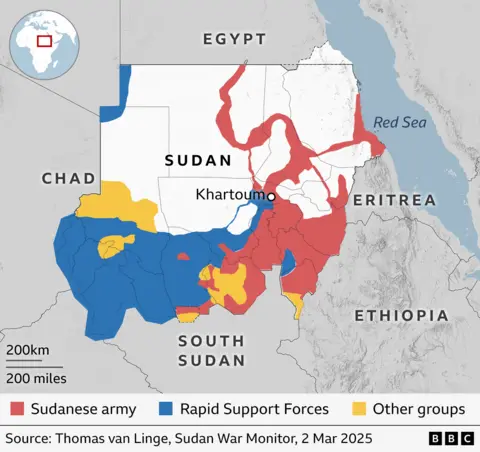
The war between the army and the RSF, a power struggle that erupted on April 15, 2023, has created the world’s largest humanitarian crisis. It has displaced more than 12 million people and pushed communities into severe hunger. El-Fasher, the last major town in Darfur under army control, has been under siege by the RSF for a year.
Further Reading
For more in-depth coverage on the ongoing crisis in Sudan, refer to these resources: