
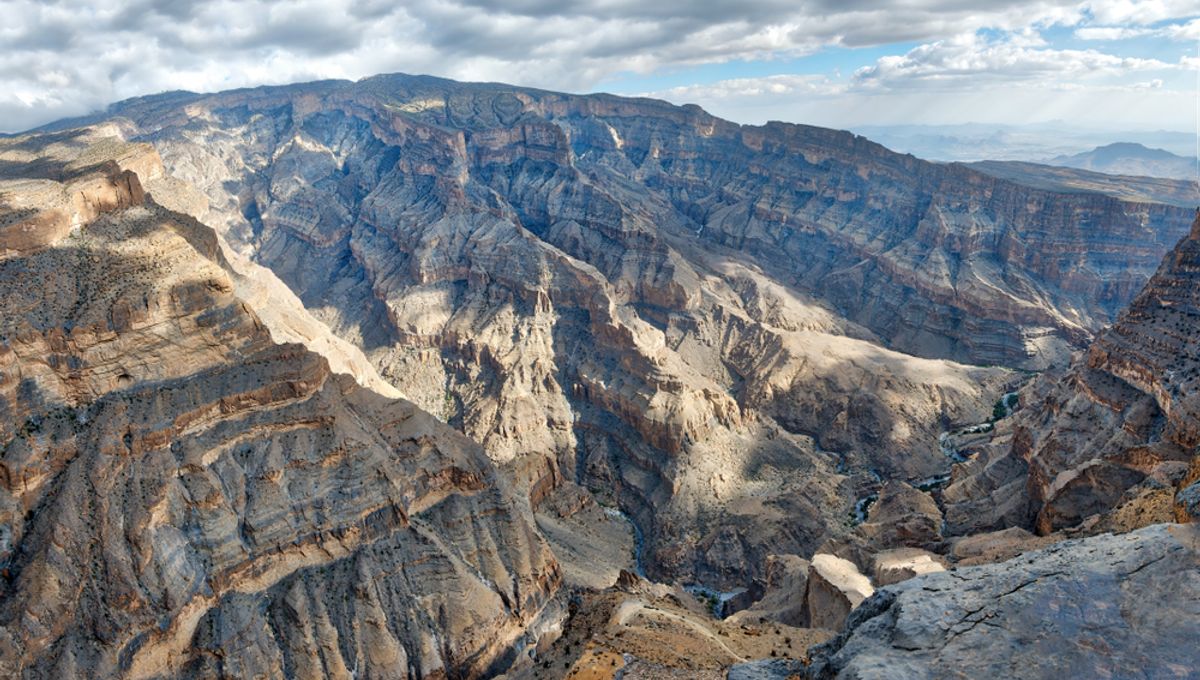
Geologists Uncover “Ghost” Mantle Plume Beneath Oman
Scientists have found evidence of an unusual geological phenomenon: a “ghost” mantle plume under Oman. Unlike typical mantle plumes linked to volcanoes, this one shows no current volcanic activity, posing new questions about Earth’s internal processes.
Unveiling the Dani Plume
Mantle plumes, rising from the Earth’s core-mantle boundary, deliver heat to the crust’s underside. This heat usually causes magma and volcanic eruptions. Researchers, however, have identified a plume, dubbed the Dani plume, that lacks a surface volcanic signature.
The Dani plume’s existence was revealed by analyzing seismic wave behavior from far-off earthquakes. The affected region, roughly 200 kilometers across and widening upwards, suggested a hotter-than-surrounding-rocks area ascending through the mantle. These findings support the concept that a mantle plume, lacking volcanic expression, can still exist.
“Is the Dani plume unique, or do similar ghost plumes exist elsewhere on Earth?”
— Researchers
In 2023, the United States Geological Survey reported over 1,700 earthquakes in the past week (USGS), highlighting the planet’s active tectonic nature.
Historical Impact
The Dani plume might have played a role in lifting eastern Oman, and it could have influenced the Indian plate’s rotation and eventual collision with Asia in the late Eocene era, approximately 40 to 34 million years ago, according to the study. The authors suggest that ancient ghost plumes may have existed, with evidence found in North America and Australia, suggesting that these features might not be uncommon.
The study, published in *Earth and Planetary Science Letters*, included data from seismic stations near the Oman-United Arab Emirates border and further afield. The findings suggest that there could be more such “ghost” plumes, potentially leading to a revision of calculations regarding the heat escaping Earth’s core.
