
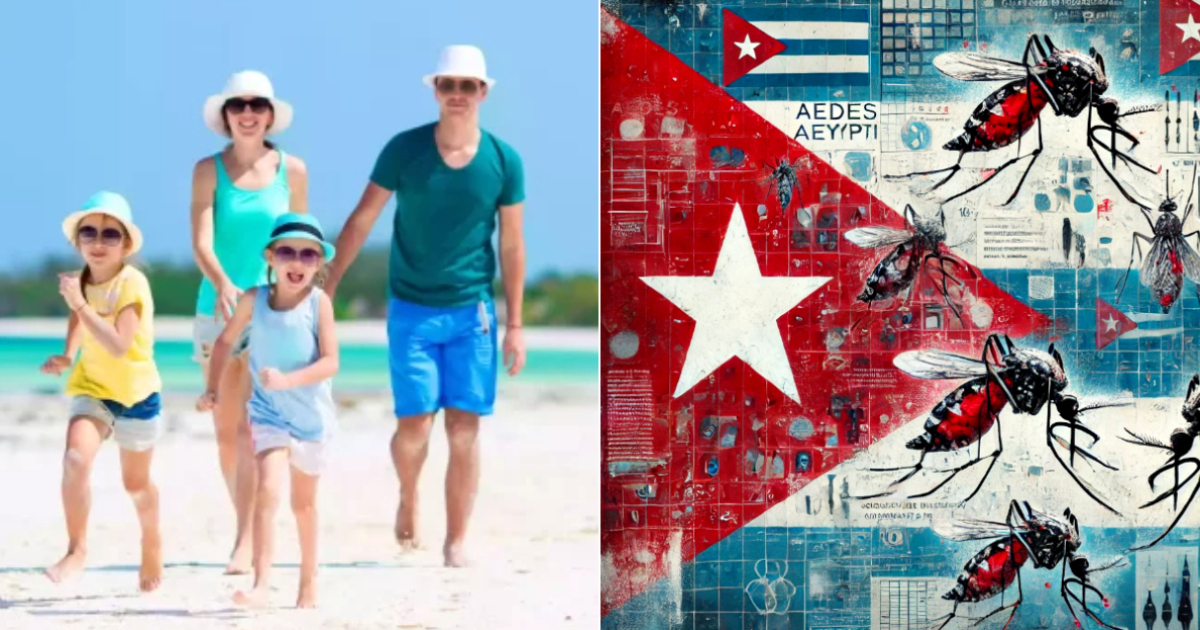
Cuban Health Crisis & Arbovirus Deaths Prompt Canadian Travel Advisory
Recent confirmation of 33 deaths in Cuba due too arboviruses – including 14 children and adolescents who succumbed to chikungunya and seven to dengue – has sparked international concern and prompted a travel advisory from the Canadian government. The news, initially reported by TVA News and subsequently echoed by CiberCuba, details a growing health crisis on the island nation.
Cuban Vice Minister of Health, Carilda Pena, officially acknowledged the deaths, a disclosure that comes after weeks of reports from families and doctors regarding a surge in severe cases and overwhelmed hospitals. previously, the Ministry of Public Health (MINSAP) had not publicly recognized fatalities linked to chikungunya, despite mounting evidence.
Global Affairs Canada updated its travel recommendations on November 18th, citing the ongoing epidemic outbreak and the deteriorating state of Cuba’s healthcare system. The advisory warns travelers of a “larger number of chikungunya cases than expected,” placing Cuba alongside countries like Bangladesh, Kenya, and Sri lanka with active outbreaks.
The canadian government highlights notable limitations within Cuba’s medical infrastructure, including poorly maintained hospitals, shortages of essential medicines, and inadequate hygiene standards. The advisory notes that while international clinics in tourist areas offer a higher standard of care,access is generally restricted to foreign visitors.
Beyond the immediate health concerns, the advisory also points to broader systemic issues impacting the country, including shortages of food, fuel, and medicine, frequent power outages, and a struggling emergency response system. Slow ambulance response times, particularly outside of tourist zones, are also flagged as a concern.
The situation has fueled criticism within Cuba, with citizens and medical professionals alleging a lack of transparency from MINSAP and the underreporting of actual case and fatality numbers. Reports on social media indicate numerous children remain in critical condition.
While the Cuban government, under Miguel Diaz-Canel, continues to hold public discussions with medical experts, critics argue that concrete action and resource allocation remain insufficient to address the escalating crisis. The unfolding situation stands in stark contrast to Cuba’s long-promoted image of a revolutionary healthcare model,now visibly struggling with an epidemic,resource scarcity,and accusations of prioritizing state messaging over public health transparency.
