
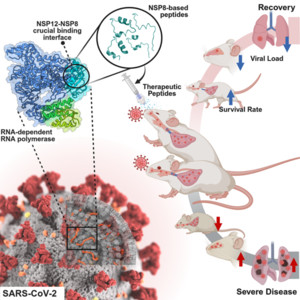
COVID-19 by blocking RNA replication, offering hope against variants.">
amid ongoing global concerns about the resurgence of COVID-19 and the emergence of new variants,a novel treatment strategy that surpasses the limitations of existing antiviral approaches has been unveiled. director Choi Young-ki of the Korea Virus Basic Research Institute announced on June 23rd the development and demonstrated effectiveness of a peptide-based antiviral that blocks the formation of the RNA replication enzyme complex, a critical component for COVID-19 virus propagation.
The COVID-19 virus (SARS-CoV-2) relies on an ‘RNA-dependent RNA polymerase (RDRP) complex’ to replicate itself. This complex comprises three proteins: NSP12, NSP8, and NSP7, which work together to replicate the virus’s genetic material. NSP8 acts as a crucial binding ring, stabilizing the entire structure.
Current antiviral drugs, such as Remdesivir and Molnupiravir, directly target and inhibit the activity of this complex.However, their effectiveness is limited, and the virus can develop resistance.Researchers have taken a different approach: instead of preventing the complex from functioning, they aim to prevent its formation.
Did You Know? The global market for antiviral drugs was valued at $48.1 billion in 2023 and is projected to reach $53.9 billion by 2029, highlighting the ongoing need for innovative antiviral therapies [[Fortune Business Insights]].
Targeting the NSP12-NSP8 Interaction
The research team focused on the interaction between NSP12 and NSP8, a region highly conserved across various coronaviruses, making it less susceptible to mutations. Using ultra-temperature electron microscopy (Cryo-EM), they precisely analyzed this binding site and developed four peptides that mimic its structure.
to ensure the peptide’s stability and ability to penetrate cell membranes, a cell infiltration sequence was introduced. This optimized peptide-based antiviral selectively binds to and blocks the approach of NSP8, preventing the normal formation of the complex. Consequently, viral RNA replication and proliferation are suppressed.
Prosperous results in Cell and Animal Models
The antiviral effects of the peptide were confirmed through cell experiments and mouse infection models.The peptide inhibited RNA replication of the COVID-19 virus, significantly reducing infected cells and viral concentration in tissues. Notably, mice treated with the peptide experienced a 100% survival rate against fatal infections, demonstrating strong prevention and treatment effects.The treatment was effective both before and after infection.
Pro Tip: Peptide-based therapeutics offer a promising avenue for combating viral infections due to their ability to target specific viral mechanisms and their potential for rapid development and modification [[2]].
Future Directions and Clinical Applications
choi Young-ki emphasized that the NSP12-NSP8 binding site targeted in this study is highly conserved across various COVID-19 variants. He added that “peptide-based therapeutics have high stability and flexibility, showing the possibility of next-generation treatment that can be applied to various respiratory viruses.”
Researchers are now focused on enhancing the stability of the peptides and optimizing delivery systems to increase the potential for clinical application. The study was published on May 27 in *Molecular Therapy*, a leading journal in cell and gene therapy (IF 12.9).
Key Findings Summarized
| Finding | Details |
|---|---|
| Target | NSP12-NSP8 protein interaction in the COVID-19 virus |
| Mechanism | Peptide blocks the formation of the RNA replication enzyme complex |
| Results | Inhibited RNA replication, reduced infected cells, 100% survival rate in infected mice |
| Future | Improving peptide stability and optimizing delivery systems for clinical use |
The Ongoing Fight Against COVID-19
The COVID-19 pandemic has spurred unprecedented research and development in antiviral therapies. While vaccines have been crucial in preventing severe illness, effective treatments remain essential, especially in the face of emerging variants. Peptide-based antivirals represent a promising new class of therapeutics that could offer a more targeted and adaptable approach to combating viral infections [[3]].
The development of this peptide-based antiviral highlights the importance of understanding the essential mechanisms of viral replication and identifying vulnerable targets for therapeutic intervention. As the virus continues to evolve, ongoing research and innovation will be critical to staying ahead of the curve and protecting public health.
What are yoru thoughts on this new approach to treating COVID-19? How important is it to continue developing new antiviral strategies?
Disclaimer: This article provides facts about a new research development and should not be interpreted as medical advice. Consult with a healthcare professional for any health concerns or treatment options.
Share this article and join the conversation! Subscribe to World Today News for the latest updates on science and health.
