
Smartphone Stress Test: new Biosensor Brings Lab-Accurate Cortisol Readings to your Fingertips
Table of Contents
SANTA CRUZ, CA – A revolutionary biosensor, powered by cutting-edge protein design and readily available smartphone cameras, is poised to transform stress hormone monitoring. Researchers at the University of California, Santa Cruz have developed a highly accurate method for measuring cortisol – the body’s key stress hormone – bringing the precision of laboratory testing directly to the point of care.
[Image of Stressed Person Silhouette Crumpled Paper with caption: A groundbreaking biosensor powered by protein design and smartphone cameras could transform how we measure the body’s stress hormone, cortisol, bringing lab-level precision to point-of-care testing. Credit: Shutterstock]
Cortisol plays a vital role in regulating essential bodily functions, including blood pressure and metabolism. Imbalances in cortisol levels are linked to a wide range of health issues, making accurate monitoring crucial.Traditionally, this required a visit to a clinical facility. Now, that’s changing.
From Lab to Life: Smartphone-Enabled Cortisol Testing
andy Yeh, Assistant Professor of Biomolecular Engineering at UC Santa Cruz, spearheaded the development of a luminescent artificial sensor that binds to cortisol molecules in blood or urine. This binding triggers a light emission,the intensity of which directly correlates to the hormone’s concentration. A study published in the journal of the American chemical Society validates the sensor’s reliability across the full spectrum of cortisol levels relevant to human health.”You can read the signal directly – the output of the sensor is light emissions, so essentially you can just take a picture of the test with your smartphone,” explains Yeh. This innovative approach combines exceptional sensitivity with affordability, eliminating the need for expensive and complex laboratory equipment.
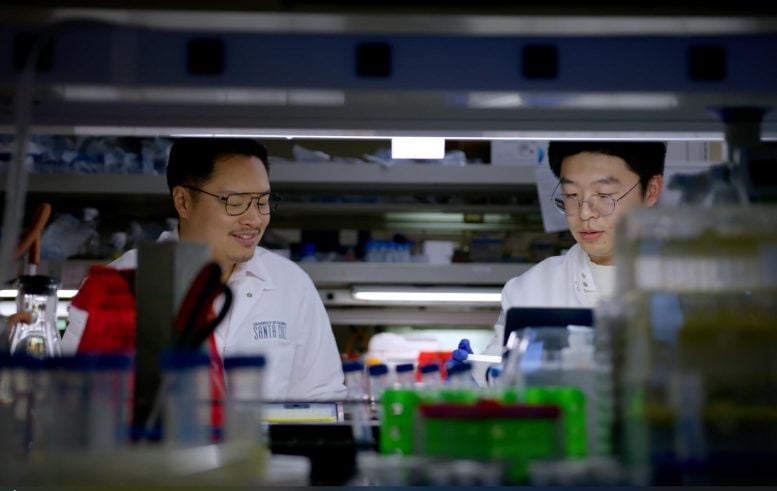
[Image of Andy Yeh in the Lab with caption: UC santa Cruz Assistant Professor of Biomolecular Engineering Andy Yeh’s lab focuses on artificial protein design. Credit: Impact Creative for UC Santa Cruz]
Engineered From the Ground Up
Yeh’s work leverages the power of artificial protein engineering – a field that utilizes AI-driven computational design to create entirely new proteins,rather than modifying existing ones.
For this project, he engineered proteins
