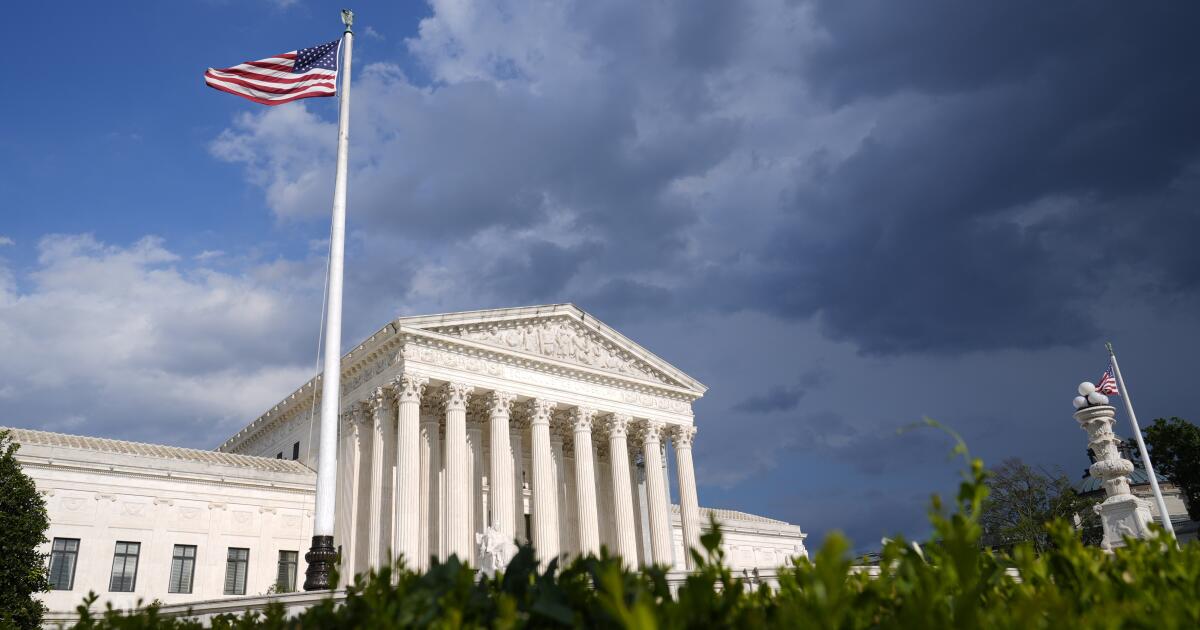
Conservative Justices Abandon Originalism as Guiding Principle
The United States Supreme Court is currently navigating a deepening internal divide over the application of originalism regarding birthright citizenship, a doctrine historically rooted in the 14th Amendment. As of July 2026, the conservative majority is clashing over whether historical intent or contemporary political pressure from the Trump administration should dictate the constitutional interpretation of who qualifies as a U.S. citizen at birth.
The Erosion of Originalist Consistency
Originalism—the judicial philosophy that the Constitution should be interpreted as it was understood at the time of its adoption—has long served as the bedrock of conservative jurisprudence. For decades, this framework was used to insulate the court from shifting political tides. However, the current term has revealed a departure from this stability. Legal scholars note that when originalism conflicts with high-stakes policy goals, such as those championed by former President Donald Trump regarding the restriction of birthright citizenship, the court’s commitment to historical textualism appears increasingly flexible.
The 14th Amendment, ratified in 1868, states that “All persons born or naturalized in the United States, and subject to the jurisdiction thereof, are citizens of the United States.” For over a century, the Supreme Court has interpreted this under the precedent established in United States v. Wong Kim Ark (1898), which confirmed that children born to non-citizens on U.S. soil are indeed citizens. The current friction arises as factions within the court weigh whether to reconsider this long-standing interpretation to accommodate executive-led immigration restrictions.
Jurisdictional Uncertainty and Municipal Impact
The ambiguity surrounding the court’s direction creates immediate logistical challenges for local and state governments. Municipalities that rely on clear federal guidance for voter registration, social service eligibility, and public school enrollment are finding themselves in a state of administrative limbo. When citizenship status is called into question, local agencies face potential litigation and budget volatility.
For those managing compliance in this environment, clarity is hard to find. Organizations and individuals frequently rely on Immigration Law Specialists to interpret how evolving federal directives impact local status. Similarly, families and businesses impacted by these shifts often find that engaging Constitutional Law Attorneys is the only way to mitigate the risk of sudden policy reversals that could affect legal standing.
“The danger of abandoning a consistent originalist framework is that the law becomes a reflection of the executive’s current agenda rather than a stable document. When the court moves away from the historical understanding of the 14th Amendment to satisfy political pressure, it creates a cascading uncertainty for every local jurisdiction that relies on federal definitions to function.” — Dr. Elena Vance, Senior Fellow in Constitutional Studies
The Trump Administration’s Influence on Judicial Philosophy
The influence of Donald Trump’s judicial appointments has become a central point of analysis. While these justices were selected for their commitment to originalism, the current debate suggests a divergence between “academic” originalism and “results-oriented” originalism. According to records from the Supreme Court of the United States, the court is under unprecedented pressure to address the “birthright” question through the lens of national security and border integrity, rather than purely through the historical lens of the Reconstruction Era.
This shift has forced lower courts into a reactive posture. In regions with high immigrant populations, local officials are struggling to maintain infrastructure, as they must prepare for two distinct legal realities: one where birthright citizenship remains absolute, and one where it is subject to executive challenge. The financial burden of this preparation often falls on local taxpayers, who must fund legal reviews and adjustments to municipal record-keeping systems.
Bridging the Gap Between Policy and Practice
The tension between the Supreme Court’s historical principles and its current political pressures is not merely an academic exercise. It is a fundamental shift in how the law governs the citizenry. As the court deliberates, the gap between the original intent of the 14th Amendment and the modern political desire to limit citizenship by birth continues to widen.
For institutions and businesses, the volatility of the current legal climate necessitates a proactive approach to risk management. Whether you are a non-profit managing citizenship-based service programs or a corporation navigating the complexities of international workforce mobility, the need for expert guidance has never been higher. Accessing a Verified Legal Directory allows stakeholders to connect with professionals who specialize in the intersection of federal policy and local implementation. As the court moves forward, the ability to anticipate these shifts—rather than reacting to them after they have already disrupted your operations—will determine who remains compliant in an era of constitutional reinterpretation.
The court’s ultimate decision will likely redefine the scope of the 14th Amendment for the next century. Until that ruling is handed down, the nation remains in a state of suspended animation, waiting to see if the originalist project will hold, or if it will be discarded to clear a path for the political goals of the day.