
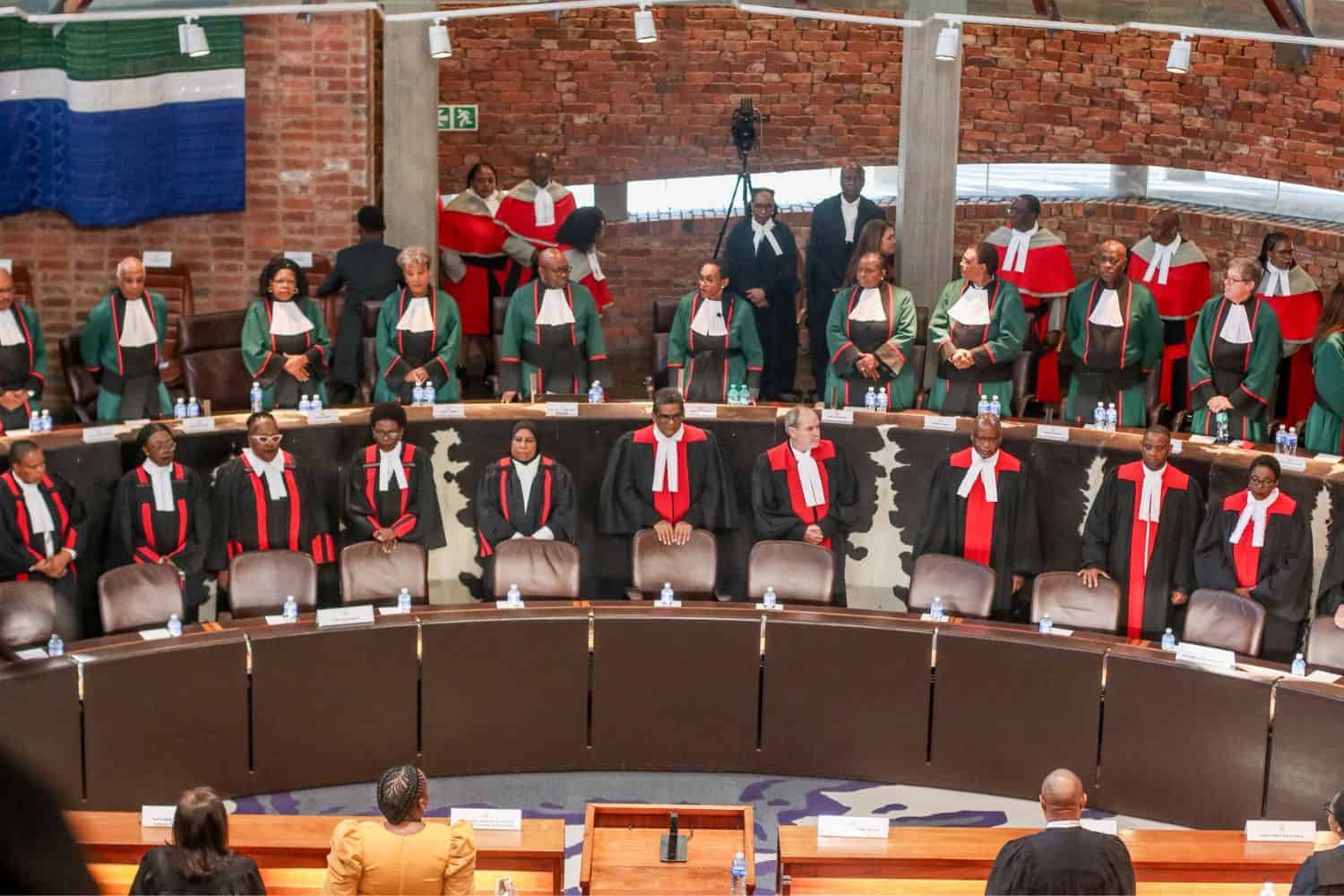
Court Invalidates Gender Commission Appointments Over Flawed Public Input
Parliament slammed for inadequate consultation in selection of key commissioners
The Constitutional Court has declared the appointment of five commissioners to the Commission for Gender Equality (CGE) invalid. This landmark ruling stems from Parliament’s failure to ensure sufficient public participation in the selection process.
Challenged Nomination Process
The legal challenge was initiated by Corruption Watch. The group contested the appointments of chairperson Nthabiseng Sepanya-Mogale, deputy chairperson Prabashni Subrayan Naidoo, Thando Gumede, Bongani Ngomane, and Leonashia Leigh-Ann Van Der Merwe, who began their five-year terms in March 2023. Parliament’s Portfolio Committee on Women, Youth and Persons with Disabilities led the nomination process, which opened in June 2022 and closed a month later.
Concerns were raised about the limited public access to candidate information. Only a shortlist was published, with full curricula vitae (CVs) withheld. Corruption Watch’s request for an extended public comment period, removal of a character limit on submissions, and the release of CVs was denied. The National Assembly proceeded with its recommendations to the president after candidate interviews.
A brief 14-day window for public comment was provided, with submissions restricted via an online form. The speaker had defended the process, asserting its reasonableness and alignment with past practices. However, the Information Regulator later clarified that candidate consent for CV publication is not necessary for public duties.
Constitutional Court Delivers Unanimous Verdict
In a decisive ruling, the Constitutional Court agreed with Corruption Watch, finding the public participation process deficient. The court stated, “In the circumstances, the appointment process conducted by the National Assembly therefore did not comply with the obligations imposed by section 59(1)(a) of the Constitution and is therefore invalid.”
The declaration of invalidity is suspended for 12 months, granting Parliament time to conduct a constitutionally sound appointment procedure.
Reactions and Implications
The CGE acknowledged the court’s decision in a brief statement, affirming its commitment to its mandate while Parliament rectifies the process. “The commission will not make further public pronouncements or respond to media enquiries on this matter,”
the statement read.
Corruption Watch welcomed the outcome, emphasizing citizens’ right to engage in such processes. “South African citizens have a right to participate fully in these processes, particularly where such institutions are at the forefront of ensuring justice and enforcement of human rights in the country,”
the organisation stated.
The ruling highlights the importance of robust public oversight in the appointment of Chapter 9 institutions, which play a crucial role in safeguarding constitutional rights. For instance, in 2023, there were 20,548 civil society organisations registered in South Africa, illustrating the potential breadth of public interest in governance (Sowetan Live, 2023).
Six other CGE commissioners, including Seeham Samaai, Mulalo Grace Nemathaheni, Mfundo Nomvungu, Yanga Malotana, Kamohelo Rodney Teele, and Marion Lynn Stevens, were appointed in March of the previous year following a similar process.
