
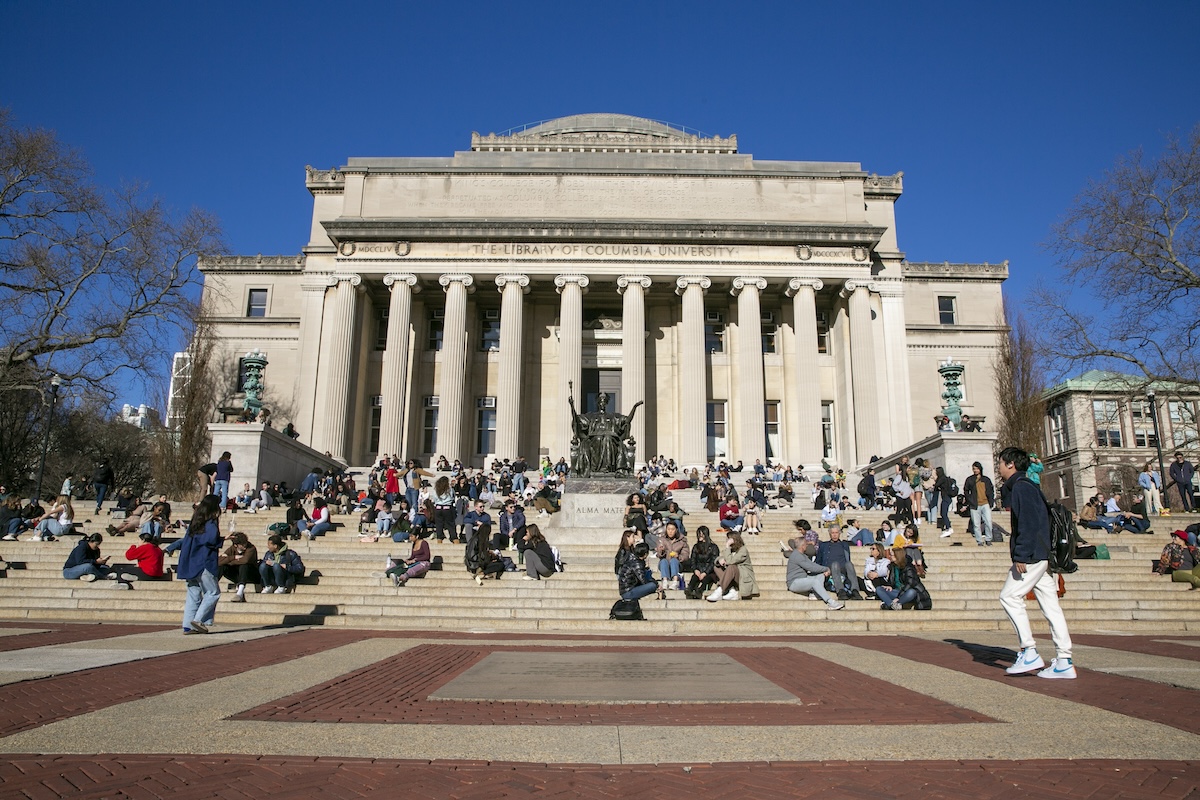
Immigration and Customs Enforcement (ICE) agents entered a Columbia University residence hall Thursday morning and arrested a student, prompting accusations that agents misrepresented themselves to gain access to the building. The university confirmed the arrest and stated that ICE agents falsely claimed they were searching for a missing person to enter the residence.
The student, identified as Elmina Aghayeva, an Azerbaijani national, was released later Thursday afternoon following intervention from New York City Mayor Zohran Mamdani, who spoke with President Donald Trump, according to reports. Aghayeva’s arrest and subsequent release occurred amidst ongoing scrutiny of ICE’s tactics and the Trump administration’s immigration policies.
The Department of Homeland Security (DHS), ICE’s parent agency, confirmed Aghayeva’s arrest, stating her visa had been revoked years prior due to non-attendance at classes and that she had been living in the United States unlawfully since then. DHS officials said agents were granted access to Aghayeva’s apartment by both her roommate and the building’s administrator.
Columbia University President Claire Shipman, in a statement, asserted that ICE agents were not authorized to enter non-public areas of the university, such as residence halls, without a judicial warrant or a guarantee. She indicated the university would provide further details as soon as possible.
Aghayeva, who uses the name Ellie Aghayeva online and has approximately 100,000 followers on Instagram, posted to her social media account during the arrest, stating that DHS had “arrested [her] illegally” and requesting assistance. She later posted that she had been released and was safe, though shaken. Columbia University also confirmed her release via social media.
Mayor Mamdani stated that he had discussed Aghayeva’s arrest with President Trump, who assured him she would be released shortly. This intervention highlights the political sensitivity surrounding ICE’s actions and the potential for direct presidential involvement in individual cases.
The incident at Columbia University echoes a similar case from nearly a year ago, when Mahmoud Khalil, a pro-Palestinian activist, was arrested in the lobby of his Columbia dormitory and detained for over 100 days without formal charges.
The university’s statement reiterated its policy regarding law enforcement access to campus buildings, emphasizing the requirement of a warrant or guarantee for entry into non-public areas. Shipman’s statement indicated the university is investigating the circumstances surrounding the ICE agents’ entry and the information they provided to gain access.
