
Colombia Disputes Peru’s Sovereignty Over Amazon Island
Border Dispute Flares as Petro Rejects Peruvian Control of Santa Rosa
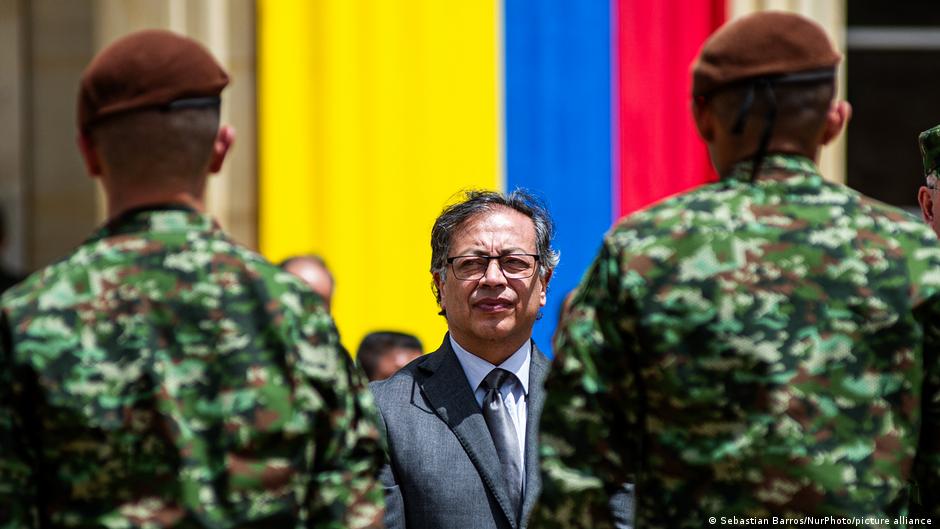
Colombian President **Gustavo Petro** has declared that his government does not recognize Peru’s sovereignty over Santa Rosa Island, a contested territory on the Amazon River. He accused Peru of violating a 1922 treaty that delineated the countries’ shared waterways.
Petro Denies Peruvian Authority
Speaking from Leticia, a Colombian city directly opposite Santa Rosa, **Petro** stated, Colombia does not recognize the sovereignty of Peru about the so called Santa Rosa Island and ignores the de facto authorities imposed in the area.
He suggested the island’s status, along with others formed after a 1929 treaty, should be settled by a binational commission or international courts.
Petro questioned the presence of a Russian helicopter carrying military personnel on the island, emphasizing its significance to Colombia’s independence.
Peru Reaffirms Control
Meanwhile, Peru’s Prime Minister **Eduardo Arana** and other cabinet members visited the Amazon District of Santa Rosa de Loreto. Their visit aimed to oversee social initiatives for the residents of this remote border community.
This Colombian assertion follows Peru’s Congress decision to establish Santa Rosa de Loreto as its own municipality. Previously, the settlement was part of the Yavari municipality. Originating in the 1970s, Santa Rosa has been administered by Peru, hosting detachments of its National Police, Navy, and customs services.
The Peruvian government maintains its territorial claim is undisputed. They argue Santa Rosa is an extension of Chinería Island, which both nations agreed in 1929 would remain under Peruvian control. Changes in the Amazon River’s course have since merged the two landmasses.
Border disputes are not uncommon in resource-rich regions. For example, a 2021 assessment by the UN Environment Programme highlighted that shifting river boundaries in South America have historically led to territorial disagreements impacting over 30 million people living near major river systems like the Amazon (UNEP 2021).
The dispute highlights the complex geopolitical landscape along the Amazon River, where historical agreements meet the dynamic nature of the waterway itself.
