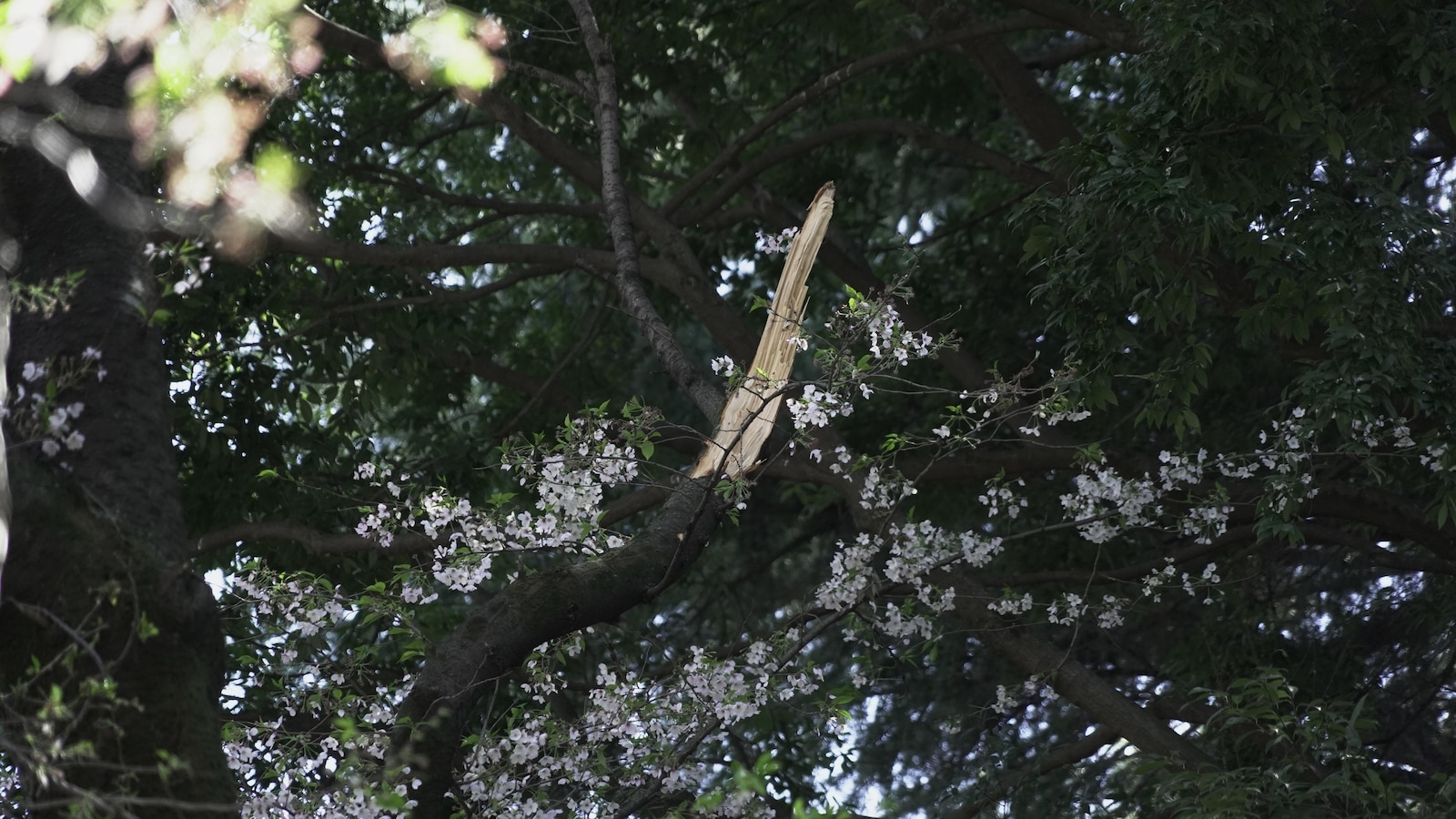
Collapse of Tokyo’s aging cherry blossom trees raises safety concerns
Aging Somei Yoshino cherry blossom trees, planted during Tokyo’s 1960s postwar expansion, are collapsing due to internal fungus, and decay. Recent falls at Kinuta Park and the Chidorigafuchi greenway have sparked urgent safety alarms during the peak hanami season, following a year where 85 trees fell across Tokyo parks.
Tokyo is currently grappling with a precarious intersection of cultural heritage and public safety. The Somei Yoshino variety, for which Tokyo is the birthplace, has become a symbol of the city’s resilience and beauty. However, the very era that defined the city’s modern growth—the postwar advancement of the 1960s—has left a legacy of biological vulnerability. Many of the trees planted during this surge are now reaching the end of their natural lifespans, becoming frail and susceptible to sudden collapse.
The danger is no longer theoretical. This past Thursday, the city witnessed two significant collapses. One occurred at the Chidorigafuchi greenway, where a tree nearly plummeted into the Imperial Palace moat. Simultaneously, at Kinuta Park in downtown Tokyo, a massive specimen—standing 18 meters tall with a diameter of 2.5 meters—crashed down, damaging a fence. This particular tree was among the oldest in the area, estimated to be over 60 years old.
The timing of these events is particularly volatile. As residents and tourists gather for hanami, the tradition of cherry blossom viewing, they place themselves directly beneath the canopy of these aging giants. The risk is compounded by the fact that these collapses are not isolated incidents. In March, another old cherry tree at Kinuta Park fell, resulting in an injury to a passerby.
The scale of the systemic failure is revealed in the data provided by Masakazu Noguchi, a Tokyo metropolitan official in charge of public parks. Last year alone, 85 trees fell across Tokyo’s park systems, leading to three injuries. While not all of these were cherry blossoms, a significant number were, highlighting a city-wide crisis of aging urban forestry.
The deterioration is driven by a combination of chronological age and biological erosion. Internal fungus growth is a primary culprit, eating away at the structural integrity of the trunks from the inside out, often leaving the exterior appearing healthy while the core becomes hollow and brittle.
This biological decay creates a complex management problem for city officials. Tokyo assembly member Yutaka Kazama has voiced concerns regarding the visibility of this decay, noting that trees with rotten or partially exposed roots are obviously dangerous. However, Kazama advocates for a nuanced approach to mitigation.
“Cherry blossom trees with their roots partially exposed or obviously rotten seem dangerous,” Kazama stated, calling for firm safety measures while cautioning against the impulse to quickly resort to tree felling.
This tension between preservation and safety is where the logistical challenge lies. Removing iconic trees can be a cultural loss, but leaving them standing risks human life. Solving this requires a shift from reactive clearing to proactive, scientific management. The need for specialized certified arborists has become paramount, as only professional structural assessments can determine which trees can be saved through support systems and which pose an unacceptable risk to the public.
the recurring injuries associated with these falls raise significant liability concerns for the metropolitan government. When public infrastructure—including biological infrastructure like park trees—fails and causes harm, the legal ramifications are complex. Affected citizens often seek the guidance of personal injury attorneys to ensure that municipal negligence in tree maintenance is addressed and compensation is secured.
The current situation in Tokyo serves as a warning for other global cities that underwent similar rapid greening phases during the mid-20th century. The “postwar advancement” model of planting often prioritized quantity and rapid coverage over long-term species diversity and staggered aging. Entire urban forests are hitting their senescence threshold simultaneously.
To mitigate this, the city must invest in advanced diagnostic tools to detect internal fungus before the wood fails. This involves coordinating with municipal infrastructure consultants to integrate biological health monitoring into the city’s broader safety protocols. The goal is to move beyond the binary choice of “leave it or chop it,” utilizing support structures to extend the life of these iconic trees without endangering the crowds below.
For more detailed reporting on these events, the Associated Press via ABC News provides ongoing coverage of the safety measures being implemented across Tokyo’s greenways.
The falling blossoms of Tokyo are a timeless image of transience, but the falling trees are a stark reminder of the physical decay of urban infrastructure. When nature is integrated into a dense metropolis, it ceases to be merely scenery and becomes a structural element that requires rigorous maintenance. As Tokyo navigates this crisis, the city’s ability to balance its aesthetic soul with the cold reality of public safety will define the future of its urban canopy. For those tasked with managing these risks, finding verified professionals through the World Today News Directory is the only way to ensure that the beauty of the season does not come at the cost of human safety.