
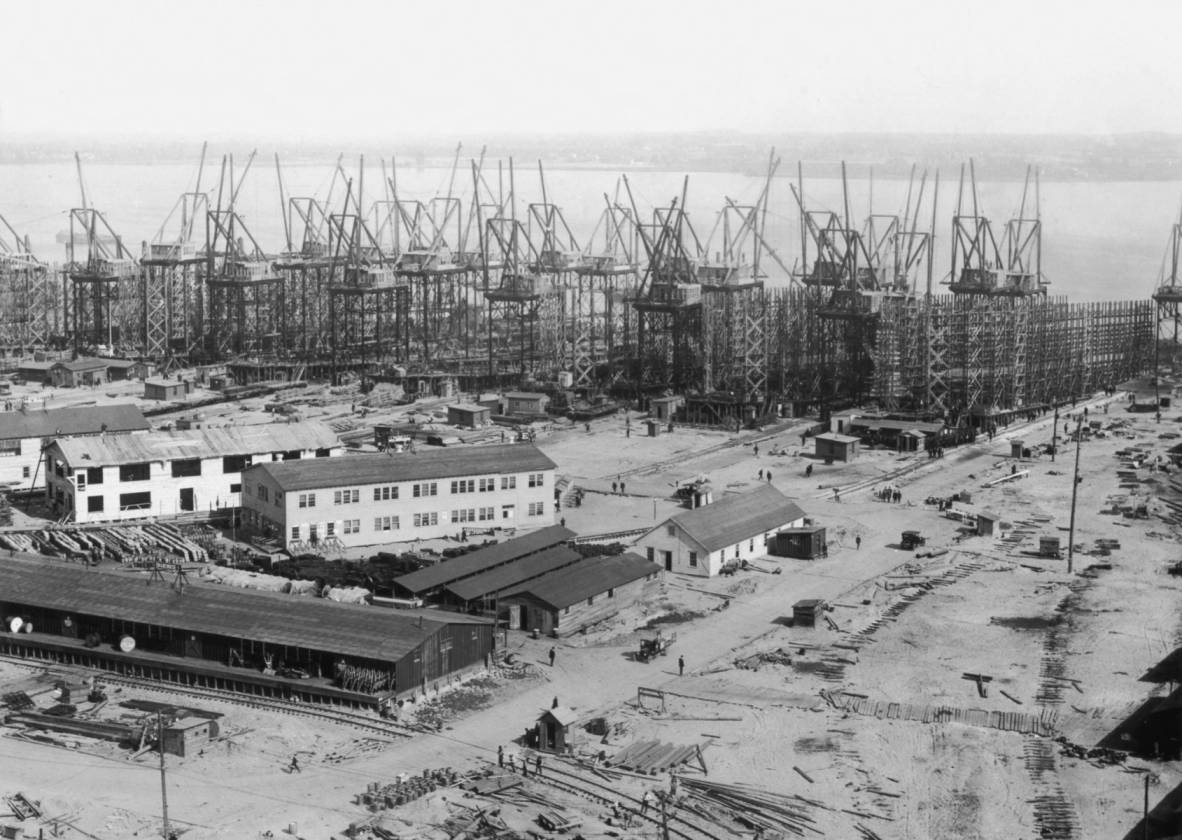
United States is now at the center of a structural shift involving the global maritime industrial base. The immediate implication is heightened competition for shipbuilding contracts and intensified policy measures that could reshape supply‑chain financing, labor markets, and strategic logistics.
The Strategic Context
Historically, control of sea lanes and the capacity to build and crew large fleets underpinned great‑power status-from Spain’s treasure fleets to Britain’s Royal Navy shipyards and the United States’ Emergency Fleet Corporation in the early 20th century. Since the post‑World‑War II era, shipbuilding has migrated to East Asia, first to Japan, then to South Korea, and most recently to China, which now produces more than half of new oceangoing vessels. This migration has been driven by three structural forces: (1) state‑led industrial policy that subsidises shipyards and their supply chains; (2) the economics of scale that reward large, low‑cost labor pools and integrated financing; and (3) the globalization of maritime logistics, which decouples vessel origin from trade routes. The United States, once a dominant shipbuilder, now contributes less than one‑percent of global commercial tonnage, while its domestic fleet is confined to legally protected routes. europe retains a strong maritime services sector but has similarly lost shipbuilding capacity. The current policy push-port fees, tariffs, and targeted subsidies-represents an attempt to reverse a decades‑long structural decline.
Core Analysis: Incentives & Constraints
Source Signals: The text confirms that (a) the United states and several allied nations are imposing port fees and tariffs on Chinese‑built ships and related equipment; (b) the U.S. administration has launched a “Maritime Action Plan” to revive domestic shipbuilding; (c) China’s shipbuilding dominance rests on massive state assistance across shipyards and feeder industries; (d) high‑wage economies face labor shortages and higher steel costs; (e) financing for new vessels increasingly comes from state‑backed banks in Korea and China, tying ship orders to domestic yards.
WTN Interpretation: the United States’ current actions are motivated by three intertwined incentives: (1) preserving strategic logistics independence by reducing reliance on foreign‑built vessels that could be repurposed for military use; (2) protecting domestic industrial constituencies-shipyard workers, steel producers, and maritime financiers-from long‑term erosion; and (3) signaling resolve to allies and competitors in a broader contest over maritime supply‑chain security.Constraints include the high cost of steel and components relative to China,a shrinking pool of skilled shipyard labor,and the limited domestic financing capacity for large‑scale ship orders. Without comparable subsidies, U.S. yards cannot achieve the economies of scale needed to compete on price, and the reliance on foreign components undermines the goal of a self‑sufficient maritime base. European allies face similar cost and labor constraints, limiting the effectiveness of coordinated subsidies unless they adopt a collaborative production model that leverages each region’s niche strengths (e.g., specialized vessels, advanced maritime equipment).
WTN Strategic Insight
“In the era of state‑driven shipyards, the decisive factor is not who owns the vessels but who controls the financing and supply‑chain ecosystem that builds them.”
Future Outlook: Scenario paths & Key Indicators
Baseline Path: If the United States and its allies maintain current subsidy levels, keep port fees in place, and secure modest financing commitments from domestic banks, a modest revival of niche shipbuilding (e.g., specialized offshore vessels, icebreakers, and advanced maritime equipment) will occur. Large commercial container and tanker orders will continue to flow to China and South Korea, preserving the status quo of global shipbuilding concentration while the U.S.and Europe focus on high‑value services and limited domestic builds.
Risk Path: If financing constraints tighten-through higher interest rates, reduced state credit lines, or a sharp downturn in global trade that depresses freight rates-shipowners may abandon subsidised domestic orders in favor of cheaper Chinese or Korean yards. This would accelerate the erosion of the nascent U.S. shipbuilding revival, increase dependence on foreign‑built vessels, and amplify strategic vulnerability, potentially prompting more aggressive protectionist measures that could trigger trade disputes.
- Indicator 1: Quarterly reports from the U.S. Department of Commerce on shipbuilding orders and the amount of federal subsidy allocated under the Maritime Action Plan.
- Indicator 2: Shipping‑rate indices (e.g., Baltic Dry Index) and global freight‑rate trends over the next six months, which signal the profitability of new vessel orders.
