
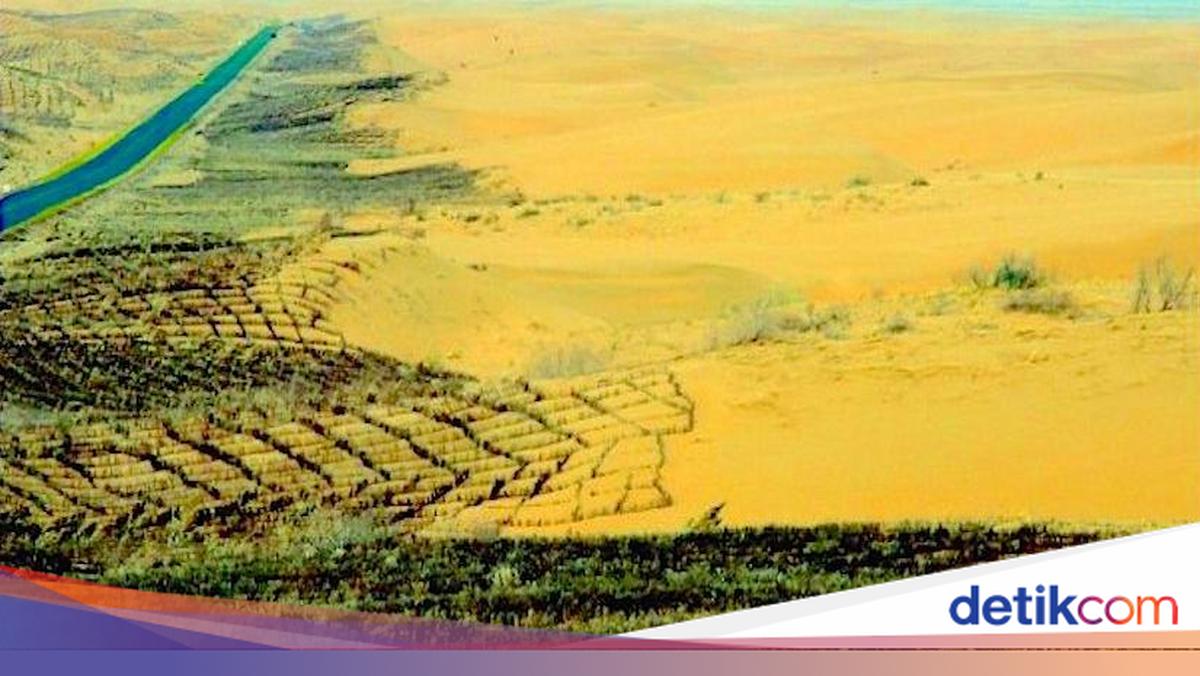
China’s great Green Wall is now at the center of a structural shift involving desertification control and border‑region stability. The immediate implication is a recalibration of environmental security pressures that affect domestic air quality, agricultural productivity, and China’s leverage over its northern neighbors.
The Strategic Context
Since the late 1970s Beijing has pursued the Three‑North Shelter Forest Program to counter the northward advance of the Gobi and Taklamakan deserts, a process accelerated by post‑1950 urbanization, intensive agriculture, and the rain‑shadow effect of the Himalayas. The initiative reflects a broader pattern in which major powers embed ecological engineering within long‑term security strategies, using land‑use projects to manage resource scarcity, mitigate climate‑related hazards, and project soft power. The scale of the wall-targeting 4,500 km by 2050-places it among the world’s largest state‑led environmental undertakings, echoing Africa’s Great Green Wall and signaling China’s intent to shape the ecological frontier of its Eurasian periphery.
Core Analysis: incentives & Constraints
Source Signals: The text confirms that China has planted over 66 billion trees as 1978, plans an additional 34 billion over 25 years, and aims to raise national forest cover from roughly 10 % in 1949 to over 25 % today. The program targets soil erosion, sand deposition, and sandstorm frequency, yet faces low tree survival rates, monoculture vulnerabilities, and ongoing desert expansion of about 3,600 km² per year.
WTN Interpretation: The wall serves multiple strategic purposes. Domestically, reducing sandstorms improves air quality in megacities such as Beijing, supporting social stability and reducing health‑related economic costs. Agriculturally, stabilizing dunes protects marginal farmlands that feed a growing population, aligning with China’s food‑security agenda. Geopolitically, the greening of border zones with mongolia, Kazakhstan, and Kyrgyzstan creates a buffer that can be framed as a cooperative environmental partnership, enhancing Beijing’s diplomatic leverage while limiting trans‑border resource competition. Constraints include the high water demand of fast‑growing species, the ecological risk of monocultures, and the need for sustained state funding and labor-factors that could strain local budgets and limit long‑term efficacy.
WTN Strategic Insight
“China’s desert‑control wall is less a climate project than a strategic frontier, where ecological engineering becomes a tool for managing resource scarcity, domestic stability, and cross‑border influence.”
Future Outlook: Scenario Paths & Key Indicators
Baseline Path: If tree‑planting rates and state financing remain steady, and modest improvements in irrigation and species diversification are achieved, the wall will expand toward its 4,500 km target by 2050. Sandstorm frequency will decline modestly, air‑quality metrics in northern cities will improve, and China will leverage the greening effort in bilateral talks with its northern neighbors, positioning the project as a model of cooperative environmental security.
Risk Path: If water scarcity intensifies, monoculture disease outbreaks increase, or central budget priorities shift toward othre strategic domains, large sections of the wall could experience high mortality, undermining its protective function. Persistent desert expansion would exacerbate dust transport to urban centers, raise health‑care costs, and provide neighboring states with a bargaining chip to question China’s environmental commitments, potentially inflaming border‑region tensions.
- Indicator 1: Annual satellite‑derived vegetation health index for the Three‑North corridor (published each spring).
- Indicator 2: Official budget allocations to the Three‑North Shelter Forest Program in the next two fiscal reports.
