
China’s Chang’e-7 Mission: Hunting for Lunar Ice at the South Pole
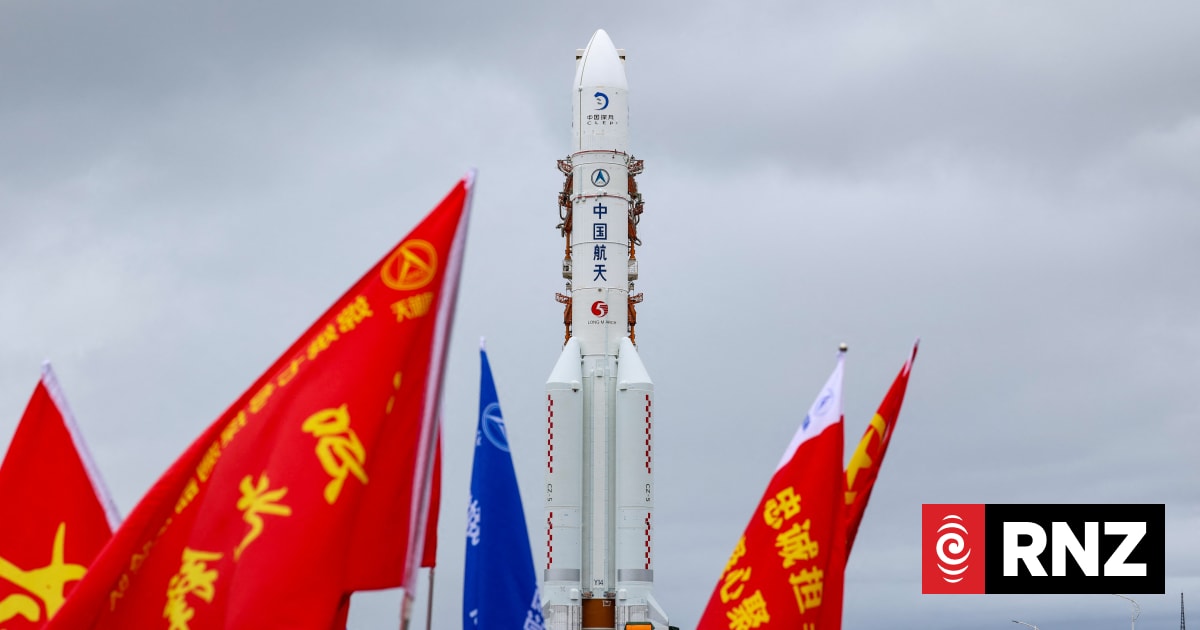
China is preparing to launch the Chang’e-7 spacecraft from the Wenchang Space Launch Site atop a Long March 5 rocket, according to reporting by Reuters and RNZ. Positioned as Beijing’s most technologically complex lunar mission to date, the uncrewed flight targets permanently shadowed craters near the moon’s south pole to survey for frozen stores of water, laying critical groundwork for future crewed landings and a joint research station with Russia.
The Tech TL;DR:
- Payload Array: Equipped with water analyzers, high-resolution cameras, and specialized radars to map volatiles.
- Robotic Innovation: Deploys a novel six-legged “hopping” probe designed to descend into pitch-black, steep-rimmed craters and return to sunlit elevations.
- Strategic Timeline: Scheduled for liftoff next week from Hainan province, with space watchers estimating a touchdown attempt around November.
Architectural Overview of the Chang’e-7 Payload and Launch Vector
The Chang’e-7 mission architecture relies on a heavy-lift Long March 5 launch vehicle lifting off from the Wenchang Space Launch Site in China’s southern island province of Hainan. Reuters reports that once the spacecraft achieves lunar orbit, onboard systems will evaluate potential landing vectors near the moon’s south pole. One primary candidate location is the rim of the Shackleton crater, a deep depression whose interior has remained untouched by sunlight for billions of years.
Thermal conditions within these permanently shadowed regions present extreme engineering constraints. Data from NASA indicates that temperatures inside these craters drop to minus 203 degrees Celsius (minus 334 Fahrenheit). These thermal baselines act as deep-freeze environments capable of preserving ancient water ice and volatile organic compounds.
Overcoming Terrain Bottlenecks with Articulated Hopping Probes
Traditional wheeled rovers face severe mobility bottlenecks when navigating the steep, jagged rims of lunar polar craters. To solve this mechanical constraint, Chang’e-7 carries an autonomous “hopping” probe engineered to access the dark interior floors. According to Reuters and RNZ, the vehicle utilizes small thrusters to fly into shadowed terrain, landing on six articulated legs to deploy a water molecule analyzer.
State news agency Xinhua reports that the hopper will execute at least three distinct hops during the operational window, utilizing its thrusters to leap back to the sunlit crater rim where solar panels can recharge its battery banks. Technical specifications detailing the exact dry weight, specific impulse of the thrusters, and communication API limits have not been publicly disclosed by mission planners.
# Simulated Telemetry Check for Lunar Hopping Sequence
def execute_hop_sequence(fuel_mass, thermal_status):
    if thermal_status < -200.0 and fuel_mass > 3.5:
        ignition_sequence()
        deploy_articulated_legs()
        return "Hop trajectory stable; analyzing water molecules."
    else:
        abort("Thermal threshold or fuel limit violated.")
Global Competition and Long-Term Infrastructure Goals
The Chang’e-7 mission operates within a crowded international timeline targeting the lunar south pole. Following India’s successful Chandrayaan-3 touchdown in 2023, multiple space agencies are rushing to secure access to verified water ice deposits. NASA’s VIPER rover, the European Space Agency’s PROSPECT drilling package, and the Japan-India LUPEX rover are all slated to arrive at the lunar south pole over the coming years.

Finding accessible water is essential for sustained infrastructure development. In-situ resource utilization could supply drinking water, generate oxygen for life-support systems, and yield raw rocket propellant to offset the economic costs of Earth-based resupply missions. China’s broader roadmap includes the Chang’e-8 mission around 2029, culminating in a crewed lunar landing before 2030 and a joint research station with Russia targeted for 2035.