
A curious phenomenon is unfolding in the Chinese automotive market, and increasingly, beyond its borders: the repeated sale of the same vehicle under multiple brands, and names. Whereas automakers routinely share platforms and components, this practice involves essentially re-launching identical cars with new badges, sometimes within a matter of years, and at varying price points.
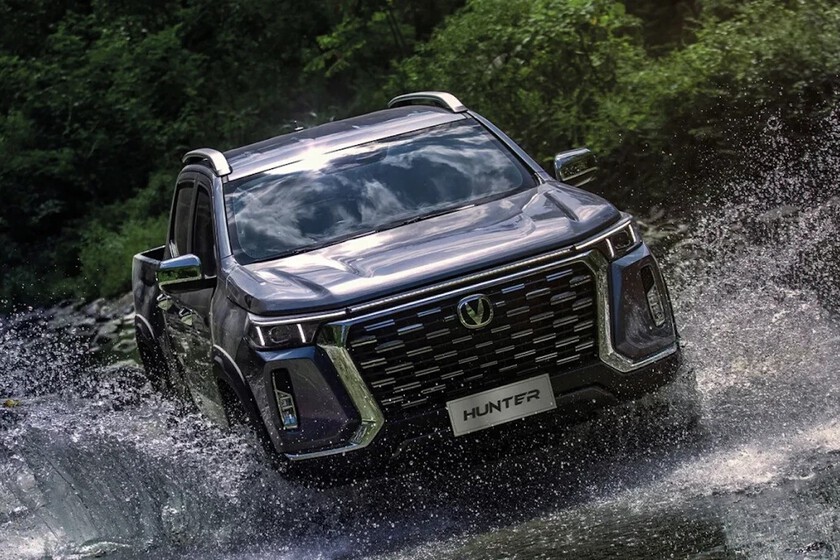
The trend is particularly visible in Mexico, where the Changan Hunter pickup truck has resurfaced, despite being sold under the same name six years ago. Prior to that, the vehicle was marketed as the Peugeot Landtrek, a rebadging effort facilitated by PSA Group’s joint venture before its acquisition by Stellantis. Stellantis then rebranded the same truck as the RAM 1200, adding a cosmetic refresh and a more competitive price tag. Now, Changan is once again offering the vehicle as the Hunter, marking the fourth iteration of the same model to appear in Mexican dealerships.
This strategy has allowed companies to sell the same vehicle over a six-year period, with prices ranging from approximately 300,000 to over 600,000 Mexican pesos (roughly €15,000 to €30,000). The core product, however, remains unchanged.
The practice extends beyond pickups. Santana, a Spanish brand, now sells vehicles originating from Chinese manufacturer Dongfeng. This isn’t a case of adapting a Chinese car for the European market, as Chery is doing with its Omoda and Jaecoo brands, but rather a direct import of a vehicle based on a design originating from 2005, with minimal updates.
A similar pattern is emerging in the motorcycle market, with the Jedi K750 Pro being sold under various logos depending on the country, despite being fundamentally the same motorcycle.
This trend is fueled by overproduction within the Chinese automotive industry. Reuters reported in early February 2026 that dealerships outside of Chengdu are offering discounts of 50-60% on Audi vehicles, a consequence of bulk purchasing and resale at prices below official manufacturer recommendations. This overcapacity is driving Chinese manufacturers to aggressively seek export markets.
The Chinese government has intervened to regulate overseas sales, aiming to prevent a negative perception of Chinese-made goods. However, competing with established automakers with long-standing international presence remains a challenge.
Recent developments in Sichuan province, including extended marriage and maternity leave policies, may also indirectly impact the automotive market by influencing consumer spending and family needs. However, the direct connection to the vehicle re-branding strategy remains unclear.
As China continues to export a large volume of vehicles, this practice of repeated branding is likely to continue, particularly in markets seeking more affordable options.
