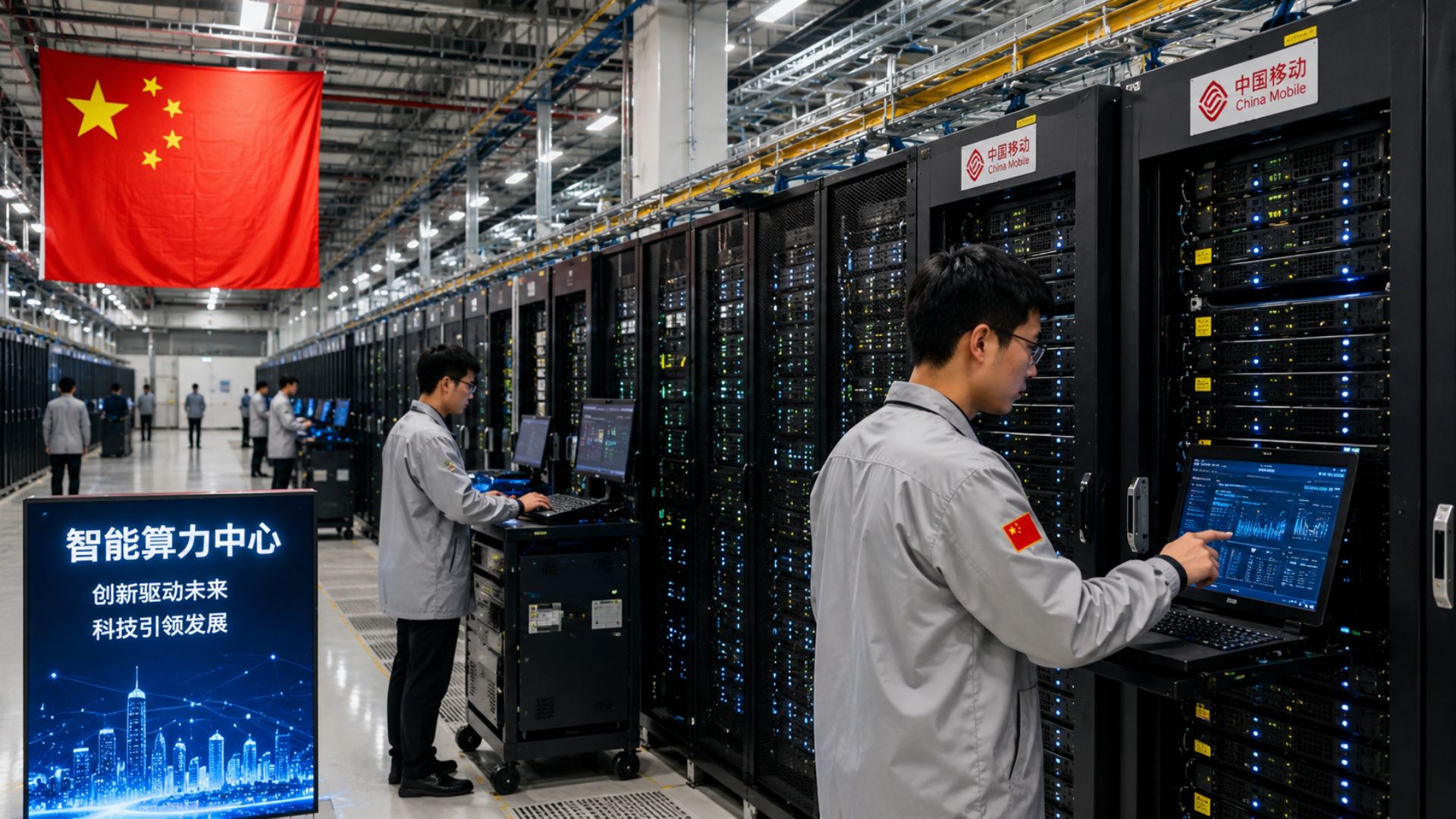
China’s AI Chip War: Huawei vs. NVIDIA in the Data Center Race
China’s $295 Billion AI Infrastructure Push: A Hardware Bottleneck Analysis
China is pivoting its national industrial strategy toward a $295 billion investment in artificial intelligence, focusing heavily on domestic compute capacity and semiconductor self-sufficiency. As of June 2026, the state-led initiative seeks to decouple local data center operations from reliance on high-end foreign silicon, specifically targeting the limitations imposed by current export controls on advanced GPUs. The move aims to stabilize the national AI pipeline, though industry analysts remain skeptical regarding the immediate viability of domestic alternatives to established architectures like NVIDIA’s Blackwell or Hopper series.
The Tech TL;DR:
- Compute Parity Gap: Despite massive capital injection, domestic NPU performance remains constrained by lithography limitations and high latency in interconnect fabrics.
- Supply Chain Resilience: Enterprise IT teams in the region are accelerating shifts toward localized Kubernetes clusters to mitigate the impact of potential hardware import restrictions.
- Operational Risk: The transition to domestic silicon requires significant refactoring of existing CUDA-based codebases, creating a high-demand market for specialized middleware engineering.
The Hardware Reality: Comparing Domestic SoC Performance
The core challenge for China’s AI roadmap is not capital, but the physical constraints of the semiconductor manufacturing process. While the state-backed funding aims to scale data center capacity, the performance-per-watt metrics of domestic chips often lag behind global standards. According to data from the IEEE Xplore digital library, domestic AI accelerators currently struggle with inter-node communication bandwidth, which is critical for large-scale transformer model training.

| Metric | Top-Tier Global (e.g., H100) | Domestic High-End Alternative |
|---|---|---|
| Memory Bandwidth | 3.35 TB/s | ~1.8 – 2.1 TB/s (est.) |
| Interconnect Speed | 900 GB/s (NVLink) | ~400-600 GB/s (Proprietary) |
| Process Node | 4nm (TSMC) | 7nm/5nm (N+1/N+2 processes) |
For organizations scaling their infrastructure, the transition to these domestic stacks requires rigorous validation. Enterprises are increasingly turning to specialized IT infrastructure consultants to audit legacy codebases and determine if the current hardware stack can maintain required uptime under heavy load.
Refactoring for Non-CUDA Workloads
The reliance on NVIDIA’s software ecosystem remains a significant technical bottleneck. Most enterprise AI workloads are optimized for the CUDA programming model. Moving to a domestic NPU architecture requires a complete rewrite or the implementation of abstraction layers to bridge the gap between existing PyTorch/TensorFlow environments and new hardware instruction sets. Developers looking to test compatibility are often utilizing containers to isolate dependencies before porting to production hardware.
# Example: Checking NPU availability in a containerized environment
docker run --rm --device=/dev/npu0
  -e NPU_DRIVER_VERSION=2026.06
  ai-dev-image:latest
  python3 -c "import torch; print(torch.npu.is_available())"
“The sheer amount of capital being deployed is unprecedented, but capital cannot bypass the laws of physics or the complexity of high-bandwidth memory (HBM) packaging. We are seeing a massive shift toward software-defined hardware, where companies are betting on custom compiler optimization to squeeze performance out of sub-optimal silicon.” — Lead Systems Architect, Global AI Infrastructure Group
The Cybersecurity Implications of Hardware Shifts
Moving from established global hardware to localized, less-vetted silicon introduces significant cybersecurity vulnerabilities. Hardware-level backdoors, supply chain interdiction, and the lack of mature firmware security protocols are primary concerns for CTOs. According to the GitHub Advisory Database, firmware-level exploits are increasingly difficult to patch once they reach the production environment. Organizations are now engaging vetted cybersecurity auditors to perform deep-level analysis on the stack before deploying sensitive datasets to these new nodes.

Future Trajectory: The Middleware Bridge
The next 24 months will likely be defined by the success of high-level abstraction libraries that mask the underlying hardware differences. If domestic firms can successfully build a robust software ecosystem—effectively creating a “Chinese CUDA”—the reliance on foreign silicon may drop significantly. Until then, the infrastructure remains a hybrid, fragile ecosystem. For firms managing this transition, the focus must remain on agile software development agencies that specialize in cross-platform optimization and container orchestration to keep services running regardless of the underlying chipset.
Disclaimer: The technical analyses and security protocols detailed in this article are for informational purposes only. Always consult with certified IT and cybersecurity professionals before altering enterprise networks or handling sensitive data.