China Eases Social Insurance Residency Rules to Boost Economic Growth
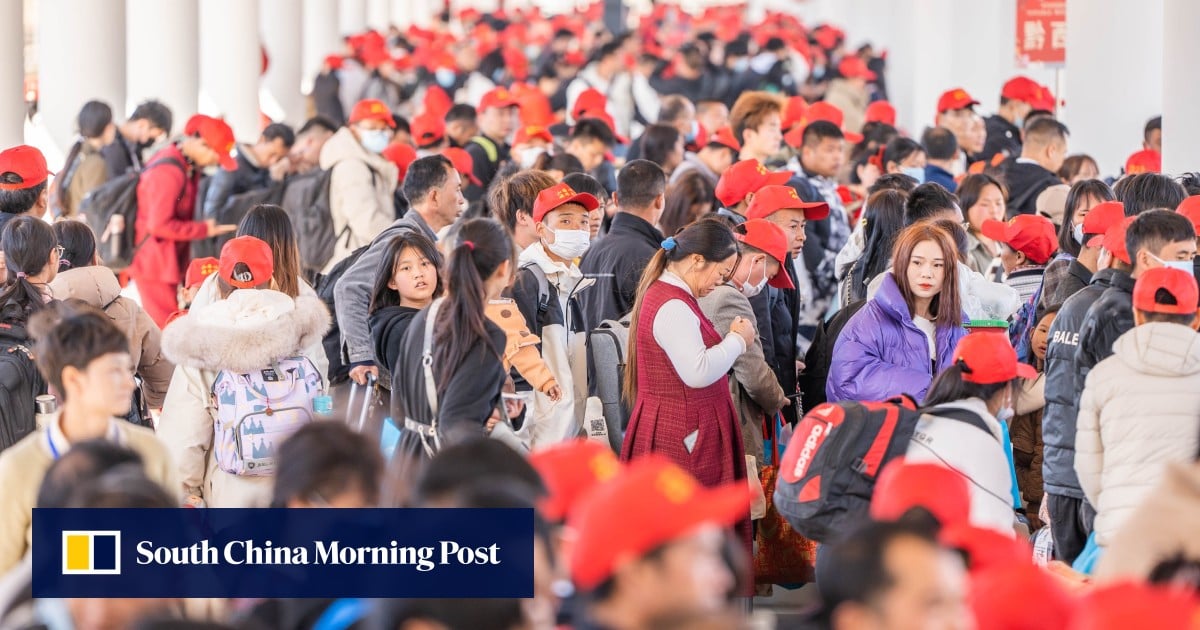
On May 22, 2026, China’s State Council announced a significant reform to social insurance access, allowing migrant workers to enroll in programs where they are employed rather than their hometowns. This policy, targeting a migrant population of over 357 million, aims to foster a unified national market by removing residency barriers.
For decades, the household registration system, or hukou, functioned as a rigid anchor, tethering millions of workers to their places of birth. While this system provided a framework for administrative control, it inadvertently created a fragmented labor market where millions of workers were effectively denied the social safety net in the particularly cities that relied on their labor. As of this weekend, the policy shift marks a definitive move toward the “separation between place of residence and household registration.”
The Structural Shift in Labor Mobility
The economic implications of this reform are profound. By decoupling social insurance from the hukou, the government is attempting to lower the transaction costs of labor migration. When workers can access healthcare, pensions, and unemployment insurance locally, their mobility increases, and their reliance on informal, often precarious, support networks decreases. This represents not merely an administrative adjustment; It’s an attempt to grease the wheels of the national economy.
However, the transition presents a complex logistical challenge for both employers and local municipal governments. Companies must now navigate a shifting regulatory landscape regarding payroll contributions and cross-regional benefit transfers. Organizations struggling to align their human resources policies with these new national mandates are increasingly turning to specialized human resources and compliance consultants to navigate the transition without incurring penalties.
The removal of the hukou hurdle is a necessary evolution. By allowing portability, the state is essentially acknowledging that a modern, competitive economy cannot function if its most mobile workers are treated as second-class citizens in the urban centers where they generate the most value.
Navigating the New Regulatory Landscape
The operational reality for businesses in major urban hubs like Shanghai, Beijing, and Shenzhen is changing rapidly. Previously, the complexity of transferring social insurance relationships between provinces served as a deterrent for both employers and employees to formalize employment contracts. With the State Council’s new mandate, the focus shifts toward seamless, automated integration.
This creates a pressing need for administrative clarity. As regional authorities work to refine their local mechanisms to match the national directive, businesses are finding that the “unified market” is still a work in progress. For firms operating across multiple jurisdictions, the risk of non-compliance is elevated. Many are now engaging corporate labor law experts to audit their current benefit structures and ensure that their practices meet the latest, more stringent requirements for migrant worker inclusion.
Key Objectives of the Reform
- Unified Market Integration: Eliminating the local protectionism that previously prevented the free flow of talent.
- Social Protection Expansion: Broadening the safety net to cover migrant workers who were previously excluded from city-specific benefits.
- Economic Fluidity: Reducing the administrative burden that hindered workers from relocating to regions with higher labor demand.
The Long-Term Economic Outlook
The success of this policy will likely be measured by the rate at which migrant workers transition into formal employment contracts. As the national government pushes for more cohesive social and economic integration, local governments will be under pressure to equalize public services. This convergence of policy and practice is designed to sustain economic growth by ensuring that the workforce is not only mobile but also secure.

Yet, the shift also places a strain on municipal infrastructure. As more workers formalize their status and demand access to local medical and pension systems, cities must scale their public service capacity accordingly. This expansion necessitates collaboration between the public sector and private service providers. Entities specializing in urban planning and municipal infrastructure support are becoming essential partners for local governments attempting to absorb this influx of formal participants.
The move toward a unified market is an acknowledgment that the legacy of the hukou system is increasingly incompatible with the needs of a 21st-century economy. By facilitating the portability of social insurance, the government is betting that a more secure workforce is a more productive one. But as the dust settles on this announcement, the burden of execution falls on the private sector to adapt, and on the local governments to provide the promised services.
The road ahead for China’s migrant workforce is clearer than it was a week ago, but it remains paved with significant administrative hurdles. For businesses and individuals, the mandate is clear: the era of residency-based exclusion is ending, and the era of portability has begun. Whether this leads to the projected surge in economic growth depends entirely on the speed and fairness with which these new national rules are applied at the local level.
Related reading
- Navigating the Digital Shift: The Rise of Online Gaming Trends and Viral Content
- Norwegian Police Remove Environmental Activists Protesting Nordic Mining at Førdefjorden
- Why the Social Security COLA Is Announced in October (daybreakwire.com)
- Novak Djokovic defeats Alexander Zverev at China Open (newsdirectory3.com)