
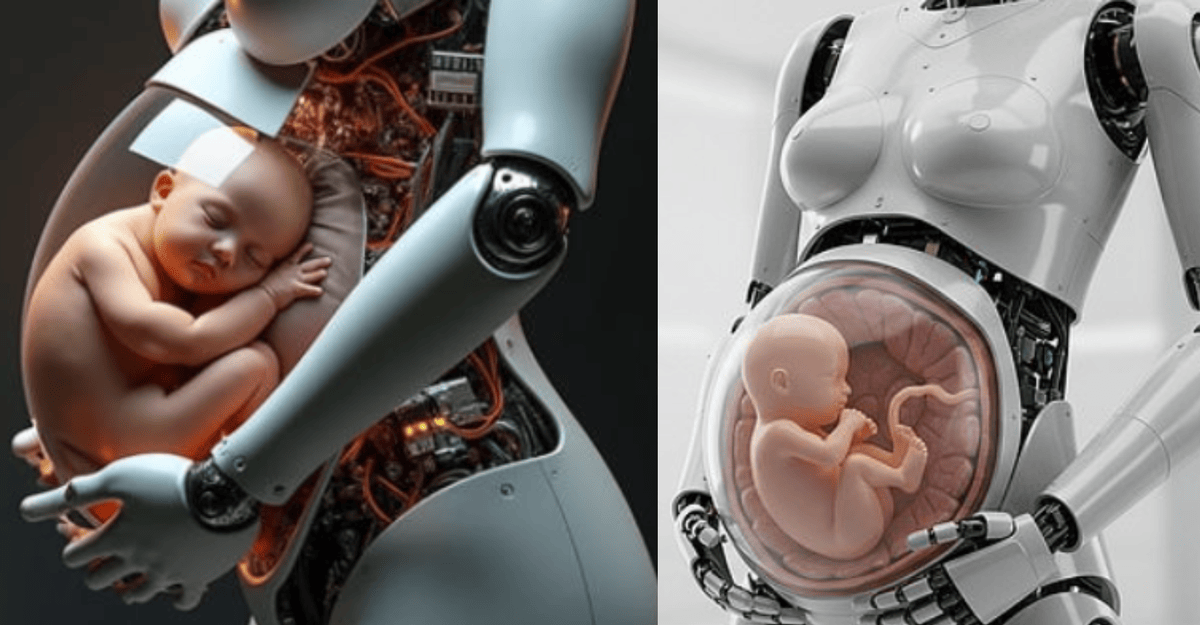
China Develops World-First Pregnancy Robot, Redefining Reproductive Possibilities
Table of Contents
Beijing – In a growth poised to reshape the landscape of reproductive health, Chinese technology firm Kaiwa Technology is pioneering the creation of a humanoid robot capable of carrying a baby to full term and delivering it. This innovation arrives as china grapples with declining birth rates and a rising infertility crisis, offering a potential, albeit controversial, solution.
The Vision of Robotic Gestation
Dr. Zhang Qifeng, leading the project and affiliated with Nanyang Technological University, unveiled the concept at the 2025 World Robot Conference in Beijing. The pregnancy robot is designed to replicate the complete gestational process,a meaningful leap beyond existing artificial womb technologies focused on supporting premature infants. Unlike traditional incubators, this robot aims to facilitate development from conception to birth.
The prototype features an artificial womb implanted within the robot’s abdominal cavity, a nutrient delivery system, and an interactive interface designed to mimic the experience of pregnancy. Kaiwa Technology anticipates a prototype within the next year, with a projected price of 100,000 yuan (approximately $14,000 USD).
Did You Know?
China’s infertility rate has risen from 11.9% in 2007 to 18% in 2020, prompting increased government investment in assisted reproductive technologies.
Surrogacy is currently prohibited in China, making this robotic approach a potential legal workaround. However, the development raises a host of ethical and legal questions.Kaiwa Technology has initiated discussions with authorities in Guangdong Province to address these concerns, including protocols for fertilization, sourcing of donor eggs, and establishing responsibility for the gestation process.
| Feature | Description |
|---|---|
| Artificial Womb | Implanted within the robot’s abdomen to support fetal development. |
| Nutrient Delivery | A system providing essential nourishment to the developing fetus. |
| Interactive Interface | Allows for interaction with the “pregnant” robot. |
| Projected Price | 100,000 yuan (approximately $14,000 USD) |
Expert Perspectives and Concerns
While Dr. Zhang asserts that artificial womb technology is “already in a mature stage,” experts express caution. Yi Fuxian, an obstetrician at the University of Wisconsin-Madison, described the robot as ”likely just a gimmick,” highlighting the significant health and ethical risks involved.He cautioned that success with animal models, such as sheep, does not guarantee similar outcomes in humans Newsweek.
“Many health risks emerge at different ages-not to mention mental health issues,” yi stated. Concerns extend to the potential for unforeseen complications during gestation and the long-term health of children born through this method.
Pro Tip: Artificial gestation technology, while promising, is still in its early stages. Extensive research and rigorous testing are crucial before widespread implementation.
Societal Debate and Historical Context
The announcement has ignited a vigorous debate on Chinese social media. Critics voice concerns about the ethical implications of detaching fetal development from a human mother, the potential for diminished maternal bonding, and the commodification of reproduction. Supporters, however, emphasize the potential for alleviating physical strain on women, offering hope to infertile couples, and expanding access to parenthood.
The concept of artificial wombs has been a subject of discussion for decades, with feminist scholars like Andrea Dworkin raising concerns in the 1970s about the potential impact on women’s autonomy and the societal value placed on motherhood. More recently, researchers at The Children’s Hospital of Philadelphia have warned that such technology could “lead to the devaluation or even pathologizing of pregnancy” The Children’s Hospital of Philadelphia research Report, 2023.
Do you believe robotic pregnancy could offer a viable solution to infertility, or does it raise too many ethical concerns? What role should technology play in the future of reproduction?
Looking Ahead: The Future of Artificial Gestation
The development of this pregnancy robot represents a significant step in the ongoing evolution of assisted reproductive technologies. While challenges remain, continued research and technological advancements could pave the way for more elegant and potentially safer artificial gestation methods.The societal and ethical implications will require careful consideration as this technology progresses.
Frequently Asked Questions
- What is a pregnancy robot? A humanoid robot designed to replicate the entire process of human pregnancy, from conception to childbirth.
- Is surrogacy legal in China? No,surrogacy is currently prohibited in China.
- What are the ethical concerns surrounding pregnancy robots? Concerns include the detachment of fetal development from a human mother, potential impacts on maternal bonding, and the commodification of reproduction.
- How much will the pregnancy robot cost? The projected price is 100,000 yuan (approximately $14,000 USD).
- What is the current status of artificial womb technology? While artificial womb technology is advancing, it is still in its early stages of development and requires further research.
This groundbreaking development promises to spark a global conversation about the future of reproduction and the role of technology in shaping our understanding of parenthood. We invite you to share your thoughts and join the discussion in the comments below.
