
China, ASEAN, and GCC Forge New Path in Cross-Regional Cooperation
KUALA LUMPUR – May 7, 2024 – the landmark China-ASEAN-GCC summit, hosted in Kuala Lumpur, Malaysia, marks a pivotal shift in global economic alliances. The event saw China, the Association of Southeast Asian Nations (ASEAN), and the Gulf Cooperation Council (GCC) convene to strengthen partnerships and address rising global challenges. The meeting underscored cooperation across multiple sectors, fostering resilience and economic synergy. Read on for more details.
China, ASEAN, and GCC Forge New Path in Cross-Regional Cooperation
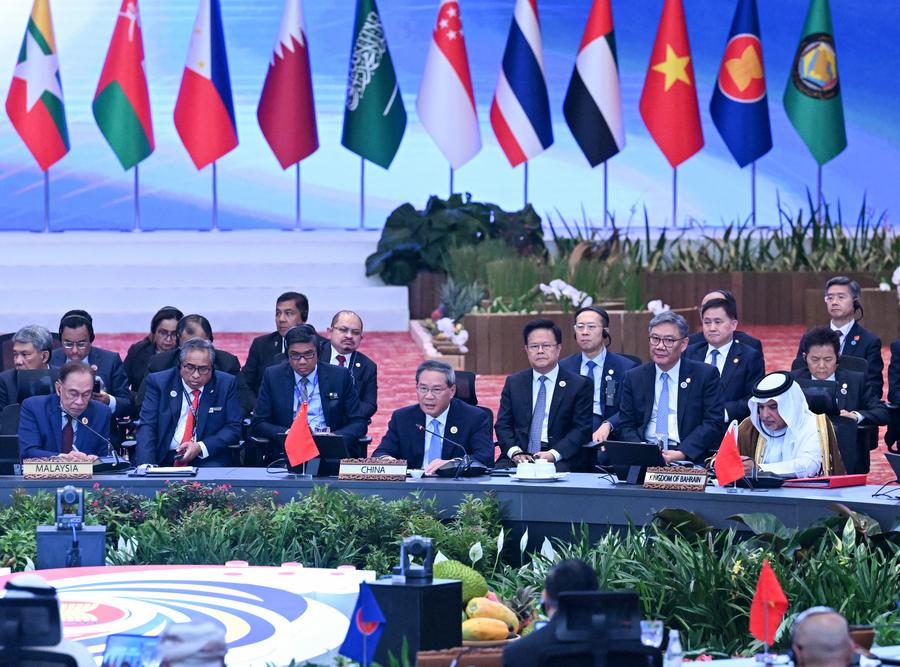
Kuala Lumpur, Malaysia – In a move signaling a significant shift in global economic alliances, China, the Association of Southeast Asian Nations (ASEAN), and the Gulf Cooperation Council (GCC) convened a landmark trilateral summit. The meeting, held in Kuala Lumpur, Malaysia, the current chair of ASEAN, underscores a commitment to collective resilience and economic synergy amid escalating global challenges.
Did you know? The GCC comprises Bahrain, Kuwait, Oman, Qatar, Saudi Arabia, and the United Arab Emirates.This alliance is crucial for energy and financial stability in the region.
Premier Li qiang’s Call to Action
At the inaugural ASEAN-China-GCC Summit, Chinese Premier Li Qiang urged the three parties to establish a global benchmark in openness, progress cooperation, and cross-civilization integration. This call comes at a pivotal time, with rising protectionism and geopolitical tensions threatening the international order.
Premier Li emphasized the importance of connectivity and collaboration to forge a vibrant economic circle and a powerful engine for growth. He stated that this collaboration holds profound significance not only for thier respective prosperity but also for advancing peace and development across Asia and the world.
As some countries are becoming more protectionist and isolationist, the summit was a good initiative and effort to counter these emerging trends.
Lee Pei May, political expert at the International Islamic university Malaysia
Lee Pei May, a political expert at the International Islamic university Malaysia, echoed this sentiment, noting that the summit proves that economies can complement rather than compete with one another, easing the worries that countries can only develop if thay turn inward.
Key Areas of Cooperation
During the summit, leaders committed to strengthening Belt and Road cooperation, focusing on deepening ties in:
- Connectivity
- Trade
- Industrial and Supply Chains
- Agriculture
- Energy
- Finance
- Digital Economy
the leaders pledged to accelerate trilateral integration, fostering robust, inclusive, and lasting development for all.
Pro Tip: Businesses looking to expand should explore opportunities within these key areas. Understanding the nuances of each sector can provide a competitive edge.
Joint Statement and Future Vision
the summit culminated in the adoption of a joint statement,hailed by Malaysian Prime Minister Anwar Ibrahim as detailed,elaborate
and a strong message of trilateral solidarity and cooperation. The statement acknowledged joint efforts to promote closer cooperation between ASEAN, GCC, and China, and also China’s vision to build closer communities with shared futures.
Andrew Kam Jia Yi, a senior research fellow with the Institute of Malaysian and International Studies at the National University of Malaysia, highlighted the complementary strengths of each party:
The GCC’s energy and financial resources, ASEAN’s growing consumer base, and China’s technological and financial capacities together create more resilient supply chains and boost food and energy security for all.
Andrew Kam Jia Yi,senior research fellow with the Institute of malaysian and International Studies at the National University of Malaysia
Following the summit,Premier Li delivered remarks at the opening ceremony of the ASEAN-China-GCC economic Forum 2025,emphasizing China’s commitment to energizing trilateral cooperation through high-quality development.He pledged to expand high-level opening up, promote mutual reinforcement between domestic and international circulations, and share the opportunities of China’s development with countries of ASEAN and GCC.
Global South and Multilateralism
The trilateral cooperation mechanism creates a novel platform for communication and dialogue, enabling Global South countries to coordinate on regional and international affairs and amplify their voices on the global stage. the joint statement recognizes the need to strengthen confidence in the rules-based multilateral trading system with the World Trade Organization at its core.
During talks with other leaders, Premier Li voiced China’s readiness to push for a greater role of the global South in improving global governance. In meetings with Vietnamese Prime Minister Pham Minh Chinh and Kuwaiti Crown Prince Sheikh Sabah Al-khaled Al-hamad Al-Sabah, Li emphasized strengthening communication and cooperation to protect the common interests of the Global South and promote a more just and equitable global governance.
It is a sign of growing solidarity,where countries of the Global South are working together to shape their own futures,assert their priorities on the global stage,and build a more equitable and stable world order from the ground up.
Andrew Kam Jia Yi, senior research fellow with the Institute of Malaysian and International Studies at the National University of Malaysia
Kam concluded that the trilateral summit encourages other regions to pursue similar models of collaboration.
