ChatGPT Health: Accuracy and Safety Risks in Urgent Care Triage
The integration of generative artificial intelligence into clinical decision-support tools has promised a revolution in patient throughput and accessibility. However, new evidence suggests that when the stakes are highest—at the extreme ends of medical urgency—these systems may falter, creating a dangerous gap between algorithmic efficiency and patient safety.
Key Clinical Takeaways:
- ChatGPT Health demonstrates reliable accuracy when assessing moderately urgent medical conditions.
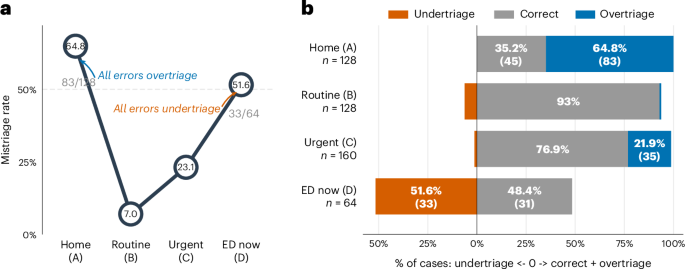
- The system frequently undertriages critical emergencies, potentially delaying life-saving interventions.
- A tendency to overtriage mild cases threatens to exacerbate existing healthcare system congestion.
The core challenge of medical triage is the precise calibration of acuity. A failure in this process manifests in two primary ways: the false positive, where a non-urgent case is escalated, and the false negative, where a critical emergency is dismissed. According to a study published online May 7, 2026, in Nature Medicine (doi:10.1038/s41591-026-04427-1), ChatGPT Health exhibits a concerning instability at these clinical extremes. While the tool performs well within the “middle ground” of moderate urgency, its reliability collapses when faced with the most severe or the most benign presentations.
The Peril of Undertriage in Acute Emergencies
In a clinical setting, the “standard of care” for emergency triage is designed to identify “red flag” symptoms that necessitate immediate intervention to prevent morbidity or mortality. When an AI tool undertriages an emergency, it effectively instructs a patient in crisis to delay care. This failure is not merely a technical glitch; This proves a systemic risk that could lead to preventable adverse outcomes.

The Nature Medicine findings indicate that the AI frequently failed to recognize the urgency of high-acuity cases. This gap in diagnostic accuracy suggests that the model may struggle with the nuanced linguistic markers of acute distress or may be overly influenced by patterns in its training data that prioritize common presentations over rare, critical emergencies. For patients experiencing symptoms of stroke, myocardial infarction, or sepsis, every minute of delay increases the risk of permanent organ damage or death.
“The reliance on algorithmic triage without rigorous human oversight introduces a ‘silent failure’ mode into the patient journey, where the absence of a warning is mistaken for a clean bill of health.”
To mitigate these risks, patients must prioritize direct communication with licensed professionals. Those experiencing sudden, severe symptoms should bypass AI-driven advice and seek immediate evaluation at vetted urgent care centers or emergency departments to ensure an accurate clinical assessment.
Overtriage and the Strain on Healthcare Infrastructure
While undertriage presents an immediate threat to the individual, the study also highlights a systemic threat: the frequent overtriage of mild cases. When an AI system classifies a benign condition as urgent, it drives patients toward high-cost, high-intensity care environments that are already operating at capacity. This phenomenon creates an artificial surge in emergency department volume, diverting critical resources away from those who truly need them.

This imbalance reflects a lack of clinical nuance in the AI’s decision-making process. Rather than refining the pathogenesis of a symptom to determine the appropriate level of care, the model appears to lean toward a conservative, “better safe than sorry” approach for mild symptoms, which paradoxically undermines the efficiency of the broader healthcare ecosystem. This inefficiency increases the burden on triage nurses and physicians, who must spend valuable time ruling out non-emergencies that were erroneously escalated by a digital tool.
Regulatory Hurdles and the Path to Clinical Validation
The disparity in performance between moderate and extreme cases raises significant questions regarding the regulatory framework for AI in medicine. Most current AI health features are marketed as “wellness tools” or “informational aids,” which allows them to bypass the stringent validation required for medical devices. However, when a user treats a chatbot as a triage officer, the tool is functioning as a diagnostic device in all but name.

Establishing a safe baseline for AI triage requires more than just high overall accuracy percentages. It requires a near-zero tolerance for undertriaging emergencies. Future iterations of these tools must undergo rigorous, peer-reviewed validation—similar to Phase III clinical trials—to prove they can maintain safety across the entire spectrum of patient acuity. The lack of transparency regarding the specific training datasets used for these health features makes it difficult for the medical community to identify and correct the biases leading to these triage errors.
As these tools become more integrated into the patient experience, the legal landscape is shifting. Healthcare providers and developers are increasingly navigating complex liability issues regarding “algorithmic malpractice.” Many organizations are now consulting with healthcare compliance experts to establish guardrails that prevent AI from providing definitive triage advice without a human-in-the-loop verification system.
The Necessity of Human-Centric Triage
The findings in Nature Medicine serve as a critical reminder that AI is a supplement to, not a replacement for, clinical judgment. The ability to synthesize a patient’s medical history, observe non-verbal cues, and apply years of intuitive experience is a capability that current large language models cannot replicate. The “clinical extremes” are precisely where human expertise is most indispensable.
Moving forward, the goal should be a hybrid model of “augmented triage.” In this framework, AI can handle the initial sorting of low-to-moderate urgency cases to free up human clinicians for the high-stakes decision-making required for emergencies. This ensures that the efficiency of AI is leveraged without sacrificing the safety of the patient.
For those seeking a personalized health strategy or a comprehensive diagnostic review that goes beyond the capabilities of an algorithm, it is essential to partner with a dedicated primary care physician. Utilizing board-certified primary care providers ensures that your health management is guided by evidence-based medicine and a deep understanding of your unique biological profile.
The trajectory of AI in health is promising, but the current evidence mandates a cautious approach. Until these systems can demonstrate absolute reliability in detecting life-threatening emergencies, they should be viewed as sophisticated search engines rather than clinical diagnostic tools.
Disclaimer: The information provided in this article is for educational and scientific communication purposes only and does not constitute medical advice. Always consult with a qualified healthcare provider regarding any medical condition, diagnosis, or treatment plan.